This article is 21 years old. Images might not display.
"Australia as a partner represents all that we look for," secretary for resources Mike Chrisman told a business lunch hosted by BHP Billiton in Santa Monica.
California has energy supply problems and is looking for cheaper, alternative energy sources.
"The Governor [Arnold Schwarzenegger] supports the diversification of energy sources and liquefied natural gas has got to be one of the many options," Chrisman said.
"For us, natural gas is a much cleaner choice for many of our energy needs and therefore it's better for our environment in California."
The endorsement comes ahead of fresh talks on Australian proposals for LNG terminals located more than 20km off the California coast.
BHP Billiton's proposed $US4 billion ($5.3 billion) Cabrillo Port LNG terminal would be 23km off the coast of Los Angeles. The company wants to ship LNG from Australia to a floating terminal from where it will be piped to California customers.
BHP Billiton claims the project offers a potential $15 billion in export earnings for Australia. It would also give a huge boost to Scarborough, BHP’s West Australian offshore gas field.
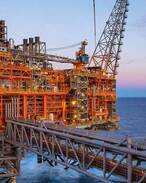
Woodside has teamed up with US firm, Crystal Energy, to develop the 6 million tonne per annum Clearwater Port LNG import facility 21km off Ventura County, by converting the Grace oil and gas production platform into a receival terminal and installing pipelines to the Californian coast.
Australia's Minister for Industry and Resources, Ian Macfarlane, is currently in California, leading a delegation to meet state officials to discuss these projects and other energy-related initiatives.
But some US environmental organisations, community groups and local governments oppose building large terminals off the coastline.
Chrisman acknowledged environmental and safety issues were an important concern.
"Our interest, of course, here in California, with an LNG facility being developed on the west coast, is balanced by our expectation that any development has to be done in a manner that protects the safety of our city and quality of our environment," he said.
Woodside spokesman Rob Millhouse told EnergyReview.net the proposed offshore terminals were safer than onshore alternatives as their distance from the coast provided a large buffer zone.
“The LNG is not stored under pressure and the modelling doesn’t support the proposition that our terminal would pose a threat to people living along the coast,” he said.
Woodside also believed that because its proposed terminal would be using existing infrastructure its environmental impact would be minimal, he said.
Some US analysts believe there is a need for just two regassification plants on the West Coast of North America, and once these were established economies of scale would favour expansion of these terminals rather than construction of new ones.
The Californian plants seem unlikely to clear all the hurdles in time. Two LNG terminals proposed for Baja California in Mexico aimed at supplying the energy needs of both Mexico and the western US are likely to be built before any US rivals.
But Woodside was optimistic that there is room for three or four LNG terminals along the West Coast, Millhouse said.