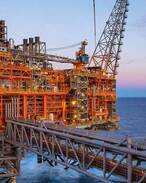
“Five or six major oil companies are already looking at the Great South Basin and doing due diligence,” John Pfahlert, executive officer of the Petroleum Exploration and Production Association of New Zealand (PEPANZ) told PetroleumNews.net this morning.
“The government’s draft national energy strategy is not a show-stopper but it is another negative signal for explorers, along with royalties, prospectivity and the like, that needs to be factored in.
“It’s difficult enough to convince explorers to come to New Zealand, rather than North America or Asia, to explore for gas when the price of natural gas here is still only about a third of what it is in the US. It’s a hard sell at the best of times.
“For anybody doing exploration in New Zealand, they have to know if there is a market for new gas in New Zealand, where they can sell it, and what will they be paid for it.”
Energy and Climate Change Minister David Parker on Monday released the government's draft energy strategy, saying its aim was to ensure New Zealand developed a sustainable and affordable energy system, with as much new electricity generation as possible coming from renewable sources to minimise greenhouse gas emissions.
But Pfahlert said the draft energy strategy – which also proposes “taxing” fossil fuel power generators – overlooked the need for a reliable gas supply to underpin the country’s electricity system.
For downstream electricity generators, any further charges on fossil fuels might mean they could not convince their boards to invest $NZ500 million in new gas-fired power stations that would have an economic life of at least 15-20 years, he warned.
This could have a flow-on effect for explorers and their appetite for hunting for further gas.
Energy analyst Brian Leyland estimates more emphasis on renewables and an effective tax on fossil fuel power players will increase the price of electricity by 10-20%.
Crown Minerals recently opened up a great swathe of the Southern Ocean, putting 40 Great South Basin blocks on offer.
Potential bidders are rumoured to include ExxonMobil, which reportedly paid $US3.2 million ($A4.5 million) last year for a sophisticated seismic package over part of the GSB.
Bids for the GSB blocks and submissions on the government’s draft energy strategy both close at the end of March next year.