This article is 19 years old. Images might not display.
Applications were submitted to the United States Coast Guard and the Maritime Administration for a deepwater port licence and to the City of Los Angeles for a natural gas pipeline franchise.
A decision on the applications is expected to be made within next year, Woodside Natural Gas president Jane Cutler said in a statement this morning.
“This brings us one step closer to our goal of providing a safe, reliable and affordable natural gas supply to Southern California,” she said.
Cutler said the location and design were chosen in response to local concerns over potential impacts on the environment and surrounding communities.
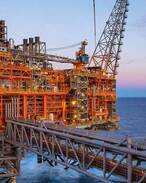
Woodside is seeking approval to place two delivery buoys more than 20 miles (32km) offshore from Los Angeles International Airport with dual undersea pipelines to deliver the natural gas to shore.
The proposal would process an annual average of 400 million cubic feet a day (MMcfd) of natural gas. Subject to market demand, subsequent phases of the project could increase the annual average capacity to 800MMcfd and 1.2 billion cubic feet per day.
The OceanWay project is designed to deliver Australian natural gas to the Californian market, without construction of an onshore LNG terminal, or an offshore platform.
Instead, LNG will be transported across the Pacific Ocean and transferred to specially designed ships, which will convert it back into gas.
The gas will be delivered via delivery bouys, sited about 32km offshore, through two undersea pipelines coming ashore near Los Angeles International Airport, joining the local gas distribution network via a local connection facility.
When not needed for unloading a cargo, the buoys will sit on the seabed. The initial OceanWay plant would be designed to process 400,000 cubic feet of gas a day but it could be expanded to 1.2 billion cfd a day.
But Woodside is not the only company looking to supply gas to the US market via offshore regasificaion.
On the east coast, Texas-based Excelerate Energy already built the world’s first offshore LNG terminal, 186km off the coast of Louisiana. It currently has a second project under application, which would involve a $US309 million ($A405.8 million) LNG pipeline and docking station 21km off the coast of Virginia.