This article is 19 years old. Images might not display.
Announcing the review for its New Zealand operating unit today, Swift said options included selling or merging some or all of the company’s New Zealand assets, as well as entering more joint venture partnerships or “reshaping” its long-term operational strategy for New Zealand.
“The board of directors and Swift Energy’s management have decided, after a regular review of its core operating areas, to explore strategic alternatives for our New Zealand operations,” said company chairman and chief executive Terry Swift.
“We see value in these assets that is not being realised in our current stock valuation. We have built a strong organisation in New Zealand and are committed to our employees there, as well as to maximising the value of the assets and interests of all of our stakeholders.”
He said several advisory firms were assisting Swift in this process.
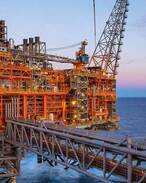
Swift Energy New Zealand’s assets consist of two producing areas – the Rimu-Kauri oil and gas properties in southern onshore Taranaki and the more northerly Tariki, Ahuroa, Waihapa and Ngaere (Tawn) fields.
SENZ also maintains and operates two natural gas processing plants, an oil processing plant, and oil and natural gas pipelines.
Earlier this month, the company’s first 2007 quarterly results revealed continuing faltering flows from its New Zealand operations, primarily because of natural production declines, maintenance work and a halt to exploration.
While its domestic first quarter 2007 production increased 19% (on the corresponding 2006 quarter) to 15.2 billion cubic feet equivalent (Bcfe), its 2007 first quarter New Zealand production of 2.3Bcfe fell 40% on the corresponding 2006 quarter, and a 23% drop on production during the last 2006 quarter.
Swift’s audited proved New Zealand reserves estimates at the end of 2006 totalled 106Bcfe and 2006 production totalled 13.5Bcfe.
Swift Energy struck oil with its first well drilled in New Zealand, the Rimu-1A well in late 1999.
But initial estimates were that the field could hold up to 100 million barrels (MMbbl) proved too optimistic. It subsequently bought the Tawn fields from Shell New Zealand.
According to Crown Minerals, the Rimu-Kauri and the Tawn properties together now hold less than 15MMbbl of oil.
Last year, Swift was unsuccessful with five wildcat exploration wells, including three drilled in conjunction with government-owned Mighty River Power.
Earlier this year, the company said it was cutting its New Zealand capital expenditure and drilling program, planning to spend only about $US35-40 million ($A42-48 million) during 2007, compared with $US57 million in 2006.