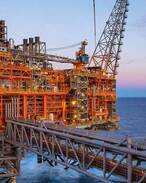
Tokyo Gas is a serious buyer and the same company which helped launch the rival North West Shelf project. It is also Japanese.
Until now, everyone had been rabbiting on about the miracle of China. How it was driving the world economy, leading to a belief among simple folk that it was the only act in town.
Tokyo Gas signing up for an annual 1.2 million tonnes of liquefied natural gas (LNG) from Chevron’s 50%-slice of the Gorgon pie changes everything.
It says the Japanese, with an economy that is still bigger than China’s, are back. It says they are prepared to pay a market price for energy while China struggles with the concept of a free market. And it tells us that an era of unparalleled competition for energy from safe suppliers has started.
The Slug could name several other factors in the significance of the Tokyo Gas deal but let’s just consider the few mentioned.
The return of Japan as a serious contender for Australian resources is huge. For the past decade, while it has sifted through the wreckage of a deep-seated financial crisis, Japan has been sidelined, leaving the running to the chaps across the Yellow Sea.
By committing to buy gas from Gorgon for the next 25 years Japan Inc (via Tokyo Gas) has run its flag back up the pole to signify that it’s serious about securing future energy supply, and is willing to compete head-on with China.
Paying the market price for gas is potentially an even more significant event. Earlier this year, China was in the running for a slice of the Gorgon pie through a deal being negotiated with the China National Offshore Oil Company (CNOOC).
It is history that the deal failed, though why has never been explained. The Slug understands that the stumbling block was price. A fair English translation is that China wanted cheap gas – and had failed to identify that the world price for energy rises and falls in harmony with the oil price.
The amusing part about the price debate is that it actually surprises some observers who fail to understand that China remains, despite some evidence to the contrary, a “command economy”, one where all wisdom, investment decisions and pricing power flows down from Beijing.
In effect, if the comrades in central planning say that you can only pay $US4 per million British Thermal Units for gas then that, dear boy, is what you shall pay, or off with your head (chop chop!).
Japanese traders, and they are among the best traders in the world, recognise that in order to secure a deal you pay the going market rate. The Slug noted this earlier in 2005 when Japanese steel mills agreed to a 71.5% hike in the price of iron ore, much to the annoyance of the Chinese. And they’re doing it again, this time with gas, and reports that the Gorgon purchase may be priced as high as $US7 per BTU.
On the third observation about competition we now appear to have a situation in which China is for now refusing to play the price game, but Japan is willing to join in, knowing that it will get first pick of the best deals – for a while.
In time, even central office in Beijing will wake up to the fact that the market has moved on. That the price of energy has settled at a new, and higher, plateau. That waiting for energy prices to fall to the price determined by an official of China’s ruling communist party is like waiting for property prices to fall in London’s West End.
There is another delicious point worth noting. The deal between Tokyo Gas and Chevron represents the second time the Chevron chaps have given Beijing central a black eye. It wasn’t that long ago that they ‘stole’ Unocal from under CNOOC’s nose.
Which leads The Slug to suggest that if Chevron has an office in Beijing it might be time to check the bolts on the door, or send the manager on a long holiday because he will not be popular with central office.