The study by North American energy specialist Tristone Capital, and reported by Natural Gas Intelligence, found that the gap between the production of LNG and the re-gasification capacity would not narrow in the immediate future. In fact, by 2010 there will be an 18.2bcf shortfall in the supply of LNG to re-gas projects.
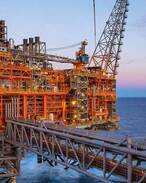
It is the widening gap which explains the boom in LNG production projects around the world, especially in Australia where there is the added appeal of political and economic stability.
More particularly, the gap explains why Woodside Petroleum shares are booming, and likely to continue booming for as long as LNG demand outstrips supply, and re-gasification plants are scouring the world for LNG cargoes.
The Tristone study, encouraging as it is for LNG producers, also contains a warning which could mean trouble for the global LNG industry unless great care is taken. To understand why there could be problems ahead you need to appreciate that market anomalies generally represent a profit for someone and a loss for someone else.
The profit side of the anomaly is easy to spot. A shortage of LNG means high demand, and high prices. But, those conditions will also, almost certainly, mean that long-term contracts, of the sort which effectively lock a producer and a consumer into a closed-loop relationship, will remain the mainstay of the LNG industry.
For producers this represents a licence to print money because they have a guaranteed market, and a guaranteed price.
But for the development of a free market in LNG, similar to that which exists for oil, the shortfall in supply could be the kiss of death – as it could be for a number of re-gasification plants being built (or planned) around the world on the assumption that LNG will become freely traded.
Among the conclusions of Tristone’s analysis is that LNG will remain a “seller’s market” for the rest of the decade, and that of the 50 proposed re-gasification projects in North America not all will be successful.
Put another way, there is the potential for the surplus of re-gasification projects to produce a number of expensive failures because these projects have a very high fixed cost structure, and need to operate at a high level of efficiency to make a profit.
Any LNG re-gasification project being built without a long-term supply agreement in place faces a sticky future – as does the belief that LNG is on the road to rival oil as a freely traded commodity.
Tristone, which operates in Canada, the US and Britain, also found that several big LNG projects were carrying large amounts of “geopolitical risk”. These are projects located in countries such as Russia, Iran, Saudi Arabia and Venezuela.
The rising risk profile means that rapid LNG export growth is not assured, simply because the owners of the capital required to build the projects might balk at the risk of putting money into dodgy places.
By The Slug’s reckoning, this represents a terrific opportunity for Australian LNG, but only on the conventional dedicated producer/customer basis. Any thoughts of a free market developing are fast flying out the window.