This article is 19 years old. Images might not display.
Firstly, "the latest environmental lobby group" is indeed a community group that has in its ranks, the traditional owners, members of the communities within the Kimberley, concerned citizens from around Australia and indeed the world.
And, if you had cared to find out, this group is not against the gas being taken out of the ground (indeed, as world citizens, we recognise that it is better to be done within Australia). Where it does fall down is when the companies bring the infrastructure to the mainland.
The Maret Islands are located just off the coast of the iconic Mitchell Plateau, which as you may or may not know is full of bauxite. If the Marets go ahead then Inpex are obligated (much to their dismay) to feed 15% of their gas back into 'local market' (under agreement with the WA Government).
UMC and Norsk Hydro are well aware of this and are jockeying to double their 7000km square pegging by taking the Rio led lease.
With the gas there to power what has been historically an unviable operation, the Mitchell, as well as Cape Bougainville and all the adjacent areas will be superficially mined (the depths range from 3 - 5 metres). This then takes up an area that equates to approximately 15% of the Kimberley. This, of course, is not the only area pegged for 'exploitation'.
I take it that you have never been to the Kimberley, and certainly never to that "godforsaken place" the Marets, judging by your parochial language.
There are many that have. Indeed the tourism industry reaps $1.2 billion per year from introducing people from all around the world to one of the last great wilderness areas.
This is a significant amount of money, especially when you consider the rate at which the world's wilderness areas are declining. Those with a keen economic eye can surely see the benefit of maintaining a wilderness vs. the short-term gains of mining in an area such as this. Tourism returns are generated in perpetuity: mining and gas for fixed terms only.
I also like your site A and site B suggestions and they would be humorous if they weren’t already happening. It appears that this is exactly what is going on, as interested parties wrestle over the options (including so-called environmental groups).
Lateral thinking is needed, but not in the way you describe.
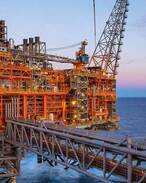
The gas will come out of the ground, but where it goes is the billion-dollar question. It is our belief that the gas should be processed on floating facilities as suggested by Nexus.
Alternatively, it should be transported to the Pilbara or perhaps to Darwin. And before you scoff, this is already being touted by some companies.
This is not a campaign that is being fought blindly over the survival of a turtle or troglobites. This is a movement that is concerned about a wilderness that should be protected for the economic benefit for tens of generations to come.