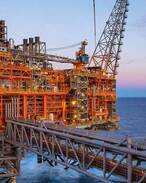
It might actually become more than interesting in the future because we are entering a time when big oil companies are redefining themselves as "energy" companies, and mining companies are using their earthmoving skills to enter the hydrocarbon business.
Oil share and Canadian tar sands are other parts of the same "mining or oil" question, but on a grander scale.
The real issue, which we're moving towards, is whether we are going to see something big happen in the resources world as the oil majors re-think their futures in an environment of shrinking conventional liquids supply.
Old hands in the oil patch will shake their heads wisely and remind The Slug that they've seen this before, and it doesn't work.
Back in the 1970s and 80s, most of the oil majors dabbled in mining, and failed. BP owned the once great mining house, Selection Trust, and ExxonMobil had a mining arm that included among its achievements discovery of the Golden Grove zinc mine in Western Australia.
Cultural differences between the people who run oil businesses and those in mining led to a wholesale retreat by the majors, tails between legs, muttering words to the effect: "Never again".
Well, if there's one thing The Slug has learned during a lifetime of watching the resources world, there is no such thing as never. Over the course of an economic cycle, as the supply-demand equation wobbles about, "everything old is new again" - as the song lyrics go.
This is where the question of whether underground coal gasification and tar sands becomes interesting, and is best summed up in two words: times change.
Twenty years ago no one seriously questioned the ability of the oil industry to carry on as it always had. There were challenges. Oil finds were getting smaller, but something had always turned up.
It would be comfortable to imagine that history will repeat itself, with a political, technological or geological breakthrough making it easy once again to find and produce oil.
Members of the peak oil club, and this includes The Slug, are struggling to see how it can happen this time. China's appetite for oil is just starting to grow. India is jumping aboard. And most readers know the rest of the theory.
What then will oil companies do to maintain their reason for existence? They can either become brilliant dividend and capital return investment vehicles (yippee say investors), or they re-enter the world of minerals via alternative energy adventures.
Some of the majors have tried wind power, and hate it. Some have tried solar, and also hate it.
Hydrocarbons from sand, or coal, is a different matter, as is uranium. This is where the production process might vary, but the end product is much the same.
That's why The Slug is watching the embryonic underground coal gasification business carefully. Companies such as Altona with its Arckaringa project and Metex with its Queensland coal gasification trials are attracting investor interest as an adjunct to the coal seam methane boom.
The difference, however, is that CSM is a relatively straightforward extraction process. Gasification in situ is a completely different matter, as are tar sands and oil from shale.
The oil and gas sector must ask at what point it becomes attractive to add an investment in an alternative such as underground gasification, and at what point do hydrocarbons players morph from being petroleum companies into "energy miners".
This question will be occupying thinking time at the top and bottom ends of the oil game.