This article is 12 years old. Images might not display.
After the company successfully sold off Liverpool Bay, production guidance for the 2014 financial year has been rebased to 245MMboe.
The 2% guidance reduction also reflects lower gas and natural gas liquids production in the Hawkville area of the Eagle Ford, though it has completed well remediation activities there.
Total onshore US production of about 107MMboe is expected for FY14, which mainly reflects the lower contribution from natural gas.
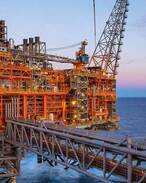
The overall reduction in full-year guidance has been mitigated by an increased contribution from higher margin crude and condensate, predominantly from BHP's Gulf of Mexico operations.
A 16% increase in liquids production for the nine months ended March 2014 to 77MMboe was underpinned by a 71% increase at onshore US.
It was supported by a doubling of production at Atlantis as volumes benefited from the start-up of a production well in the September 2013 quarter.
Another two production wells are scheduled for completion there in the coming months.
Production in the Eagle Ford accelerated at the end of the March quarter.
BHP expects 75% growth in onshore US liquids production for the full year as a number of completed wells are brought online.
The company recorded an 84% increase in liquids production at Pyrenees in the March 2014 quarter.
It followed the completion of major planned maintenance during the December quarter and the start-up of three production wells during the March quarter.
While liquids showed promise, natural gas hit the results.
Natural gas production for the nine months ended March 2014 fell 5% to 624 billion cubic feet.
The successful delivery of first gas from Macedon partly offset lower seasonal demand at Bass Strait and natural field decline at Haynesville.
That field decline partly drove BHP's decision to prioritise onshore development drilling in the liquids-rich Black Hawk region of the Eagle Ford.
Onshore US drilling and development spending totalled $US3.4 billion ($A3.6 billion) in the nine months to March.
That spending rate fell in the March quarter to $1 billion in line with BHP's planned annual investment program of $4 billion.
About 75% of the drilling activity occurred in the Eagle Ford with the majority focused on the Black Hawk acreage.
Petroleum exploration spending for the nine months to March was $434 million, of which $231 million was expensed.
A $600 million exploration program, largely focused on the GoM and Western Australia is planned for FY14.
During the March quarter BHP drilled two wells in the Carnarvon Basin.
Rydal-1 in WA-255P, which was chasing oil, encountered hydrocarbons but was deemed non-commercial.
It is in the process of evaluating Bunyip-1, which was drilled in WA-335P, with the well reaching a total depth of 4579m and encountering hydrocarbons. The aim in that well is gas.