The week in review
Often it's tempting to see the world in black and white. Just two sides to every argument. You're either with us or against us.
And while that last line was used by President George W Bush after the 9/11 attacks, the rise of Trumpian politics has surely done more to further this polarisation of debate and thought than anything else.
And it seems where America leads the rest of the western world follows, with so-called educated political and industrial discourse having too often deteriorated into mud-slinging exercises whether between Peter Dutton and Anthony Albanese or Boris Johnson and Nigel Farage.
Nowadays it seems all too often that we aren't allowed to take a nuanced position on an issue, and we have to unflinchingly nail our colours to mast A or mast B.
This scenario would appear at first glance to be the case in today's energy sector too, with the various sectors falling into pre-determined camps with no hope of an existence in a metaphorical no-man's land.
The fossil fuels companies – the bad guys, polluting the world and destroying the environment, impervious to calls to change their ways.
The renewable energy sector – bright eyed and bushy tailed, evangelical idealists, chasing the impossible dream of clean energy.
The environmentalists – dreadlocked agitators, looking for a high-publicity fight rather than making a real difference to the world.
And journalists – well, the less said about them the better.
It's kind of comforting to know where everyone sits around the campfire and makes reinforcing our owns narratives infinitely more straightforward.
But every so often something comes along which serves as a much-needed reminder that nothing in life is that straightforward, and that all arguments are actually a spectrum of shades of grey and not simple black and white.
Consider for a moment a plan to build a massive wind farm, designed explicitly to generate huge amounts of clean energy and to help Australia unshackle itself from its dependence on fossil fuels.
In a binary world what would the parties say?
Fossil fuels companies: "Well, that's all well and good but you'll still need gas or coal fired power stations for when the sun's not shining."
The renewable energy sector: "It's happening. The future is here and it's green."
The environmentalists: "Let's go spray paint the front doors of ACME Oil."
It's simple, isn't it? Everyone's in their place. And from the media's point of view the story pretty much writes itself.
And so, this is the headline ENB wrote this week about just such a renewable energy project:
"Opponents of Robbins Island wind farm ready to stand firm"
That doesn't fit our template, does it?
No one really objects to the development of renewable energy facilities other than NIMBYs, do they?
And so, it begs the question, who are the opponents in this instance, readying themselves to block the construction of the wind turbines?
The answer? The Bob Brown Foundation – the environmental campaign group established and led by the former MP and the leader of the Australian Greens.
But shouldn't Brown and his Foundation support the wind farm project? Shouldn't they be banging the drum about how the idea is the best thing since sliced bread?
In a binary world, yes, they would. But we don't live in a binary world, we live in a world with exceptions to the rule and nuance and subtleties.
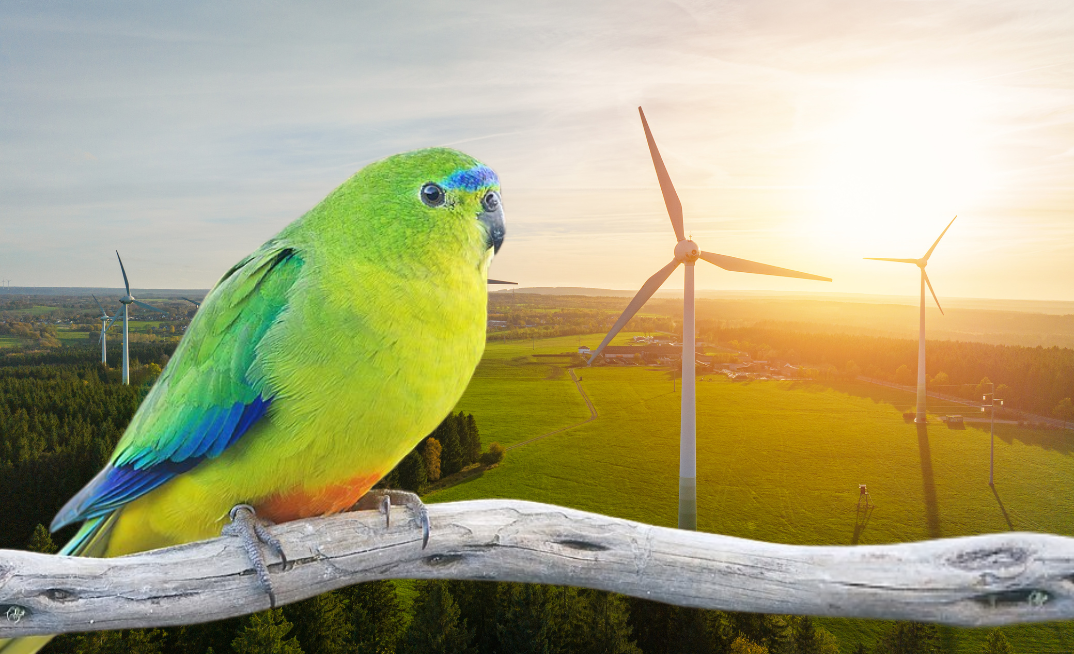
And so, while the BBF might support the notion of renewable energy and most likely do, in the case of the Robbins Island development, they're opposing it because of the impact they say it will have on the region's birdlife.
And while I'm not for a moment going to proffer any suggestion of what might be the best way forward with this scenario, the existence of the BBF as the lead opponent to a renewable energy project should serve as a reminder to us all that – tempting as it might be – the issues we're all so invested in are far from one-dimensional, simple matters.
Here's hoping you have a great weekend. I hope we can all agree on that.
Yours,
Russell Yeo
Editor
Energy News Bulletin
To get the best analysis and insight of what's happening in APAC's energy sector, sign up for a free trial.