The week in review
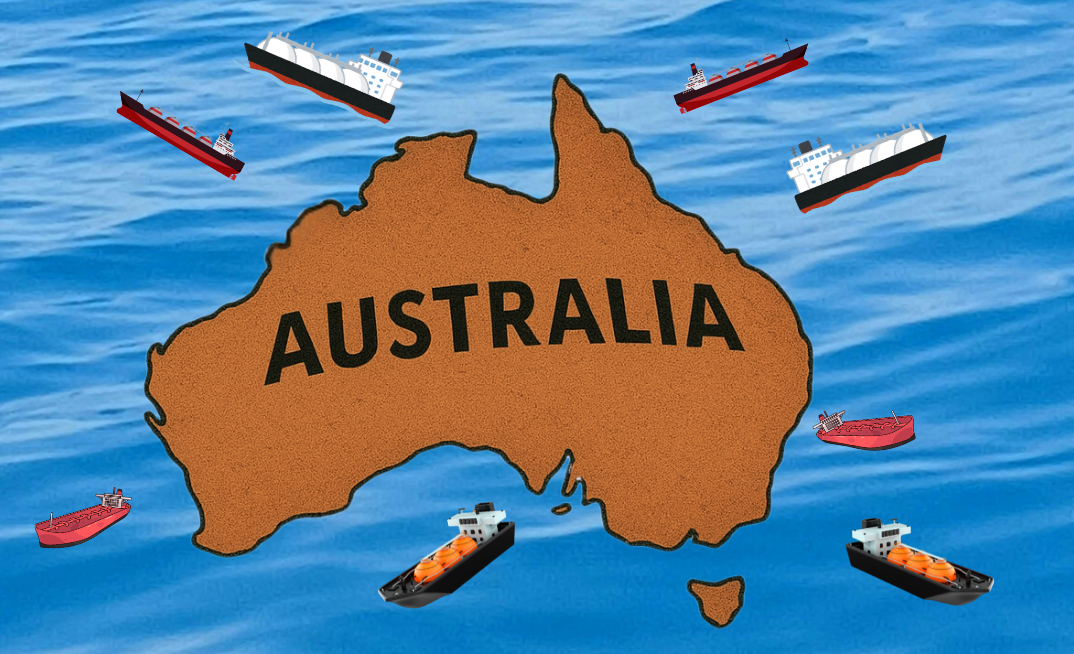
The extent of Australia's gas export trade has been laid out this week for all to see with the publication of Australia's Energy Commodity Resources 2025 by Geosciences Australia.
And with the publication of this weighty tome, we can see clearly the mess the domestic/international export gas market is in.
According to the report, which is based around 2023 data, Australia exported about 70% of all its gas as LNG in 2023, with earnings for the companies involved reaching $74.3 billion.
Let that sink in - 70%. And what's more, that was down 18% from the previous year. And it's worth noting that LNG exports have increased by an average of 13.5% per year over the last decade.
Australia produced 6,264 PJ (5.57 Tcf) of gas in 2023, a touch down (1.5% - 98 PJ) from 2022, with approximately 75% of this produced from conventional sources, dominantly hosted by basins of the North West Shelf (Northern Carnarvon, Browse and Bonaparte basins), which accounted for 90% (4,193 PJ; 3.73 Tcf) of conventional production to the end of 2023.
The remainder of gas produced was from coal seam gas sources, totalling 1,593 PJ (1.42 Tcf) in 2023, with the Bowen and Surat basins in Queensland accounting for nearly all of this amount.
But despite this significant production, warnings of an east coast shortage still abound.
Day after day, week after week, leaders from our sector bemoan the lack of gas for domestic and industrial users, while others (mentioning no names) complain of the risk of upsetting the apple cart and not being able to service highly lucrative international export contracts.
Australia's east coast is the only major gas export region in the world where exports are not controlled to protect domestic customers – a scenario that differs from what we have on the west coast. Gas in eastern Australia is also expensive because so much is sent overseas with export contracts setting the price of gas sold locally.
This hardly seems to be working in the best interests of Australian manufacturers or households, does it?
Compare an east coast manufacturer paying $12 to $19 per gigajoule (Gj). That's more than double to what's paid in WA and in the US - one of Australia's major LNG competitors - gas is around $5 to $8/Gj. Even in Europe, where gas is mainly imported, prices are usually equal or even less than in eastern Australia.
It really is a broken market. Gas production has doubled since 2015, while domestic use in eastern Australia has dropped by about 20%. Adam Smith's laws of supply and demand? The price of wholesale gas has more than doubled in the last decade.
In releasing the report, the government resources minister Madeleine King said: "Since 2021, Geoscience Australia has published annual reports on the nation's energy commodity resources, revealing trends and providing an overview of our nation's world-leading energy resource base.
"This report shows Australia is endowed with abundant and diverse energy resources."
Yes – luckily for us – and our Asian neighbours - it is.
But here's hoping the government's long overdue review of the market and its mechanisms which allow 70% of the gas to leave the country, sorts it out once and for all.
Yours,
Russell Yeo
Editor
Energy News Bulletin
To get the best analysis and insight of what's happening in APAC's energy sector, sign up for a free trial.