The week in review
Energy storage is leading the news agenda so far in 2026.
Last week we seemingly couldn't stop writing about batteries.
As a brief glimpse at our recent coverage will show, since the start of the new year, public consultations on more than eight battery energy storage systems have been opened by the Department of Climate Change, Energy, the Environment and Water.
And if all pass approvals and are constructed according to plan they'll deliver a combined capacity of more than 13GWh to the nation's grids.
But this week it was pumped hydro that was stealing the limelight.
First came news that construction workers at the heavily delayed Snowy 2.0 project have completed the "crown" section of a heavily reinforced tunnel transition at the entrance to the project's upper intake.
It's described as a key structure that will be among the first points where water from Tantangara Reservoir enters the pumped-hydro system.
Approximately 450m³ of concrete, 160m² of formwork, a 3.7m-thick lining section and about 80 tonnes of steel reinforcement, have gone into the tunnel's section construction, which is part of a 50m-long transition tunnel that gradually changes an 11m-diameter tunnel from round to square at the entrance.
Then we reported on Sunshine Hydro's efforts to fast-track their $2b pumped-hydro project in central Queensland as they work to position Djandori as a coal-scale storage asset backed by contracted renewable energy and firming capacity when wind and solar output falls.
Formerly known as Flavian, the 961-hectare Djandori Gung-i project is designed to operate as a large-scale, closed-loop pumped-hydro system drawing power from wind and solar generation across the wider Queensland grid, with two reservoirs storing a combined 51GL of water.
Water would be pumped from the lower to the upper reservoir using surplus, low-cost renewable power generated in Queensland. When water flows from the upper to the lower reservoir, turbines will be driven, generating electricity for supply to the market. Excess energy would then be used to produce green hydrogen, creating a closed-loop system for stable, dispatchable green power and fuel.
Sunshine Hydro says the project can deliver "like-for-like" capacity to retiring coal-fired power stations that are already well connected to the grid, and estimates it could abate about 4m/t of carbon dioxide a year by displacing coal-fired generation with firmed renewable power - equivalent to roughly 2.5% of Queensland's current annual emissions.
And then finally in the realm of pumped hydro, came news that early works for the Queensland-based Borumba pumped hydro project have cleared a key hurdle under the EPBC Act, allowing vegetation clearing and technical investigations at Lake Borumba. This approval enables exploratory tunnel drilling, test pits, and associated infrastructure, laying the groundwork for a potential large-scale, long-duration storage asset without yet committing to full construction.
And if that wasn't enough, further south, Hydro Tasmania has lodged a new federal referral for its proposed Cethana pumped hydro development as part of the Mersey Forth hydropower scheme, reinforcing Tasmania's ambition to play a central role in firming renewable generation for both the island state and the mainland.
ENB's deputy editor Rueben Hale spoke to ANU Prof Andrew Blakers, an expert in pumped hydro energy storage, who told him that Australia will require genuinely large-scale, low-cost storage to handle overnight demand and prolonged periods of weak wind and solar output.
"Pumped hydro energy storage remains the backbone of global storage, accounting for more than 90% of installed capacity, and offers the lowest-cost option for long-duration energy shifting," said Prof Blakers.
Blakers explained that projects such as Snowy 2.0 deliver storage at roughly one-fifth the cost of batteries and operate for around ten times longer. While batteries remain critical for fast-response, short-duration and high-power applications, Blakers added pumped hydro and batteries play complementary roles in delivering a reliable, low-emissions power system.
"Australia will eventually need 1000-2000 GWh of energy storage and perhaps 50 GW of storage power by 2050 when we are completely decarbonised," he said.
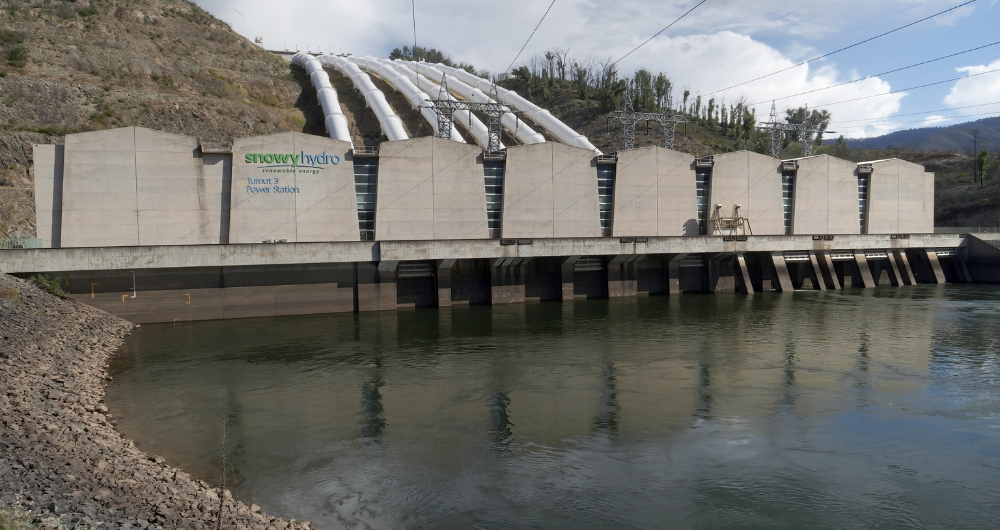
"Snowy 2.0 is 350 GWh, Borumba 50 GWh, Cethana, Kidston (and existing PHES at Kangaroo Valley, Tumut 3, Wivenhoe), plus a few others, are being considered," he said, warning that we might have 50 GWh of home and utility batteries by 2030, but we must continue to build between now and 2050.
And then finally, still within the energy storage sector, we reported on a new University of Queensland-based study looking at the viability of compressed air energy storage (CAES) technology.
With $250,000 from both the state's Department of Environment, Tourism, Science and Innovation (DETSI) and the Chinese Academy of Sciences (CAS), UQ will look at the novel tech which compresses air using renewable-generated power, stores it underground and then releases it to drive a generator and create 8-12 hours of dispatchable power when needed.
When I told my son about this, I likened it to holding a small, paper propeller across the mouth of an inflated balloon as you let the air out of it. Connect that propeller to a generator and - hey presto – ingeniously simple.
What all this coverage underlines is the crucial place storage has in the efforts to address the challenges of the energy transition.
Yes, we can generate huge amounts of renewable energy but if we can't store it for use until it's needed, then we will lose our way.
That's why ENB decided some months ago to do a deep dive into the role of battery and storage in the Australian energy transition.
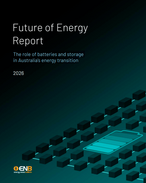
In our forthcoming report - entitled "Future of Energy: the role of batteries and storage in Australia's energy transition" – we've examined the storage capacity in the pipeline and the rate of battery adoption, including a state-by-state outlook, supported by exclusive survey data and analysis of operating, construction and planned projects nationwide.
If you'd like to learn more and ensure you receive a copy, please get in touch.
Alternatively, you might like to consider advertising in the printed copy of the report which is going to be launched at EXA. If so, please get in touch with my colleague Tori McNally.
Yours,
Russell Yeo
Editor Energy News Bulletin
To get the best analysis and insight of what's happening in APAC's energy sector, sign up for a free trial.