The United States signed a charter in June with the European Union's executive Commission and 12 countries including Russia, China, Japan, Canada and Brazil to research the technology in a "Carbon Sequestration Leadership Forum".
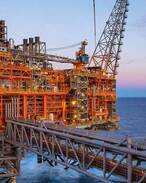
Norwegian oil company Statoil, has the world's first commercial store of carbon dioxide (CO2) in sandstone 1,000m under the North Sea. Statoil currently pumps about one million tonnes a year of non-toxic CO2, produced by everything from living organisms to car exhausts, into
rocks below Sleipner.
U.S. officials estimate that up to 250 billion tonnes of CO2 could be captured from the atmosphere and stored underground or captured in the soil in the United States. The US generates about 5.8 billion tonnes of CO2 a year.
Another solution is to inject CO2 into oil wells making oil flow more freely and loosening it from surrounding rocks, possibly raising output by 5-15 %.
The five-year project underway in Japan, is aimed at developing technologies to store a large amount of carbon dioxide gas collected from sources such as thermal power stations and chemical plants.
The gas will be stored in a sandstone aquifer rich in moisture. A typical aquifer is topped with a 100m layer of cap rock that keeps liquids and gases trapped.
The experiment at Iwanohara involves injecting about 20 tons of carbon dioxide a day into onshore and offshore aquifers through wells and monitoring the movement of the gas through three observation wells.