This article is 11 years old. Images might not display.
The $38 million aircraft, Rescue 625, is one of only a handful of advanced civilian helicopters in the world capable of performing effective rescues at sea during pitch-black night-time conditions thanks to its sophisticated sensor equipment that includes a powerful infra-red system and in-built cameras.
Its 300 nautical mile range is greater than that of any other helicopter in Australia. Flying out of Broome airport, it should have the legs to access the furthest drill rig or FPSO from shore.
Rescue 625 also has an auto-pilot hover function and a rare double-winch set-up.
The helicopter will be staffed by a rotating crew of five pilots and paramedics, who aim to be in the air within 15 minutes during the day, or within 30 minutes at night.
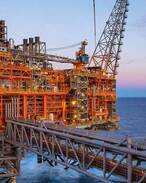
The helicopter was commissioned by Shell to support its move into the Browse Basin, including the massive Prelude FLNG facility that will be located about 200 kilometres off the coast, almost 500km from Broome.
Prelude will weigh 6 million tonnes and has been designed to operate in all sea states including 1-in-100 year cyclonic events.
It will be one of the first FLNG projects in the world, and one of the largest maritime structures at sea.
CHC Helicopter is contracted to operate Rescue 625 and its crew for Shell, but it will not be for the company's exclusive use, and for a fee other oil and gas companies can call on the aircraft to assist.
Civilian authorities in the Kimberley can also call on the service, and the Australian Maritime Safety Authority has already called on the search and rescue team to help with three incidents involving missing fishermen. All were recovered safely.
Shell announced an EC225 helicopter search and rescue helicopter service in June last year, with Rescue 625 an expansion of that, to enable 24 hour coverage.