Current operator New Zealand Oil and Gas has confirmed Transworld Oil, which will end up with 45% equity in PEP 38460, is eager to start what industry commentators are describing as the most important well drilled in this country for nearly three years.
"Tui has the potential to change the face of the New Zealand energy industry," said one commentator.
He said Tui was the most important well drilled since the Ensco 50 jack-up rig drilled the first Pohokura well, Pohokura-1, in early 2000. Although Tui-1 was pretty ambitious, the field had the potential, with its stratigraphic upside, to contain more gas than Shell New Zealand currently had on its books.
"Tui is a reasonable structural trap, but with the stratigraphic potential which could exceed that of Maui."
Tui was a far better prospect than the Hochstetter prospect which NZOG and partners had drilled without success in a different part of the same permit in early 2000, added the commentator.
NZOG exploration manager Eric Matthews confirmed from Sydney today that Transworld would become operator after the farm-in, which would see Transworld take a 20% stake from NZOG and a 25% share from Pan Pacific Petroleum subsidiary WM Petroleum, leaving NZOG with a 20% interest, Pan Pacific 15% and Australian Worldwide Exploration 20%.
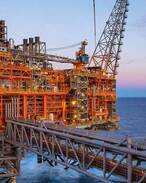
He said Transworld Oil, which is registered in the Bahamas but has offices in Texas, would be setting up an office in New Plymouth within the month to oversee the Tui drilling program. The Tui-1 well is expected to be drilled by the semi-submersible rig Ocean Bounty in February and to take some 30 days to reach a total depth of approximately 4000m.
Matthews reiterated his belief that the main structural play at Tui, an Eocene-aged Kapuni D sands closure covering 50 sqkm, was a remnant of an originally much bigger closure that had hosted an oil accumulation extending over both Maui and Tui. The cumulative potential of the D sands was estimated at 700 million barrels of recoverable oil; while secondary objectives included the Miocene-aged Moki formation, with 400 million barrels potential, and the Kapuni F sands, with 50 million barrels potential.
"The stratigraphic potential is so large I would not even want to put a possible figure on the amount of oil that might be there," Matthews added.