

Sparc Technologies began life as a materials business, commercialising graphene additives for protective coatings, but its sharper wager now sits in a three-way venture with Fortescue and the University of Adelaide, aiming to produce green hydrogen without first generating electricity.
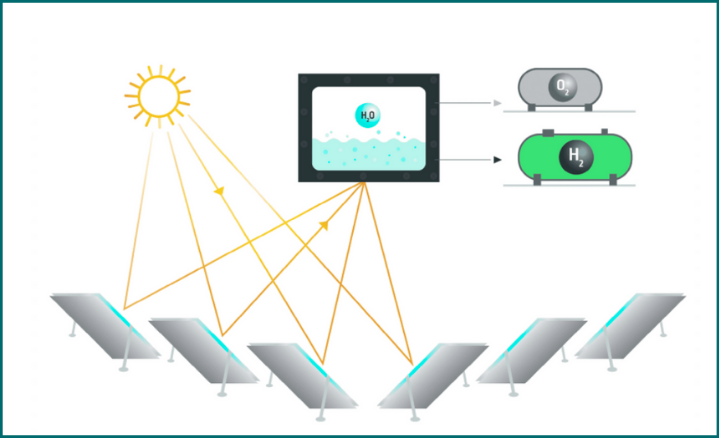
Sparc is developing photocatalytic water splitting — a process that uses sunlight and a specially engineered photocatalyst to split water directly into hydrogen and oxygen.
The company's MD Nick O'Loughlin says that distinction is becoming critical as the economics of electrolysis, once treated as inevitable, collide with stubbornly high power prices and a tougher investment climate.
YOU MIGHT ALSO LIKE

"The cost of electrolysis and the green hydrogen that comes from that process is really driven by the cost of power," O'Loughlin said. "Nonetheless, it's not coming down. In fact, it's only been increasing for consumers and businesses alike."
That reality has forced a reckoning across Australia's hydrogen sector. O'Loughlin concedes the industry — including Sparc's backer Fortescue — moved too fast during the boom years, when export-scale ambitions raced ahead of commercial fundamentals. The correction has been swift: fewer grand export visions, more modest projects, and a renewed emphasis on technical risk, cost and offtake.
"Fortescue has pulled back from mega-scale, export-driven green hydrogen projects, while doubling down on research and development," O'Loughlin said.
"What we're pursuing is a direct conversion of solar energy into energy in the form of hydrogen."
That pivot has elevated technologies such as photocatalysis within Fortescue's broader development pipeline. Sparc now sits firmly inside that R&D orbit, with accomplished hydrogen expert Michael Dolan — Fortescue's head of R&D — taking a seat on the venture's board.

Making hay while the sun shines
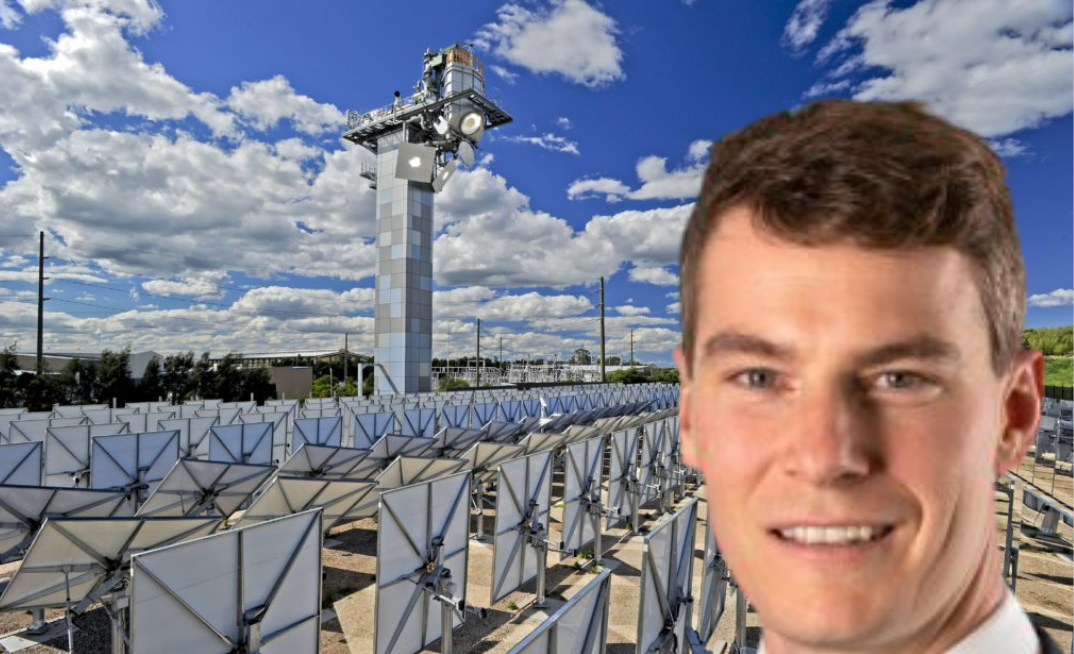
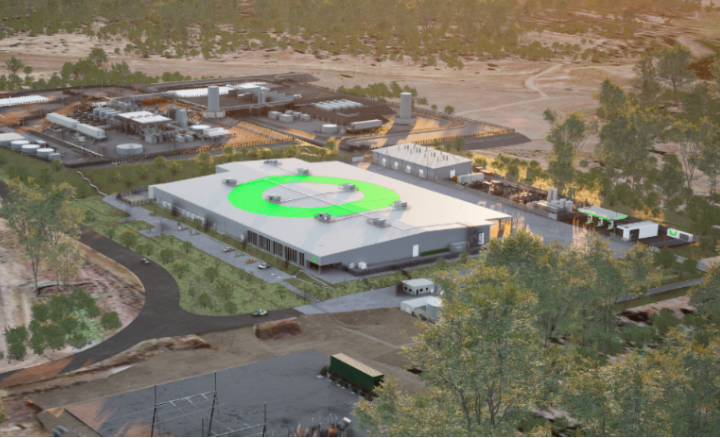
Sparc's moment comes with the commissioning of a pilot plant at Roseworthy, on a University of Adelaide campus north of the city. O'Loughlin describes it as a first-of-its-kind facility producing hydrogen via photocatalytic water splitting.
The plant is not designed to deliver commercial volumes. Instead, it is intended to bridge the gap between laboratory science and deployable infrastructure — a modular, engineered system that can be scaled. The pilot uses concentrated solar equipment purchased off the shelf and retrofitted with Sparc's hydrogen reactor and supporting balance-of-plant systems.
What we're pursuing is a direct conversion of solar energy into energy in the form of hydrogen, O'Loughlin said.
The strategy is deliberately pragmatic. Rather than reinventing every component, Sparc is trying to prove a path to scale by bolting modular solar mirrors end-to-end and progressively lifting reactor size and efficiency.
As with all hydrogen ventures, commercialisation hinges on offtake and capital. But O'Loughlin argues photocatalysis has a structural edge by reducing dependence on both the grid and long-distance logistics. Hydrogen, he notes, is "a very small molecule that wants to escape", making storage and transport expensive — particularly when production is far from use.
Producing hydrogen at, or adjacent to, industrial sites could materially reduce those costs by minimising storage volumes and transport requirements, while avoiding heavy grid infrastructure altogether.
Funded for success
Sparc is well funded for this stage, having secured a $2.75m federal government grant in July, alongside $2.5m in shareholder contributions and R&D rebates. The funding has supported the Roseworthy build, and the recent appointment of CEO, Alana Barlow, will lead the post-pilot commercial push.

Barlow brings experience from Queensland government and Sumitomo, and played a key role in the $111m Sumitomo–Rio Tinto Gladstone hydrogen project — Australia's largest green hydrogen project to reach final investment decision. Her brief is to shape Sparc's Hydrogen business plan beyond the next 12 months, deepen partnerships and prepare the investment case for a larger demonstration plant.
O'Loughlin is wary of repeating the sector's earlier mistake of promising headline-grabbing production costs without project context. Solar-driven hydrogen economics, he says, depend heavily on site-specific solar resources.
Instead, he frames the contest in terms of efficiency. Solar PV converts sunlight to electricity at about 20%, while electrolysers run at roughly 70%, leaving end-to-end efficiencies in the low teens. Photocatalysis has a theoretical solar-to-hydrogen efficiency of 30%, even if real-world performance today remains in the low single digits.
"Anything approaching or above 5% solar to hydrogen efficiency using our technology would be very competitive with electrolysis," O'Loughlin said. "And certainly, anything approaching 10% would significantly undercut electrolysis in terms of cost."
For a sector now defined by capital discipline rather than hype, the test is no longer ambition but execution: whether a pilot like Roseworthy can turn novel chemistry into repeatable infrastructure — and whether cutting electricity out of the equation is the fastest way to make green hydrogen stack up.
Sparc takes hydrogen pitch to industry
Sparc will take its message directly to the market next month, with managing director Nick O'Loughlin set to present Sparc's pilot results and development progress at the Energy Exchange Australia (EXA) conference. The appearance puts the Roseworthy project—and Fortescue's growing interest in non-electrolyser hydrogen pathways—before utilities, developers, and investors increasingly focused on cost discipline and execution, rather than scale for its own sake.
Formerly known as AOG, EXA has broadened its remit beyond upstream oil and gas, building on a 43-year legacy while expanding into hydrogen, carbon capture and storage, wind, decommissioning and the evolving role of gas in a decarbonising energy system.
The conference returns to the Perth Convention & Exhibition Centre from March 10–12, 2026, bringing together the global energy supply chain for three days of collaboration and technology exchange. Register here.