

Families and communities in regional and rural Australia are being divided as a result of political decisions taken about the rollout of renewable energy that are "unhelpful and misleading at best."
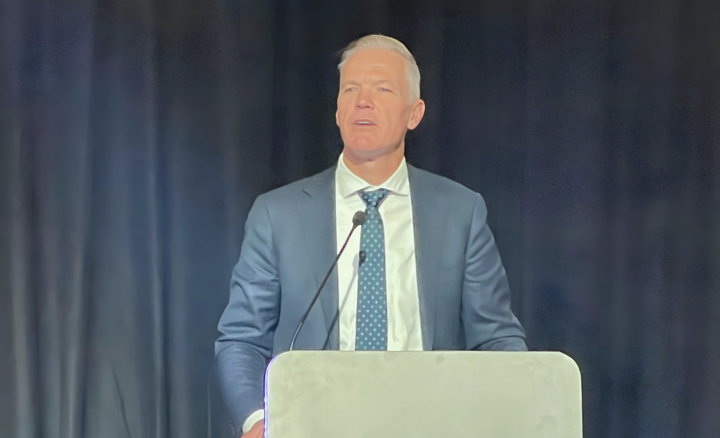
That's according to Tony Mahar, former National Farmers Federation boss turned Australia's Energy Infrastructure Commissioner (AEIC), as he addressed the Energy In WA Conference 2025 in Perth today.
In a speech that went some way to outlining the challenges of living in the rural, which are essentially playing host to the plethora of renewable energy projects, Mahar painted a concerning picture.
"Australia…remains open for business and we must recognise the critical role that foreign investment has played in Australia's history and will continue to play. That being said, the rollout of energy infrastructure in Australia does need to improve," Mahar said.
"Bloomberg estimates that $2 trillion worth of investment is floating around the world looking to land in renewable energy.
"The challenge for Australia is to make sure that it lands here and it doesn't crash around."
"What we have seen here in Australia is the energy transition is a case study of how geography and factors such as land and those who control the land, climate and the fact that it's changing - are shaping behaviour, and so the allocation of resources…and the distribution of those resources is absolutely critical."
Mahar argued strongly for the bush, highlighting the powerlessness many people in regional communities felt as the impacts of the energy transition steam through agricultural lands.
"For some communities, the energy transition has been good and will continue to be good," he said.
"They see the advantage of these opportunities. They see the jobs, they see the investment, they see the economic sharing, and we should highlight that that's what we should strive for. Unfortunately, that is not as common as what it needs to be."
And he dismissed the naysayers who claim farming communities cannot co-exist with renewable energy.
"I've seen sheep grazing underneath solar panels. I've seen crops right up to the bottom of turbines. So these myths, truths and misleading statements are making a difficult task much more difficult.
"But for others, we need to be honest and recognise that this transition feels like a threat to identity and a threat to livelihoods. In the worst case, communities feel like they're being bullied and bribed. They feel like they're not being heard. Their concerns are dismissed and the impact on their communities discounted and dismissed," he said soberingly.
He also highlighted the burden being placed on small, under-resourced local councils, engaging with powerful and experienced renewable energy developers, adding, "the power imbalance is being exploited and the benefits aren't being shared well enough."
But after painting this concerning picture, Mahar declared his belief that Australia – including rural Australia – must be open for business, but added that "the open for business sign must also say it won't be at any cost."
A lack of information and the existence of misinformation are "making a difficult task much more difficult than it needs to be…leading to disruption, division, conflict and delays."
As well as improved planning processes and clearer policy, as ever, in Mahar's opinion, it is engagement and a linking of arms that has the power to put the rollout back on the right path.
"We need to see a clearer and more compelling story and explanation and demonstration of the practical reasons of why this energy transition is happening. It's been done before, but it's not hitting the mark. I think we collectively need to link arms and tell and talk and discuss why this energy transition is happening, who it's happening to, where it's happening and what are the benefits," he said.
To conclude, he juxtaposed a country of "haves and have nots" in which the rollout of renewables had not been improved from its current standing, with a country in which developers and communities walk in lock step towards a "prosperous and vibrant regional communities that have long term benefits and long term legacies that allow us to protect and maintain the amazing assets that we have.
"If we can…get this right, we'll not only keep the lights on at home, but we'll light the way for the world, showing that a just, fair and prosperous energy transition is possible," he finished.
Published support
Separately – but right on cue to back Mahar's thoughts – comes news that Coexistence Queensland, a group which works to foster cohesion between communities and developers, have published a new guide to support landholders with renewable energy agreements
The Landholder guide: Decommissioning renewable energy projects outlines key issues for landholders to consider when planning for the end of a project's lifecycle.
The guide provides practical information and is designed to be easy to follow, supporting landholders to make informed decisions and negotiate agreements that protect their long-term interests.