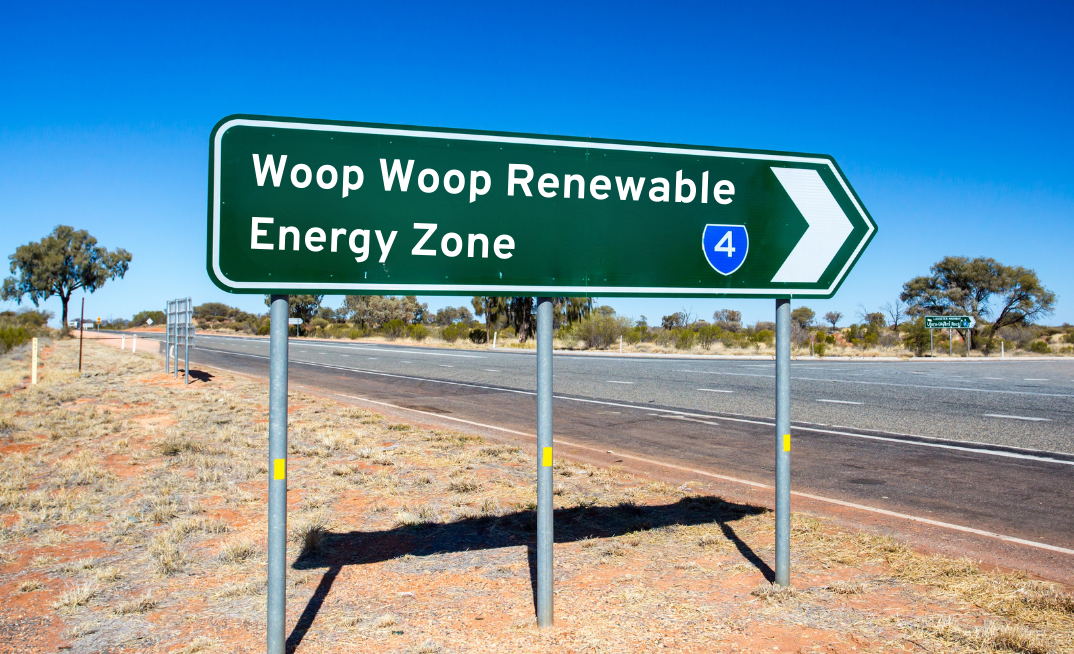


A consortium of renewable energy heavyweights has hatched a plan to sidestep community pushback by proposing its next clean energy hub in one of Australia's most remote regions.
The proposal – known as the Inland Renewable Energy Region – is included in a joint submission - seen by ENB - sent to the Australian Energy Market Operator (AEMO) as part of the consultation on the draft Integrated Services Plan 2026 (ISP 2026).
The consortium - including Squadron Energy, Spanish giants Iberdrola and Acciona and local developers Tilt Renewables, Ark Energy and Voyager Renewables – say the outback zone could support more than 10GW of new renewable power by the time it is fully operational.
YOU MIGHT ALSO LIKE
"The Inland Renewable Energy Region represents a nationally significant opportunity to unlock a large inland renewable corridor in far north-west and western NSW," said Iberdrola's CEO Paul Simshauser in the submission. "It offers a dependable and scalable source of renewable energy capable of materially contributing to NSW's future supply as coal retires."
"Existing [zones] are constrained by social licence, land use and hosting capacity limitations, while offshore wind faces high costs and long lead times. These factors underscore the need to unlock new inland regions with strong fundamentals and lower development barriers."
Details emerging
To even come close to becoming a reality, grid connections with suitable stability and capacity would be essential.
"A new high‑capacity inland transmission link is central to unlocking this opportunity. Technical assessments undertaken by the Collaboration Group confirm that multiple HVAC and HVDC configurations are capable of transferring 2–4 GW in an initial stage. Potential connection points under investigation include Broken Hill, Mt Piper, Bannaby and Wollar, all of which offer credible integration pathways into the existing network. As the corridor expands, further stages could align with future interconnection opportunities identified in AEMO's planning processes," notes the consortium's proposal.
The AEMO submission also calls for prioritisation of a cable project in the final version of ISP 2026, which is due to be published in June.
While the REZ plan predicts 2-4GW of power by 2035 and 6GW by 2040, it would not be a part of the federal government's 82% 2030 renewable energy target. Still, it would prove invaluable to meet the forecast demand surge set to be driven by new data centres, electrification and industrial loads.
"Additional transmission beyond the currently Actionable ISP projects are required to meet the pace and scale of transformation identified in both AEMO's modelling and the broader market," the submission reads.
"Preliminary analysis indicates strong alignment with least‐cost outcomes."
Long time coming
The plan – which has been a discussion point for many years in energy circles – progressed to companies signing an MOU in December to jointly assess the feasibility of building a major new transmission line to the Cobar region.
However, in 2024, Transgrid proposed in a report that a remote inland REZ could provide additional renewable energy sources, identifying western NSW as a region with "excellent potential."
Their annual Transmission Planning Annual Report (TAPR) detailed potential facilities to be developed in Broken Hill, Noona, or the Northwest Horizon regions. Transgrid said all of these regions have "some of the best" solar and wind resources readily available anywhere on the National Electricity Market (NEM).
At the time, Transgrid said they were actively exploring the viability of the inland REZs and developing multiple corridors from existing networks to connect them to the NEM.
To see how the REZ roll-out is tracking check our interactive map here.