

The Albanese government's last-ditch deal with the Greens in the Senate to get its environmental law reforms over the line is set to pay off just hours before environment minister Murray Watt's self-imposed deadline expires.
The breakthrough comes more than five years after Professor Graeme Samuel delivered his scathing independent review of the quarter-century-old laws, with the reform Bill passing into law today.
Speaking this morning, environment minister Murray Watt – who was given the troublesome portfolio with the express purpose of getting the reforms through – said it was a momentous occasion.
YOU MIGHT ALSO LIKE
"This is a landmark day for the environment in our country," Watt stated.
"These reforms will deliver tangible benefits for the environment and protect what is precious. But these reforms will also be a power surge of productivity for our economy, cutting approval times for key projects and injecting up to $7 billion into the economy,"
The package of bills, introduced to the house last month and still the subject of a senate inquiry that will report back in March, amends the 1999 Environment Protection and Biodiversity Conservation (EPBC) Act – described by the Prime Minister, Anthony Albanese, this morning as "broken and needs to be reformed."
The deal
In the end, Watt achieved his long-promised objective after days of intense bartering with the Greens and the Coalition.
Greens leader Senator Larissa Waters was quick to take credit for the passing, claiming it was her party's pressure that "made this bill better."
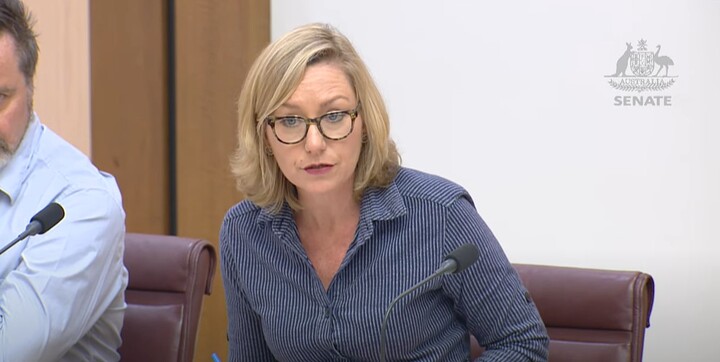
"[And] infinitely better than if the government had done a deal with the climate deniers in the Coalition."
The Greens' significant wins, including removing the ability for coal and gas projects to use fast-tracked approvals or the ‘national interest loophole' from the laws.
"The Greens stopped Labor's fast-tracking of coal and gas, but their straight up refusal to add climate to these laws shows Labor puts coal and gas corporate profits ahead of the millions of people who want to protect the climate," Waters said.
After a debate and a vote in the senate today, the bills will be sent back down to the House of Representatives for a final (procedural) vote before the house rises for Christmas.
Devil's in the detail
The government has proudly declared the new laws will "not only protect the environment for future generations but also deliver for business and the community by helping speed up decision-making for projects in key areas of national priority like housing, renewable energy and critical minerals."
New measures focused on environmental protections:
- a national environment protection agency to act as an independent regulator with a clear focus on ensuring better compliance with and stronger enforcement of Australia's new environmental laws
- national environmental standards, designed to ensure clear, strong guidelines to protect the environment
- higher penalties to be available for the most significant breaches of environmental law, as well as environment protection orders for use in urgent circumstances to prevent and respond to major contraventions of the law.
- the removal and sunsetting of the exemption from the existing EPBC Act for high-risk land clearing and regional forest agreements, meaning they comply with the same rules and standards as other industries
- a requirement for proponents of large emitting projects to disclose their greenhouse gas emissions and their emission reduction plans
- retaining the federal approval of "water trigger" coal and gas projects
New measures focused on speeding up decision-making for business and the community include:
- a new streamlined assessment pathway designed to reduce the timeframe for proponents who provide sufficient information upfront, providing an incentive to meet the standards upfront
- new bilateral agreements with states to remove duplication for the assessment and approval of projects
- regional planning set to deliver ‘go' and ‘no go' zones, aimed at delivering greater certainty to business, and future planning at a landscape scale, rather than project-by-project assessment
- a clarification of definitions of "unacceptable impacts" and "net gain" for the environment and restraining the operation of environmental protection orders
Liberals feeling sore
Predictably the response from the Coalition opposition, who will no doubt feel a little snubbed, was strong, with the Liberal leader Sussan Ley describing the Labor-Green push as a "dirty deal."
Sticking to her mantra of higher energy prices, which she has been citing since her party ditched net zero as a policy, Ley said: "What is absolutely clear is that this is going to put energy prices up and provide further pressure on electricity bills for struggling households and families.
"For the simple reason that the Greens have got what they want. The Greens Party has always been at war with gas. They've always been at war with the resource projects that make our country strong. "
Her environment spokesperson, Angie Bell, said the negotiations that led to today's announcement were still ongoing late on Wednesday night.

"This will deliver more red tape for gas. This will deliver more red tape for housing. This is a problem for Australians when it comes to jobs, productivity, and investment in our country. This will slow us up, and it's a very bad bill for our economy," she added.
Reaction
As ever, the sector has not been backwards in coming forward. Here's a digest of the reaction:
The Australian Energy Producers CEO Samantha McCulloch described the deal as a "squandered opportunity to address the significant costs and delays in delivering gas to Australian consumers.

"Carving gas out of streamlined reforms is simply not in the national interest. The deal will entrench slow approvals, which will drive up energy costs, deter investment and further delay the new gas supply Australia urgently needs.
"By conceding to the Greens, the Government has chosen more red tape and uncertainty instead of enabling new gas supply," she said.
WA Chamber of Minerals and Energy's Director Policy and Advocacy, Anita Logiudice, said the lobby group is still concerned about aspects of the legislation, but remains committed to working with the Federal Government to ensure the reforms deliver improvements for both the environment and business.

"While the EPBC amendments provide the framework, their real impact hinges on national standards and regulations that are yet to be written – and on bilateral accreditation eliminating duplication and delivering Federal and State assessments simultaneously.
"The State and Federal governments must now put their shoulders to the wheel to fast-track negotiations, so WA can be accredited to deliver project assessments without delay," said Logiudice.
The Climate Council CEO Amanda McKenzie said: "This deal strengthens protections for our native forests and provides a faster yes to responsible renewable energy projects that cut climate pollution. That will help protect communities from rising power prices and climate damage.

"But this 2025 law fails the climate test. All new coal and gas projects still get a free pass on climate pollution. In fact, the law forbids the environment minister from considering a project's climate pollution when assessing whether it should go ahead. That is a gaping hole in a law that should protect nature from the ravages of climate change."
Greenpeace CEO David Ritter welcomed the agreement, adding, "The agreement announced today secures a significant improvement on the broken laws that for too long failed to deliver credible environmental protection. Removing the risk of fast-tracking coal and gas projects is also welcome.

"But the big sting in the tail is that the legislation still fails to address the enormous climate harm to nature from these sorts of projects. It still leaves the door open for the heedless expansion of coal and gas—major drivers of worsening bushfires, floods, and other climate disasters that destroy ecosystems and harm species."
WWF-Australia also welcomed the news, saying it offered nature a "fighting chance."
CEO Dermot O'Gorman said: "We're pleased to see a national environmental protection agency and guard rails to prevent the acceleration of fossil fuel projects and keep approval powers in Commonwealth hands. Of course, nothing is ever perfect, and there is important unfinished business."
"This new law means genuine progress for nature protection in Australia," said.
The WA view
Western Australia has played a central role in the progress of the reform, with the intervention of the state's premier, Roger Cook, leading to the efforts of the previous environment minister, Tanya Plibersek, coming to nothing in the previous parliament.
Speaking today, Cook said: "It could've been better from an industry point of view, but it could have been a lot worse.
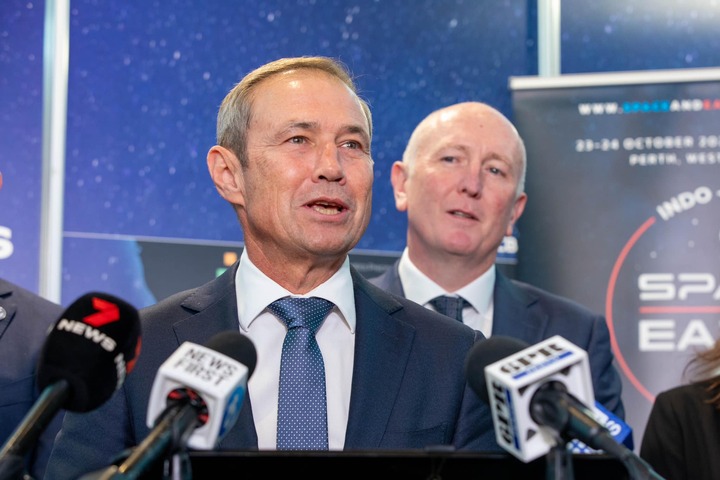
"There's no doubt that the legislative package has improved as a result of the deep engagement from Western Australian industry," he said.
He added that he saw it as a "missed opportunity" to do an agreement with the Liberal party to make sure this legislation perhaps reflected the concerns of industry.
"The Liberal Party are a dysfunctional rabble. They've been marginalised, basically led by the nose by Pauline Hanson and Barnaby Joyce , and quite frankly, they've let WA industry and the WA community down by not being better engaged," he said.
Referring to a social media post published by Cook on Thursday evening, the Greens WA environment spokesperson Jess Beckerling, said: "Last night, the Premier put out a video begging the Liberal party to do a deal with Federal Labor to pass environmental reforms that industry wants.
"This morning, we woke to the news that to improve the reforms that were on the table significantly Federal Labor ignored Premier Cook's pleas and instead made a deal with the Greens to significantly improve the reforms that were on the table.
"Premier Roger Cook needs to remember that he works for Western Australians who want to see the environment protected and a safe future for their kids and grandkids - not for the Chamber of Minerals and Energy."