Over the past few weeks the Australian dollar, and its “free world commodity currency cousin” the Canadian Loonie, have soared in value.
According to the latest available information, the Aussie has risen from around US77c to around US81c, and the Loonie is up from C84c to C87c.
To some observers, these moves of between US3c and US4c look like small beer.
But they’re not, for three reasons.
They have happened in the space of a couple of months, which is a tidal wave in the world of foreign exchange. They represent a significant cost increase for anyone spending US dollars in Australia and Canada. And they appear to represent a new trend in the global financial markets.
Slugcatcher, always on the lookout for trends in the business world, even has a name to suggest for what what’s happening.
In effect, we’re watching the creation of new category of currencies which might be called FWEC – short for “Free World Energy Currencies”.
Countries which belong to FWEC are those with an abundance of energy supplies, but are not members of OPEC, or the dodgy world of the former Soviet Union.
Canada, with its tar sands, coal, natural gas and uranium, is a foundation member of FWEC, as is Australia, with its reserves of coal, gas and uranium, and potential energy supplies from geothermal (long shot), solar (longer shot) and shale oil (very long shot).
The point being made by The Slug is that Canada and Australia are finally being recognised for the wealth they have in the ground (or in the air), and the role they will play in the future supply of energy to the rest of the free world.
The trigger for this sudden recognition by the investment world that the Aussie and the Loonie have been seriously undervalued was the latest Middle East crisis caused by Iran kidnapping a boatload of British sailors – which caused a rise in the oil price.
But the knock-on consequences of higher currency values will be far more interesting than this latest episode in the never-ending problems of the oil-rich Persian Gulf.
The most obvious is that capital costs, especially for construction work, have just risen quite sharply. Offsetting that is the potential for higher prices from the end product.
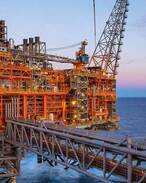
Backroom bean counters will be the best people to work out precisely what this means for projects such as Gorgon, and Woodside’s Pluto development.
Potentially, this is bad news – but not too bad, thanks to the higher commodity prices which caused the currency move in the first place.
For most energy-related projects, the rising Loonie and Aussie represent a hurdle to clear. It might cause problems in the capital raising stage, but the higher costs should (in theory) be offset by higher recurrent income – assuming it can be locked in.
The more interesting aspect of what’s happening on the currency market is that Canada and Australia are being re-priced into a new category by world markets, which seem to be saying that these two countries are shaping as the big winners from changes in the world energy mix.
Rather than simply having countries rich in “petro-dollars”, we now have countries which will be rich in “energy-dollars” as the global energy mix changes to include “new” energy products such as uranium, gas and alternative forms of oil.
Whether this is good news or bad news is uncertain – but it is news!