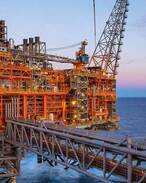
Without bothering to look at the causes, or the blame, the game now is to focus on how to fix the problems, and how to make sure that Australia's (if not the world's) most important mineral province is not left exposed to low power, or expensive power, or both.
The key, as Bonaparte and the Fuhrer discovered, is to ensure there are more suppliers travelling different routes. Loading everything onto one long road, or a single extended pipeline system in the case of WA's gas, is pure folly, as Alcoa, BHP Billiton, Rio Tinto and others are discovering.
More gas producers are needed. More pipelines are needed. And, above all, a completely open market is needed in which producers can charge the world parity rate for their gas.
Do all of that and the problem of one gas-processing plant catching fire is absorbed by the wider system, avoiding the sorry sight of mines switching to super-expensive diesel, or factories cutting output.
But the first step towards a solution is to eliminate what's not wanted. In a word: government.
Finding a long-term answer to the Varanus crisis, or something similar in the future, does not under any circumstances require a government-imposed solution because, if you look closely, you will find the dead hand of government all over Varanus, as it was all over an earlier Woodside gas outage.
To explain: Slugcatcher is suggesting that government in WA has dithered and delayed on a myriad of largely irrelevant issues designed to impose its will on the petroleum industry.
Why it has done this is a great unknown. Perhaps it's because left-leaning governments distrust all profit-making businesses, and save their greatest dislike for the petroleum industry because it is the most profitable.
Whether it is turtles on Barrow Island, or rocks art on the Burrup, government has found a way to stop things happening rather than to encourage them, which is what it ought to be doing.
Worse than turtles, however, is the crazy notion that government can impose production quotas that specify the retention of gas for the domestic market - with the objective being to control the price of gas for local consumers, which really means keeping gas prices down so the government can win the next election.
If you think The Slug is being a little histrionic, then you don't have the first clue about how government works. From the day it takes office, the only serious objective is how to win the next election, and that means making populist (rather than correct) decisions.
The gas retention policy is a classic. In WA, the State Government wants to impose a policy that says 20% of gas should be retained for the local market - code for ‘you can sell the other 80% as liquefied exports', but the balance is for hot water systems in marginal electorates.
Layer that policy over the appalling approvals process created by a government staffed by people who can't get jobs in the private sector and you have a logjam of global dimensions.
Rather than bringing forward the development of some of the world's greatest natural gas deposits, we have disgraceful delays such as Gorgon slipping into its third decade of dormancy, and project developers in the far north looking to pipe their gas to Darwin for faster development approvals.
Capping it all off is the nonsense in Queensland of developing coal seam methane as an export business partly because WA gas is not being developed.
Varanus was a shot across the bows of WA and its miners. It came after Woodside's switchboard fused out.
Next time it could be something far more serious, leaving WA consumers to shiver in their cold showers, and for sections of the mining industry to close - and all because government isn't making decisions and encouraging new gasfield developments and new north-south pipelines.