I always find your commentary interesting. Until recently I worked for one of the gas majors and I worked closely on the Domgas issue.
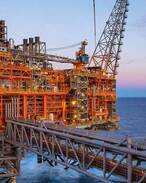
The development of new gas projects is complex and expensive and it takes a long time to make the development decisions, to secure market share to underpin the investment, to secure the finance required and to obtain the "shareholder", government and community approval to proceed.
You simply cannot wave the magic "policy" wand at this problem and beating up the current incumbents will not help. It simply won't work.
Policy changes like the reservation "policy", renewable energy targets (which affect energy demand) and the recent Federal Government tax changes which impact the value of condensate (which is often a key value contributor in gas project economics), as well as the approvals processes you alluded to all serve to make the challenge harder.
In addition, its policy objectives across multiple portfolios (energy, industry and environment) are contradictory.
The WA Government does not have an energy policy (and it has never had a coherent one). As a result it, along with previous governments, has painted the WA community into a corner.
Based on extensive research it is clear that WA's only viable short-medium term energy option are gas and perhaps significantly more coal-fired baseload power than people would care to admit, but this contradicts the WA Government's stated Greenhouse Policy objectives (and is thus politically unpalatable).
Nuclear is NOT an alternative, despite the protestations of connected parties, because of technical, financial and demand profiles and spending any time looking at this option for WA will be a plain waste of time and taxpayers money. Renewables will continue to be a bit player for a variety of reasons.
More gas will be developed for both domestic gas and LNG, but people need to understand the economics of projects and the nature of the WA demand for energy and particularly for gas (it is very spotty).
The Governments, both Federal and State, need to stop getting in the way by imposing contradictory policies and economic "disincentives" to development.
Hopefully, out of this mess someone will finally develop a clear picture (model) of our energy requirements and then use it to develop internally consistent policies and practices to deliver better outcomes for the community.
PS - the companies which are bleating about losing gas supply and paying more for energy need to be "slapped" for failing to adequately understand their business risks and to prepare to address them should they arise. They can't say they weren't aware after Longford (which had the same impact in Victoria) and the recent incident at the North West Shelf.