The week in review
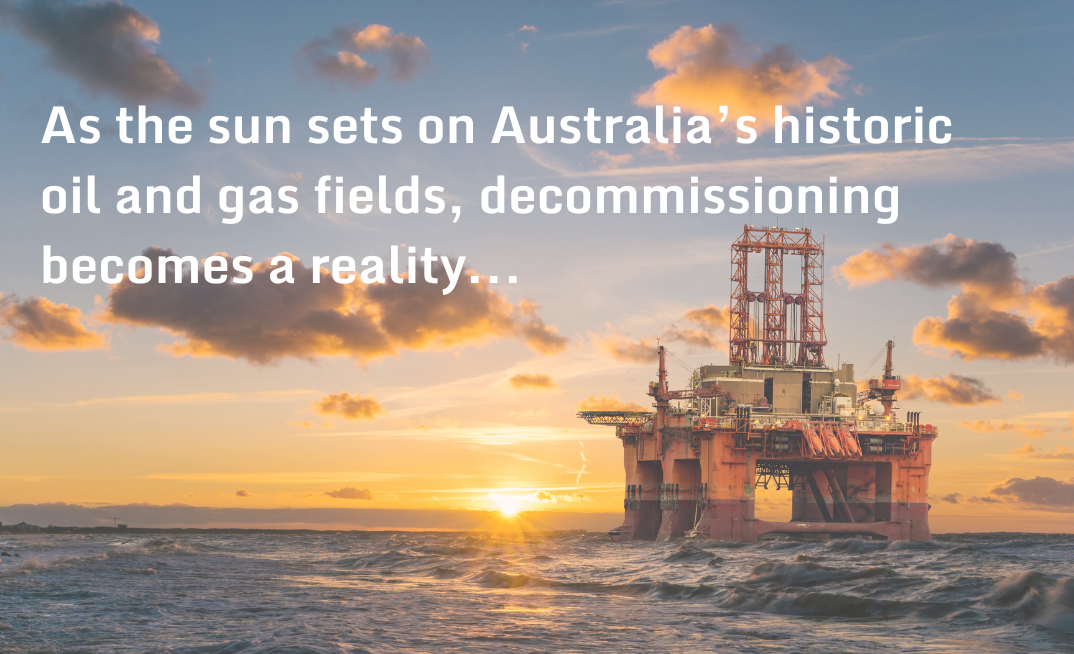
Australia has been in the business of extracting energy from the ground - be it oil or gas (or indeed coal) - for many decades, and whether that's on land or at sea, we've proved immensely successful at it.
From the records of first onshore drilling for oil in the Coorong area of South Australia in 1892 and the first instance of offshore drilling in Albany Harbour, WA in 1907 to the discovery of the first commercial oil field at WA's Barrow Island in 1953 and the development of the Bass Strait in the sixties right up to the ongoing efforts to open up the Beetaloo Basin, Australians have a lot of skin in the game.
Masses of construction, masses of employment, masses of prosperity, masses of infrastructure on land, at sea and under the sea.
But as the maxim goes, what's goes up, must come down.
And the issue of decommissioning is now one which preoccupies the minds of thousands working in the Australia's energy sector.
Estimates and analysis varies, but the best assessments show there is about $60 billion worth of decommissioning work to be done in Australia's offshore sector with relatively little domestic expertise available to grapple with this equally huge challenge and opportunity.
Part of the challenge is as a result of a lack of forethought when the oilfields were originally developed.
For too long, the energy industry was content to build and drill with little thought for what would happen when the reserves dried up. Decommissioning considerations in permissioning documents was barely given a mention, consigned to a to do list for future generations.
Well, that time has come now as many fields - particularly the decades old Bass Strait region - near their end of production life. And like every good parent tells their kids "if you made a mess with your toys, you have to put them all away."
And until relatively recently that had been the prevailing wisdom - when the times come to decommission, the land (or seabed) needs to be returned to how it was before any exploration occurred.
But now masses of research is being conducted by industry and academia to investigate decommissioning in-situ - leaving aging O&G infrastructure in place with checks and balances and assurances that it's not corroding or leaching chemicals which might adversely affected the environment.
While of course this can potential be a huge money saver for industry, there are benefits to the environment too. In the case of offshore exploration, once pipes and infrastructure are installed on the seabed, they soon become living eco-systems, covered in coral and a haven and habitat for marine wildlife. Conservations always look to preserve wildlife habitats - why should these artificial "reefs" be considered as ripe for ripping up?
It's these kinds of questions and many others which will be debated ad infinitum at a conference which is being held in Perth next week.
D&A 2025 - billed as Australia's biggest decommissioning and abandonment conference - is a huge focal point for the growing industry and a valuable opportunity for exchange of ideas and thought leadership.
And it's leadership which is very much needed as the urgency means that foreign expertise circles to offer their skillset and in turn scoop up some of that $60 billion liability.
ENB will be at the conference next week and will be bringing you all the latest developments and announcements. And of course we'll be following the sector's progress as it tackles what Ursula Benson, Chevron Australia's asset retirement manager, earlier this year called the "absolute mountain of work ahead of us to do."
One Northern Endeavour is more than enough, don't you think?
Yours,
Russell Yeo
Editor
Energy News Bulletin
To get the best analysis and insight of what's happening in APAC's energy sector, sign up for a free trial.