The week in review
So much of the narrative in the media and elsewhere in the energy sector is focussed on how ill-prepared and exposed Australia is in the midst of the on-going Iran conflict.
How we are reduced to going – cap in hand – to our Asian neighbours, imploring them to maintain their supplies of liquid fuels.
And undeniably there's a certain amount of truth in that. And it's also undeniable that choices made by previous governments to close down domestic refineries have left us overly reliant on imports.
But while we're fixated on looking outwards for our energy security, a comment made by an INPEX executive in Perth this week perhaps reframed the narrative and showed what our Asian neighbours might be thinking when they look south to us.
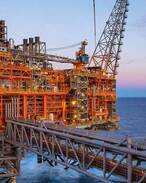
Speaking at the Nikkei Asia forum INPEX's Hitoshi Okawa, representative director, senior executive VP suggested that Australia is seen as the land of the plenty, certainly in terms of LNG.
"Australia has a very unique position. And also this is a kind of prime opportunity for Australia…some country, they're changing their portfolio from Middle East to non-Middle East, country such as Australia…How North Australia attract the world, global capital investment to Australia?" said Okawa, a man who knows a thing or two about LNG.
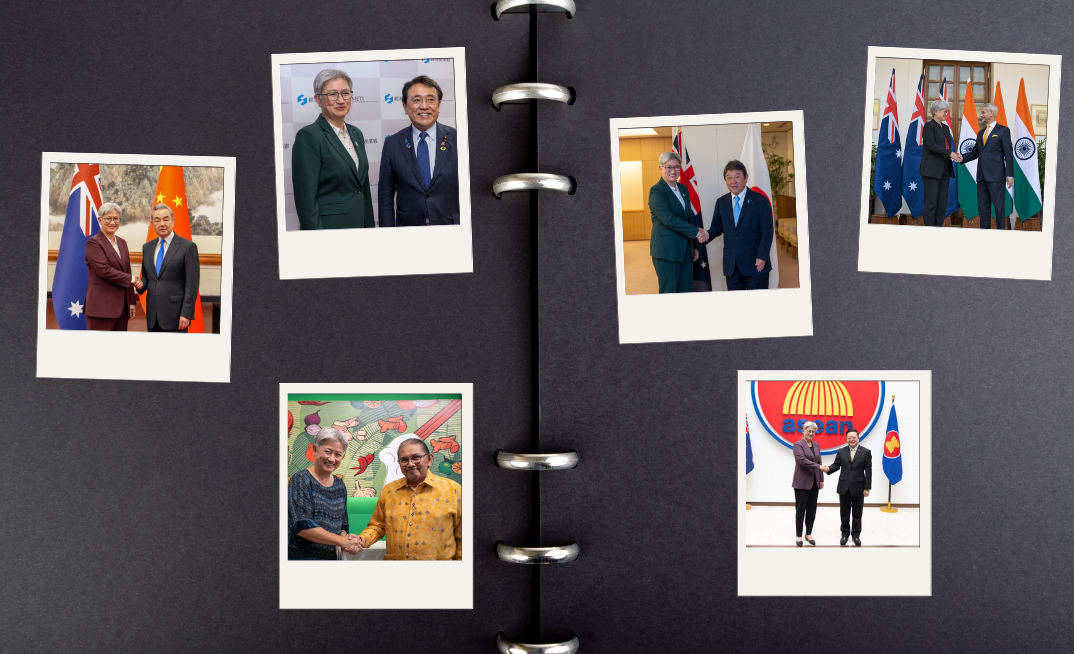
So maybe when our PM Anthony Albanese has been going to our Asian neighbours – while we have been seeing it as a begging bowl mission – he's actually been able to go in to those diplomatic meetings in a more powerful position, using our LNG export strength as his bargaining chip.
As the world possibly gets used to a new normal – a world in which the Middle East cannot be relied upon as a stable source of LNG – other buyers from around the world will look to Australia as a supplier.
And if we get more demand, maybe some of our Asian neighbours who've been used to a constant supply might be starting to get worried we could look to sell to other buyers.
And – reading between the lines of comments made by foreign minister Penny Wong earlier this week before she set off on another whirlwind trip visiting our Asian neighbours – that's a fear the Australian government is willing to use to best effect.
In a message to China, she told The Australian newspaper: "You need jet fuel to get the FIFO workers to the mines. You need diesel to run your mining enterprises, your mining industry, you need diesel to run your agricultural sector. The delivery of jet fuel to Australia enables us to continue to provide the exports that we export to the region."
In other words, you've stopped your exports of liquid fuels to us, so don't be surprised if you see us stop exporting our LNG back to you.
And then – hey presto – it's announced that Beijing has instructed Chinese state-owned oil companies to begin discussing fuel exports with Australian buyers, following meetings between Wong and her Chinese counterpart Wang Yi.
As Wong said at her Beijing press conference: "We receive diesel, jet fuel, petrol and fertiliser, and that comes back to the region in LNG, coal, commodities and food."
Diplomacy at its finest, eh?
And with news yesterday that PetroVietnam Gas, a unit of state-owned PetroVietnam, has received an Australian cargo of LNG as it looks to increase LNG imports amid the ongoing disruptions, it appears Okawa has a point.
On the other big topic that's dominating the energy sector's news agenda at the moment, we want to know what you think about the need for reforming the gas sector's taxation regime. Is PRRT doing its job? Should the government implement a new 25% tax? Please click here to take part in our poll - it'll take you less than a minute.
Yours,
Russell Yeo
Editor Energy News Bulletin
To get the best analysis and insight of what's happening in APAC's energy sector, sign up for a free trial.