

As Australia sharpens its focus on industrial decarbonisation, a remote research site tucked into Western Australia's south west is attracting the attention of scientists, policymakers and global energy majors alike.
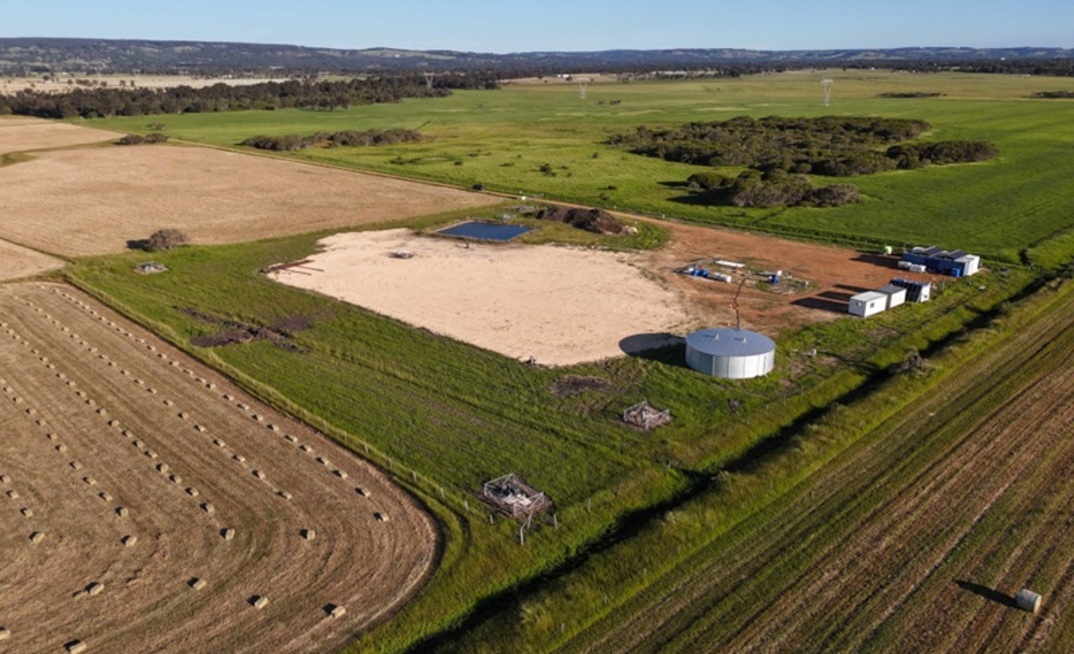
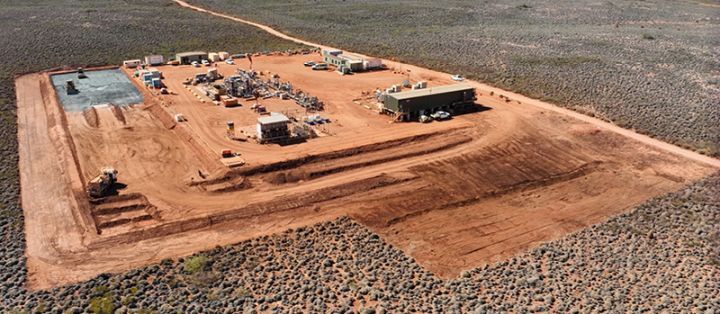
The In-Situ Laboratory (ISL), a purpose-built facility near Harvey, an hour and a half south of Perth, is turning Australia's complex geology into a proving ground for carbon capture and storage (CCS), one of the most crucial technologies for a net-zero future.
YOU MIGHT ALSO LIKE
A Unique Subsurface Experiment
Positioned within a natural fault system, the ISL – run by Australia's national science agency CSIRO - is one of the world's only facilities designed to study how CO2 behaves in such fractured environments—key to understanding containment, risk and long-term safety. Using advanced pressure sensors and geophysical monitoring, CSIRO researchers are simulating carbon injection and migration scenarios in real-world subsurface conditions.
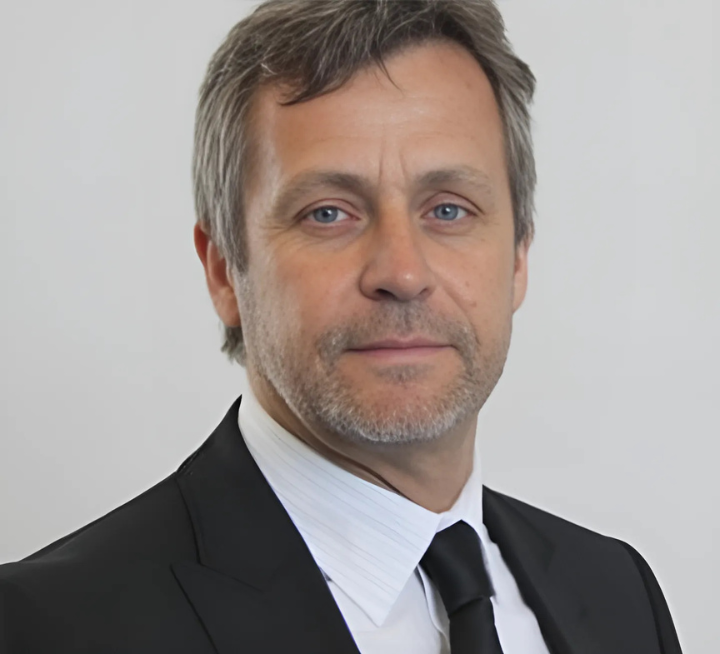
Damian Barrett, research director for CSIRO's Energy Resources Program, said the lab is tackling some of the biggest questions facing CCS.
"The ISL is designed to address difficult questions of how CO2 behaves in fault systems, how to monitor it safely and how to build public trust in CCS. It's not just a research site - it's a long-term platform for training, technology testing and regional upskilling. We're creating capability that supports Australia's low-emissions future."
He added the lab is part of a broader collaboration with Japan's Research Institute of Innovative Technology for the Earth (RITE), which merges Australian field science with cutting-edge monitoring technologies.
"It's an excellent example of the strong trust and bond between Japan and Australia, which can accelerate technological innovation. Industry is watching closely—there's growing demand for scalable, science-backed solutions for carbon storage."
Why CCS and CCUS matter
As principal CCS scientist at CSIRO Ludovic Ricard explains, CCS involves capturing carbon dioxide from high-emitting industrial processes and locking it away underground - something Australia is uniquely positioned to lead due to its extensive geological formations and subsurface expertise.
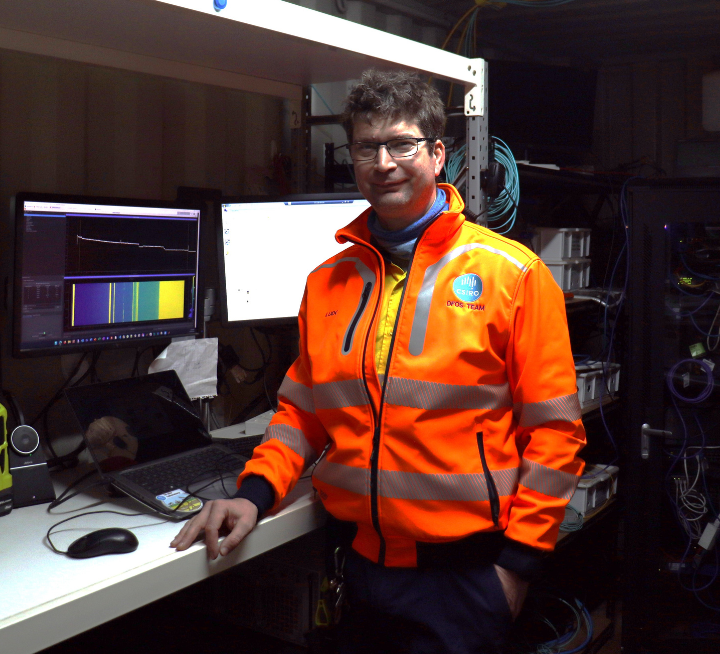
"If you think about cement or steel, they still rely heavily on fossil fuels. So how do we decarbonise those industries and still ensure that Australia remains prosperous?" Ricard said.
CCUS – which including brings in the notion of using the captured carbon carbon - opens additional pathways industrial processes.
Add into the mix direct air capture technologies (DAC) such as the CSIRO-developed CarbonAssist and Envina and the future possibilities are very appealing. "We're also exploring mineralisation, where CO2 is turned into rock, but the most scalable option remains geological storage. You can compress CO2 significantly and store more of it underground," said Ricard.
While the process of injecting CO2 underground has existed in oil recovery since the 1970s, Ricard said its purpose today has fundamentally shifted from extraction to emissions mitigation.
Chevron, Santos and Woodside: scaling up the CCS Push
The CSIRO site is one of several high-profile CCS efforts underway in Australia.
At Barrow Island, Chevron's Gorgon CCS project is one of the world's largest, with the capacity to store up to four million tonnes of CO2 annually. Despite early technical challenges, the facility has now injected more than 10 million tonnes of CO2, paving the way for industrial-scale deployment.
"We believe in the critical role carbon capture and storage (CCS) can play in a lower carbon world. As the IEA said in its report, CCUS in Clean Energy Transitions, reaching net zero will be virtually impossible without CCUS and our commitment is to accelerate progress toward the lower carbon ambitions of our company and customers," a spokesperson for Chevron told ENB.
"We're focused on leveraging our expertise and global reach to advance CCS technologies and scale lower carbon solutions across the value chain with a focus on hard-to-abate, energy-intensive industries—petrochemicals, refining, power, steel, and cement."
"In Australia, Chevron operates Gorgon CCS on Barrow Island, as well as interests in several other offshore CCS joint ventures," they added.
Likewise, Santos is moving rapidly at its Moomba CCS project in South Australia's Cooper Basin. As reported in its second-quarter update, the project is more than 80% complete and remains on track to begin CO2 injection by early 2026. Moomba is expected to store 1.7 million tonnes of CO2 annually, with the potential to scale up further - part of Santos' ambition to create a national CCS network.
"Moomba CCS also reached a major milestone in the second quarter, with more than one million tonnes of CO2e stored since project start-up," said Santos MD and CEO Kevin Gallagher.
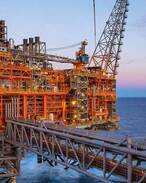
Meanwhile, Woodside is advancing plans for the Angel CCS project in what would be Australia's first offshore storage proposal.
"CCS is a proven solution - it's a well-understood process that's been in use since the early 1970s. As noted by the International Energy Agency, the CCUS facilities currently in operation around the world have a collective capacity to capture more than 40 Mt CO2 each year," a Woodside spokesperson told ENB.
"CCS has a key role to play in meeting the world's emissions reduction requirements. The successful deployment of CCS in Western Australia has the potential to create new jobs, protect current jobs, and contribute to reducing the carbon intensity of hard-to-abate sectors."
Global Links, Local Impact
CSIRO's Barrett and Ricard both emphasised CCS is more than just technical infrastructure - it's a long-term strategy to build industrial resilience and maintain global trade partnerships.
"CCS and CCUS are essential tools in the energy transition," said Barrett.
"They allow us to manage emissions from sectors that can't easily decarbonise, while also addressing legacy carbon. For Australia, they offer a strategic pathway to reduce emissions, support new industries, and help our regional trading partners meet their climate goals."
ISL also serves as a regional training hub, helping local communities and professionals gain the skills needed to support a growing CCS sector. Importantly, its building public trust through transparency and rigorous science.
From faults to foundations
As regulators, investors and the public scrutinise large-scale carbon projects, the kind of data emerging from ISL is essential. Rather than pushing forward with blind ambition, CSIRO says it is taking a measured, science-first approach—monitoring risks, refining modelling and sharing results across industry.
"We're not trying to inject the most CO2," Ricard said.
"We're trying to learn the most—so we can guide industry and government on how to do this safely and effectively."
CSIRO's work is complemented by research at the CO2CRC Otway International Test Centre in Victoria, one of the world's most advanced field sites for carbon storage. The Otway site provides real-world insights into CO2 behaviour, subsurface monitoring and modelling, and injection techniques—strengthening Australia's global leadership in CCS innovation. Together, Otway and the In-Situ Laboratory represent the scientific foundation on which safe, commercial-scale CCS deployment can be built.
From Barrow Island to the Cooper Basin to offshore Karratha, Australia is already home to some of the world's most advanced CCS infrastructure. But it's ISL's quiet work beneath the surface in rural WA that may ultimately shape the future, helping turn geology into a climate solution.
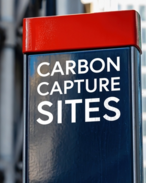
For more information on Australia's CCS sector, you can visit ENB's interactive CCS map here.