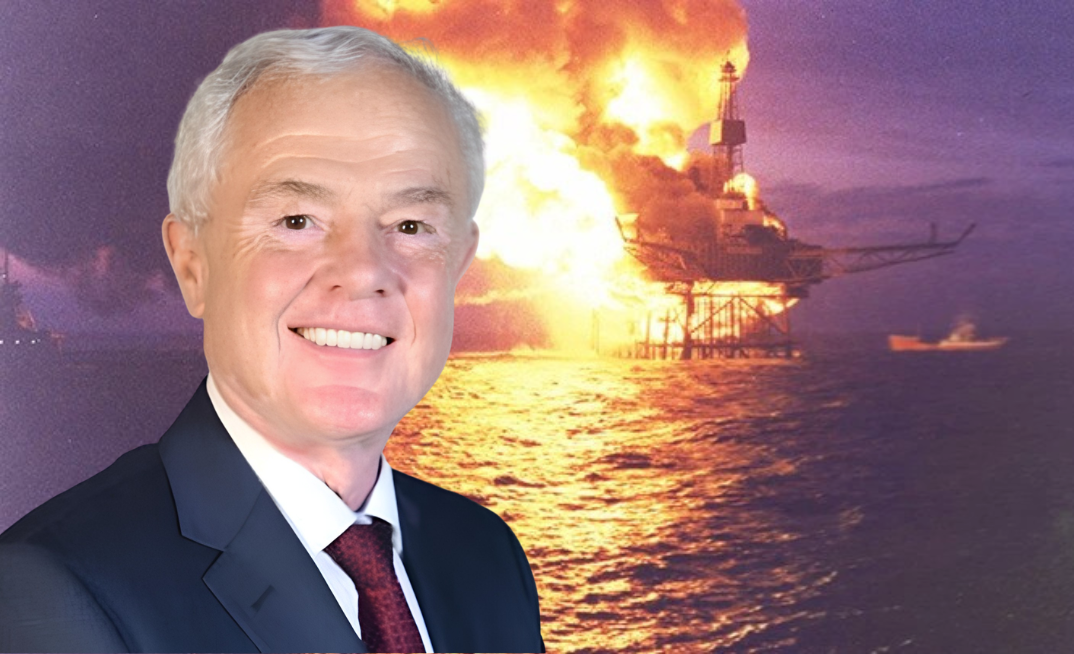


Not many people can say they faced death and escaped, and when Ed Punchard recounted his memories of surviving the Piper Alpha oil rig fire, you could hear a pin drop in the room.
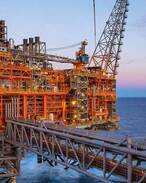
The devasting fire 38 years ago claimed the lives of 165 workers and two rescuers and has rightly gone down in history as one of the oil and gas industry's worst disasters.
YOU MIGHT ALSO LIKE
Punchard – who was a rigger on the infamous North Sea platform – now lives in Fremantle in Western Australia and, determined not to let the incident define him, has had an eventful life as a filmmaker, a diver, a submarine pilot, a maritime archaeologist, a public speaker. And perhaps most importantly as a father, a grandfather and a husband.
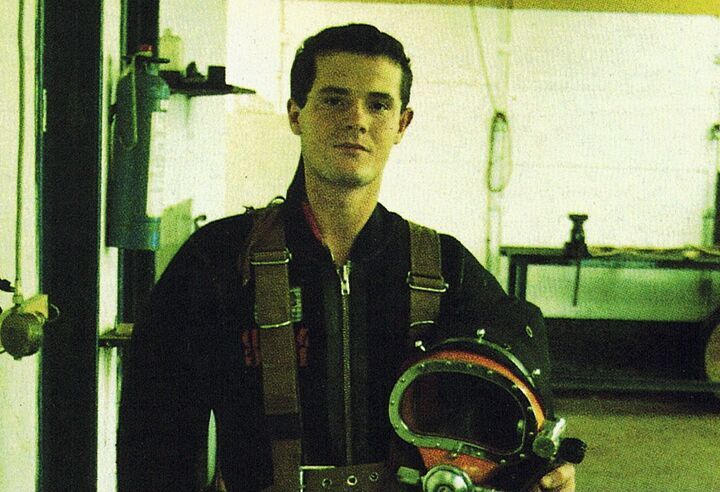
And ironically it's not the hours of safety training or years of offshore experience which pulled him through the harrowing escape – it was the thought of his young daughter.
While clambering to escape, a fellow rigger threw him a rope adjacent to life rafts.
"I get on it, and the first thing that happens is I fall. I fall about 10 or 12 feet.
"When I looked down, I could see paint starting to lift on the deck, and little wispy bits of old ropes started to shrivel," he recalled.
As he tried to take his riggers' boots off to alleviate some of the weight, one of them got caught on his foot, half on and half off.
"That was probably the most difficult time," Punchard somberly recalled.
"I thought about my baby daughter. And the great thing was that when I thought about her, the rope stopped slipping through my hand."
Traumatic night
The Piper Alpha disaster started with an explosion at about 9.45pm, with the blaze continuing through the night with flames 200 metres high. At its peak it was burning at 100GW - three times the total UK energy consumption at the time.
"I came out of my office, went up a series of stairwells, and all I could see was smoke.
"One of the control room operators was being carried down the stairwell, and a couple of the lads who were helping with him said, ‘Don't try and go that way, it's all smoke and flames."
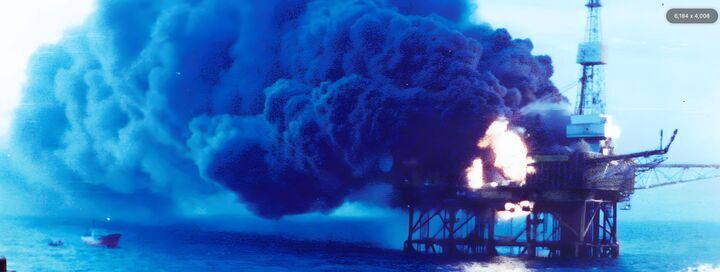
Located miles off the Scottish coast, rescue helicopters were still about two hours away and at first there was not too much concern.
"We're chatting away, just talking about last time Piper had blown up and how we'd probably all be off on helicopters in a short while and looking forward to a few pints at the pub," Punchard said
"But the smoke was getting thicker…and I could then see the extent of the fire, and I found it very shocking," he recalled.
Equipped with a skillset developed by intense training from his time as a North Sea diver, Punchard worked well under pressure to lead about 20 men to safety and triaged – a word he said he didn't know the meaning of until a decade later – the rescue helicopters when they arrived at what was left of the platform.
He also watched many of his friends and colleagues escape the blaze in hopes of safety, with five men believed to have jumped from the helicopter deck through the firewall to their survival.
It is unknown how many jumped and did not survive.
Punchard also recalled helping a coworker who later described trying to run across the pipe deck as walking on an ice rink.
Punchard said when he looked at his colleague's feet, the rubber soles of his boots were melted and on fire.
"That's why he was slithering as he ran," Punchard said.
"He put his hands on the red-hot handrail, and he jumped overboard, and when we got him on the Silver Pit [rescue craft], he had very badly damaged hands and feet.
"He has to climb up the rope netting on the side of the vessel. He's got these terrible burns on his hands and his feet. He can only get so far.
"I lie down on the deck, and I'm almost face to face with him, and I have to peel back his fingers because he's frozen on the rope.
"I managed to release his hands, and then we physically hauled him back on board."
Of the 228 men on board Piper Alpha on the night of 6 July 1988, only 63 survived. The bodies of 30 workers were never recovered.
As the summer Scottish morning dawned the devastation was clear to see.
"The sun comes up and Piper is almost completely gone," Punchard said as he recalled witnessing the facility being eaten by the fire and disappearing into the North Sea.
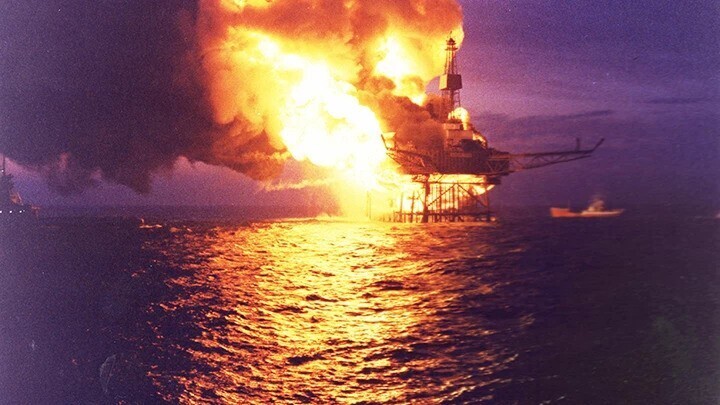
"We saw it sink. When the three risers fractured, the intensity of the heat was so strong the legs and the structural members went white hot. They were literally white hot.
"We saw them bend, and we heard them bend. It made the most enormous noise."
Retrospection
While Punchard admits the industry has changed and safety procedures improved, the consequence of a similar incident ever happening have not changed.
"I think everybody who's involved in this incident has suffered enormously as a consequence, but I think it's important to always consider the mindset component, the psychology of management and what your responsibilities are and how you manage your own decision making," Punchard said.
Despite Punchard himself saying he is happy he is not jaded by the event, the aftermath of the tragedy was something the survivor had to learn to live with.
"That's how I survived on the night, but how do you survive after an experience like that?"
Greatest fear
"My greatest fear is that I would not live a good life," Ed said, with the thoughts of the past in his eyes.
"There is something that stayed with me a very long time, ever since Piper, and I describe it as my greatest fear.
"Life is a blessing."
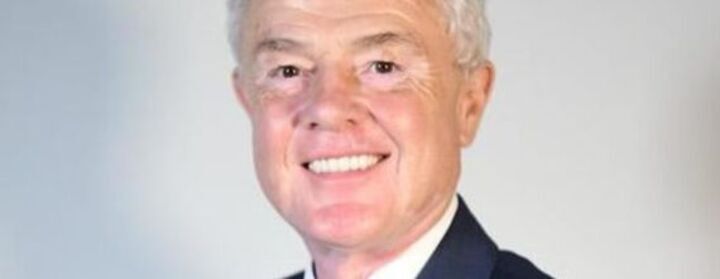
Reflecting on the uneasy life immediately after survival, Punchard recalled seeing the faces of those friends he lost.
"I had what I described as a visitation," he said.
"I thought I'd woken up, and there was somebody standing in the cabin in front of me, and he was an offshore worker. He had overalls on, but he was soaking wet, and he just stood there and looked at me.
"That was a dream - it must have been - but the truth is that in my waking hours, when my thoughts turn to it, I see faces.
"What I went through that night was nothing compared to others, and what I did that night was nothing compared to others. I'm really proud to have had a career in the oil industry, and now I'm more engaged with it again.
"I realise it's still part of me," he told the rapt room.