The flip side, however, is rosy, with national benefits worth at least $NZ204 million and possibly up to $NZ451 million if methanol manufacturer Methanex stays operating its plants at full production, the partners tell the commission in their application to jointly sell Pohokura gas, rather than in competition with each other.
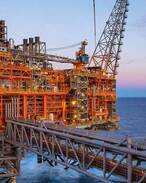
Pohokura partners Shell New Zealand, Todd Energy and Preussag Energie say production from the offshore north Taranaki field could start as early as late 2004 if joint selling and marketing of Pohokura gas is allowed. This would, to a significant degree, offset the anticipated decline of Maui.
However, they warn of delays of at least three years should the commission refuse their application.
The partners also submitted an independent report by Charles River Associates (Asia Pacific) in support of their application.
"In the context of increasing demand for gas and the imminent depletion of Maui, the timely development of the Pohokura field becomes critical for New Zealand. In our view, separate marketing would lead to delay in the development of
Pohokura, and significant subsequent welfare losses," says the CRA report.
"Possibly the greatest impact (of delay) would be on electricity generation. A significant rise in both gas and electricity wholesale prices would be expected, with blackouts a possibility."
"Speed of development of Pohokura is critical in order to avoid significant gas and electricity supply reductions," the report adds.
With joint selling, production in 2004 would be 15 Petajoules of gas, rising to 30PJ by 2005 and a ceiling of 70PJ in late 2007. Based on the estimated range of reserves and expected production rates, development costs for Pohokura could exceed $NZ1 billion, with the field continuing to produce gas and condensate until around 2020, says the 127-page CRA report.
The Pohokura partners say separate competitive selling of the gas "would be difficult, if not impossible, to overcome" and that separate selling would lead to extra transaction and production costs, with the field being depleted earlier than wanted. This would affect the value of the field and flow through to the whole industry, "significantly reducing exploration incentives in New Zealand".
The partners also concluded that the risk of no development at all, the creation of sub-economic pockets of gas, sub-optimal pool depletion and increased production and transaction costs would mean future gas exploration and production in New Zealand would be a less viable option.
However, the CRA report said authorisation of joint marketing would enable the Pohokura parties to make decisions to develop the field in a timely fashion, and would result in the field being developed "much sooner than would otherwise be the case." Authorisation would also send a pro-competitive signal to the marketplace and would act as an incentive to further participation in exploration and production.
The CRA report noted that in Australia, where market characteristics were similar to those in New Zealand, the Australian Competition and Consumer Commission had authorised the joint marketing of gas, such as with the North West Shelf project. "The ACCC has consistently recognised that separate marketing in the various Australian markets is not feasible, and that production would not commence unless joint marketing was authorised."