


The Albanese government has unveiled a long-flagged domestic Gas Reservation Policy requiring LNG exporters to set aside up to 25% of new gas production for the local market - a move the Coalition quickly attacked as a short-term fix that fails to address the structural causes of east coast gas shortages.
Under the scheme, exporters will be required to reserve between 15% and 25% of gas volumes tied to new contracts for domestic users, with the final percentage to be determined following industry consultation. The policy will apply only to new gas contracts signed from the date of announcement, with full operation slated for 2027 to give producers time to adjust, and will not retrospectively rewrite existing LNG export contracts.

The announcement coincides with the ACCC's latest report, which warns Victoria, New South Wales, South Australia, Tasmania and the Australian Capital Territory will collectively rely on surplus gas from Queensland and gas stores to meet demand.
YOU MIGHT ALSO LIKE
The latest forecasts suggest there could be up to an eight petajoule shortfall for the east coast gas market in the second quarter of next year, depending on the amount of uncontracted gas exported by the Queensland-based LNG producers.
Queensland is anticipated to have sufficient gas to meet local needs, while the southern states are projected to need an additional 26 PJ of gas through the quarter.
Energy minister Chris Bowen framed today's move as a landmark reform designed to shield Australian households and manufacturers from global price volatility while improving negotiating leverage for domestic buyers.
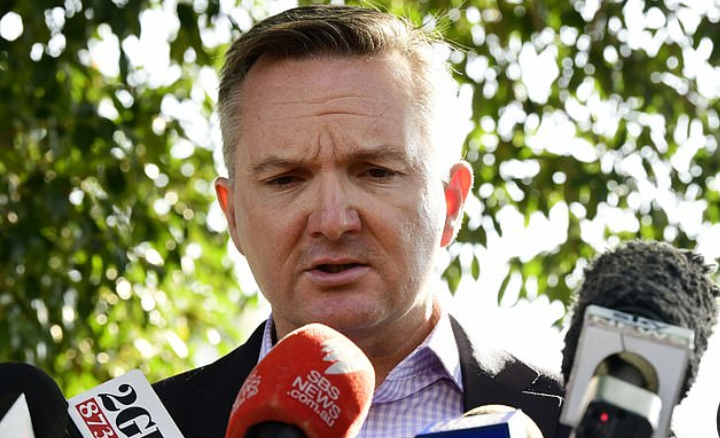
"Most Australians think that Australians should have first rights to the gas that's under Australian soil and Australian waters, and that gas should be available at reasonable prices. And Australians are right about that," Bowen said in Canberra.
But the Opposition said the policy amounted to "too little, too late", arguing it would fail to address looming supply risks.

"It will not commence market-wide until 2027 and does nothing to address the very real risk of shortfalls in the near term," federal shadow resources minister Susan McDonald said, pointing to the ACCC warning that the east coast gas market could face shortages as early as winter 2026.
Industry braced for tighter domestic obligations
The policy responds to repeated warnings from regulators and analysts of tightening east coast supply as production from southern basins declines and Queensland LNG projects continue to dominate reserves and export capacity.
According to the ACCC, Queensland LNG producers and their associates control or influence more than 90% of east coast proved and probable (2P) gas reserves, giving exporters significant sway over domestic supply availability and pricing dynamics.
Bowen said the government was seeking to strike a balance between protecting local users and preserving Australia's reputation as a reliable LNG exporter, stressing the scheme was designed to operate prospectively and would not undermine existing export commitments.
Still, the announcement has sharpened tensions with gas producers, which argue that reservation policies risk deterring investment at a time when new supply and infrastructure are needed to stabilise the market and replace declining legacy fields.
Key details yet to be resolved
Industry participants are seeking clarity on how the reservation mechanism will interact with foundation contracts, export permits and uncontracted gas volumes that could otherwise be directed into long-term LNG sales.
The Coalition said Labor's policy ignored what it described as the "root causes" of market failure, including insufficient investment in new supply, gas storage and pipeline infrastructure, and repeated market interventions that it says have failed to bring down prices while undermining investor confidence.
Unions claim victory after decade-long push
Supporters argue the policy brings the east coast closer to Western Australia's long-standing domestic gas reservation framework, which advocates say has helped underpin local industry and energy security.
The Australian Workers' Union (AWU), which has campaigned for a federal reservation scheme for more than a decade, described the announcement as a historic win for manufacturers and workers.
AWU national secretary Paul Farrow said requiring exporters to meet domestic obligations before securing export permits would strengthen bargaining power for local buyers and help protect jobs in gas-reliant industries.

"The best time to introduce an Australian gas reservation scheme was a decade ago. The next best time is now," Farrow said.
Environmental concerns over gas lock-in
Environmental groups were more sceptical, warning the policy could entrench reliance on fossil fuels if it were used to justify new gas developments rather than accelerating the shift to lower-cost renewable alternatives.

"If implemented effectively, this reservation policy should mean no new gas projects are needed — but without strong guardrails, it risks entrenching our dependence on expensive, harmful fossil fuels even further," Greenpeace Australia Pacific campaigner Geoff Bice said.
Analysts caution that while domestic reservation may improve negotiating dynamics for local buyers, its ultimate impact on prices will depend on supply growth, infrastructure investment and the pace of demand decline as the energy transition gathers pace.
With consultation still ahead, the government faces a delicate task: turning a politically potent announcement into a durable market reform without chilling investment or locking in higher long-term costs for consumers and industry alike.
Industry weighs in
Peak energy sector lobby group Australian Energy Producers (AEP) has cautiously welcomed the gas reservation policy but warn more needs to be done to encourage new supply.
AEP CEO Samantha McCulloch said industry supported domestic gas reservation in principle, but warned it must be explicitly tied to new supply to avoid deterring investment and exacerbating shortages.
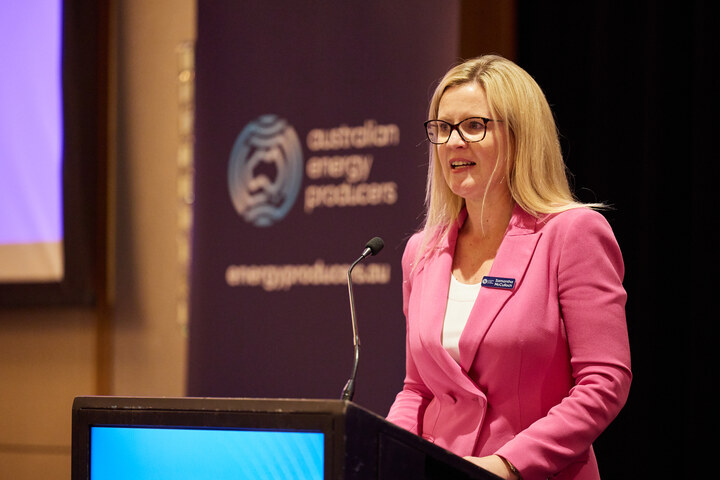
"As we said from the outset of this review, a well-designed, prospective reservation policy can provide certainty for gas producers and users to invest with confidence," she said.
"However, a reservation policy alone will not fix the east coast gas market. Bringing new supply online sooner, including in the southern states that are facing shortfalls, is the only sustainable way to put downward pressure on prices and keep the market well supplied for the long term."
Origin Energy (APLNG)
"APLNG acknowledges the fundamental reforms proposed including introduction of domestic gas reservation via an export permitting model to commence in 2027, however we note the importance of the policy design to ensure all exporters contribute to Australia's domestic gas supply first with no exceptions, and no loopholes. Australians expect nothing less.
"We look forward to contributing to the consultation process, and will continue to advocate for an enduring framework that provides long-term investment certainty and strikes the right balance between delivering sufficient, lower cost supply for Australian gas users and attracting investment in new supply in southern markets where gas demanded is strongest – getting this balance right will be key to ensuring a well-functioning gas market that delivers good outcomes for all participants over the long-term."
Shell (QCLNG)
"Today's announcement is an important first step. We have been supporting calls for domestic reservation, in which all exporters contribute equally, because it's in the national interest that we have an efficient, well-supplied domestic market alongside a vibrant LNG export industry.
"There remains more work to be done through the consultation process on a simple, equitable, and enduring model to sustainably increase supply in a way that avoids distorting investment signals.
"We look forward to working on the detail on the scheme in the new year."
Squadron Energy
Australia's first LNG importer, Squadron Energy CEO Rob Wheals, said Port Kembla Energy Terminal (PKET) would aid gas producers in moving gas to where it is needed in the most efficient way.
"Port Kembla Energy Terminal is the only regasification terminal built in Australia, with plans to be operational by winter of 2028 but with also the option to be in market in 2027," Mr Wheals said.
"The terminal can act as a virtual pipeline to deliver gas from Queensland, NT and WA to meet east coast gas needs. It can deliver gas more flexibly and at lower cost than a new pipeline, and on par with existing pipelines.
"A reservation scheme increases domestic supply while PKET ensures gas can get to where it is needed. We have built the terminal and connecting pipeline, we have leased the FSRU, we have appointed the operator and Jemena is reversing the Eastern Gas Pipeline to enable supply to Melbourne as well as Sydney."
The Port Kembla regasification terminal is connected to the Eastern Gas Pipeline (EGP) through a 12-kilometre pipeline, and is capable of covering up to 70 per cent of eastern gas market demand and supporting consumption peaks.
APA Group
"We are supportive of a domestic gas reservation and are hopeful the announcement today will ensure producers are incentivised to develop sufficient volumes of gas to ensure reliable and affordable gas supply for east coast consumers," said APA CEO Adam Watson.
"We encourage the Government, as they finalise their recommendations, to ensure that any additional regulatory powers do not inhibit or delay the much needed private investment required to bring their ambitions to life. APA is ready and willing to continue to invest in the infrastructure required to transport and store more gas around the country, but the regulatory and policy settings must encourage this investment.
"Governments across Australia now need to move quickly. Energy infrastructure underpins Australia's economy. Without ready supplies of gas and reasonable energy prices, industry and productivity will suffer. Manufacturing Australia was right in calling out that uncertainty around gas supply and energy prices is negatively impacting our domestic industrial sectors and they are right in calling for, among other measures, fast-tracking priority gas transmission and storage projects.
"APA is already moving forward to unlock the investment needed to support reliable and affordable energy through our East Coast Gas Grid expansion plan which will move more gas to where it is needed.
"Now is the time to prioritise unlocking domestic gas and supporting infrastructure. And we must stop suggesting that there will be uneconomic subsidisation of LNG import terminals - we have enough affordable domestic supply right under our feet."