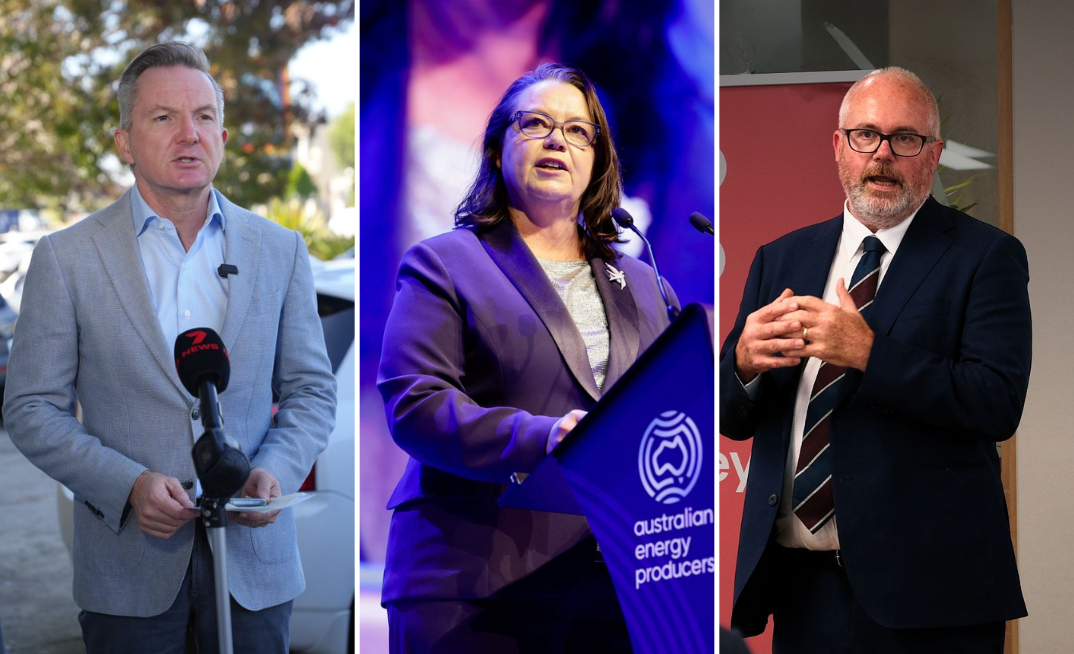


An apparent lack of coordination and communication between ministerial offices in Canberra has been revealed over the announcement of the government's gas reservation policy, which has sent ructions through the country's energy sector.
When ministers Madeleine King and Chris Bowen and Senator Tim Ayres held their press conference on 7 May to make the announcement, many in the industry were taken aback and surprised at the unexpected nature of the revelation.
Indeed, in the following days – while detail was still scant on the policy – many leading industry figures suggested its lack of detail was a result of the lack of planning.
Today, it appears there could be some basis in these concerns.
YOU MIGHT ALSO LIKE
Documents obtained under freedom of information requests filed by ENB show there was no communication between the three ministers' offices in the previous six months regarding the timing of the announcement.
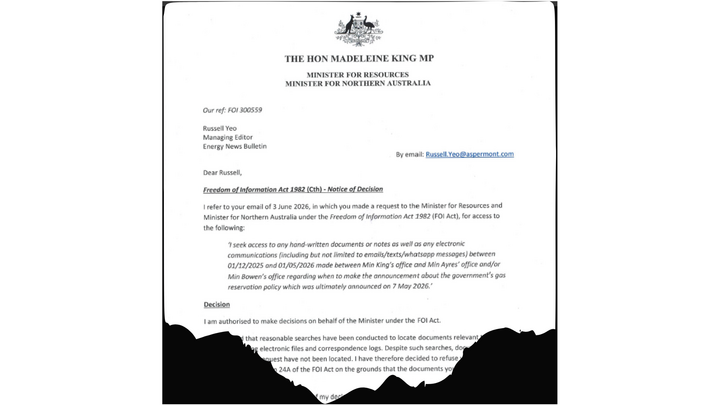
The three offices contacted all confirmed that despite the appropriate searches being made, they were unable to identify any relevant documents, including emails, text messages and even WhatsApp messages related to the coordination of the announcement of the significant government policy.
Unless the politicians' support teams only spoke to each other verbally on this issue over that six-month period – and failed to document these conversations – it is perplexing how King, Bowen and Ayres ever managed to find themselves at the same press conference on the same day at the same time.
Today speaking to ENB, the Queensland Treasurer and energy minister David Janetzki - who has been outspokenly critical of the plan, said: "Rushing through underdeveloped energy market interventions poses significant risks to the economy, jurisdictions and industry."
Bury the news
While the idea of the reservation scheme had been proposed last December, a formal announcement had been anticipated later this year following discussions with the industry.
One possible reason for both the suddenness of the announcement and, indeed, the lack of information gleaned through the FOI process, is that the government's announcement was rushed out to steal the headlines from the Green party's ultimately unsuccessful efforts to get a levy imposed on industry windfall profits.
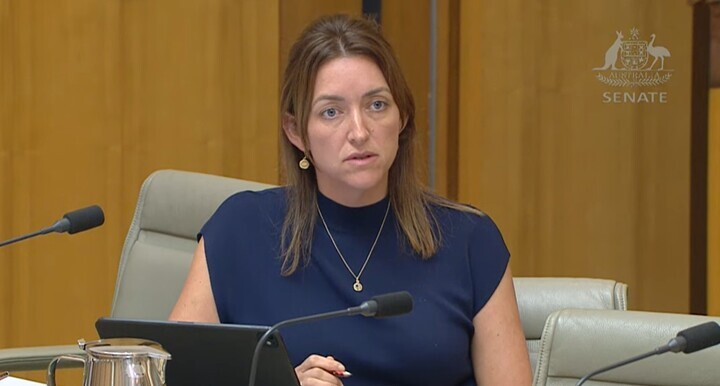
In the run up to the announcement, the Greens' Senator Steph Hodgins-May had run a Senate inquiry with 7 May publicly earmarked as the day the committee would table its report.
In the event, the triple-header government press conference somewhat took the wind out of the committee's sails and stole the headlines, something which was noted at the time.
Speaking to ENB today MST Marquee analyst Saul Kavonic said: "The reservation policy announcement was done purely to distract from the gas tax debate at the time, and the reservation policy was and still is nowhere near ready.
"Core design element questions, such as how demand elasticity, the relief valve or buyer behaviour that holds out for uncommercial terms are dealt with remains not only unaddressed, but not thought through at all."
At the time of the announcement Hodgins-May said: "Announcing this policy just before the gas export tax committee report is released, as if people aren't smart enough to know a distraction tactic when they see one, proves Labor is running a protection racket for gas corporations."

Indeed, at Senate estimates a short while after the announcement was made, Hodgins-May pressed the government on their chosen announcement date.
However, in response to her questioning, Senator Ayres said nobody in government was "remotely interested" in the publication of the committee's findings and he was unaware the select committee was due to publish their report on that exact day.
AEP's view
News of the concerning lack of cohesion in Canberra comes as the energy sector's peak body – Australian Energy Producers – releases their damning submission to the government's public consultation exercise on the reservation plan.
Referencing a self-commissioned analysis by Wood Mackenzie, AEP said the domestic gas reservation would undermine investment in new gas supply, weaken Australia's long-term energy security and ultimately make it harder to deliver reliable and affordable gas to Australians.
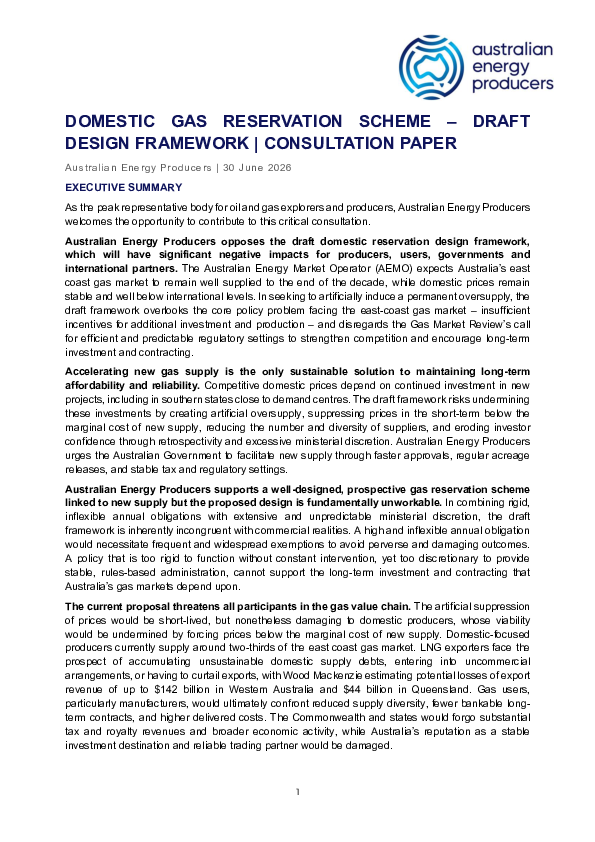
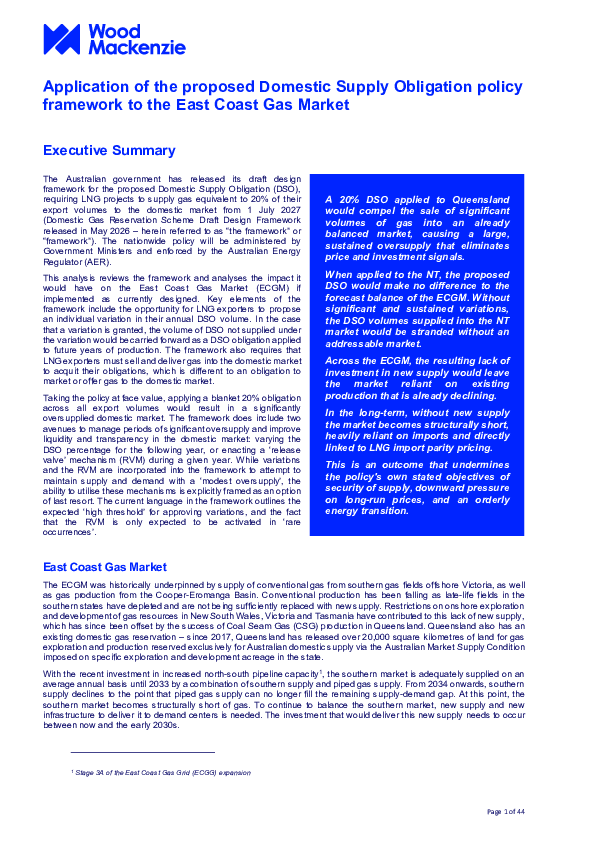
The analysis, published as part of the group's official submission, shows the proposal to require LNG exporters to supply 20% of their export volumes to domestic users every year would force more than 200PJs of additional gas into an already well-supplied east coast market, creating a massive structural oversupply that would undermine the investment needed to avoid future shortfalls.
AEP CEO Samantha McCulloch said the analysis confirmed industry concerns that the proposed framework is fundamentally unworkable and needs significant changes.
"The proposed scheme will ultimately result in higher gas prices for Australian manufacturers because it will destroy investment in future supply, reduce competition and risk reliance on more expensive LNG imports for southern states," McCulloch said.
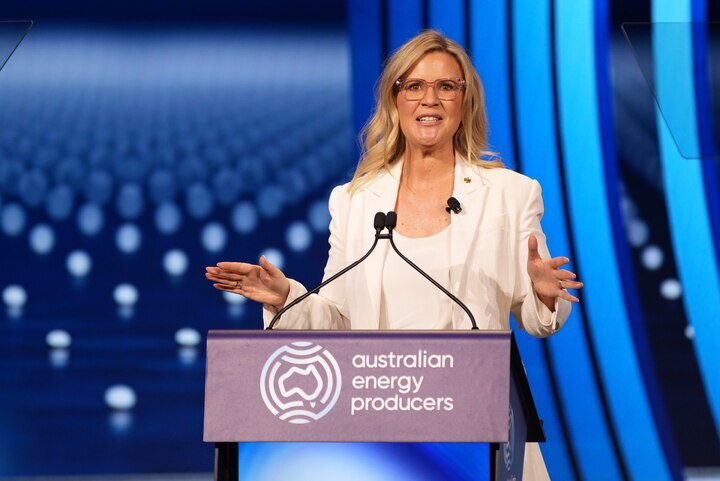
"It will have the perverse effect of reducing competition and stopping investment in Victoria and NSW where new supply is most needed."
The Wood Mac report also found the framework would crowd out domestic-focused gas producers that currently supply around two-thirds of the east coast market, discourage new gas exploration and development, introduce significant sovereign risk, and undermine Australia's reputation as a reliable energy supplier in the region.
Rather than continue with the scheme as it currently stands, AEP said the government must calibrate domestic supply obligations to actual market demand, fully protect existing contracts, and allow gas genuinely offered to the domestic market but not purchased to be exported without unnecessary regulatory hurdles.
They also recommended replacing annual ministerial approvals with a more predictable, performance-based compliance framework. The scheme, they said, should also recognise the unique circumstances of Western Australia and the Northern Territory and exempt these jurisdictions in practice.
"The ultimate test of a successful policy will be if it delivers a more efficient and predictable framework that encourages investment, maintains competition and strengthens Australia's long-term energy security," McCulloch said.
"However, the current proposal falls well short of this and without substantial changes it will ultimately lead to lower supply, higher prices and reduced tax and royalty revenue for governments.
"These reforms are complex and should not be rushed. Genuine and detailed consultation on the design is critical to avoid the same unintended consequences and damage associated with previous government interventions."