

The Australian president of global oil and gas giant Chevron said his US bosses are "confused and frustrated" by the ever-changing goalposts surrounding Australian gas reservation policies.
Balaji Krishnamurthy told a business audience in Perth this morning that Australia's policies and regulatory settings have negatively impacted investments in the energy industry.
YOU MIGHT ALSO LIKE
He said Australia's government policies – such as the gas reservation – have been changing rapidly, leaving investors and business leaders uncertain.
"[US headquarters] are confused and frustrated," Krishnamurthy said.
"Competition for capital is global in nature, and with what's going on around the world, we are seeing jurisdictions taking policies to make themselves more attractive for investment. When we are actually changing the roots of the game, like through the halfway point in a footy game for example, that creates a lot of confusion and frustration."
Having held the role of Chevron Australia president for about a year, Krishnamurthy further said the "confusion" surrounding government policies was not recent.
"I think we have seen this over the last few years, and it has spanned multiple governments, and this domestic gas conversation is one such conversation," he said.
"Not too long ago, we were talking about tax changes. Now we are talking about domestic gas. The cumulative impact of these things really erodes investor confidence."
Krishnamurthy said the level of frustration surrounding the uncertainty can be resolved by "stable, durable policies" and leaning into Australia's resource-rich advantages, agreeing with some energy policies proposed by One Nation leader Pauline Hanson.
"Look, there are a couple of things in the policy that is something we would support," he said about One Nation.
"First is the idea of leaning into the resource advantage that Australia has, which is the envy of many nations around the world, I think that is something that we would absolutely see as a good policy choice.
"As we have talked about many times in public forums, the regulatory settings that we have in this country are a real friction point for the investments to happen.
"Having certain timelines and faster approval cycles would be a good policy option. I'm not looking for easier approval. We want to make sure we still hold up our standard, but the ability to cut through that bureaucracy, the green tape and red tape to get to an approval step faster, whether it's a yes or no.
"I think those things are going to be really important policy positions, regardless of what party has that energy policy."
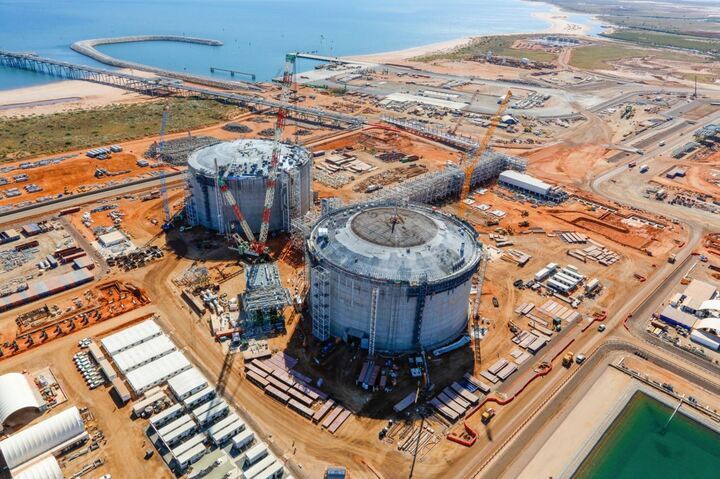
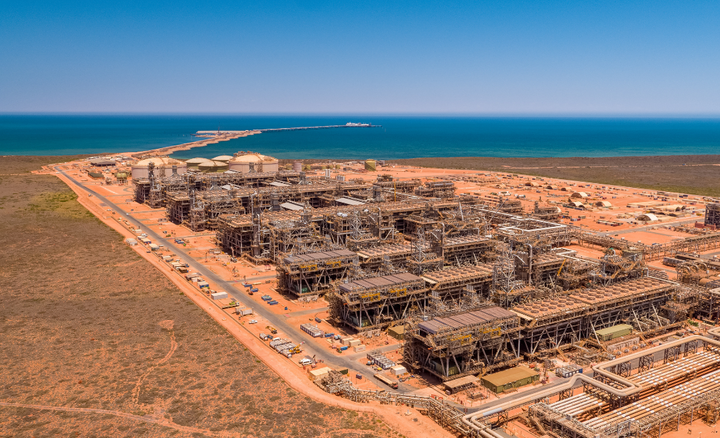
Chevron produces nearly 40% of Western Australia's domestic gas from major operations, including Wheatstone and Gorgon near Onslow and Barrow Island, respectively.
Krishnamurthy said while the energy transition is an important movement to undertake, there is a "deeper appreciation" needed for the role gas plays in Australia, particularly to support achieving renewable targets.
"I fully support the vision for higher renewable penetration, but the reality is gas still remains the backbone of our energy system," he said
"In a scenario where we are widely successful in achieving those renewable targets, gas is also going to be needed for firming capacity, and that gas is also going to be needed in Asia to help lower the carbon intensity of the entire global energy system."
"It is so easy to say no in today's world. It is much harder to say yes and have that political courage to step up and approve a project, especially in an environmentally sensitive area like Barrow Island."
Following the closure of Qatar's LNG facility due to strategic strikes during the ongoing Iran war, Australia became the second biggest global exporter of LNG, with Chevron serving both the domestic and Asian Pacific markets.
"Our gas also provides critical input needed for bedrock industries in this state, such as manufacturing and mining," Krishnamurthy said.
"Being a reliable LNG provider to Asia has been an important leverage point for this country, Australia, to secure liquid fuels during this time of unprecedented global supply shock."