

Australia's clean-energy ambitions hinge on a workforce that doesn't yet exist. A landmark workforce plan warns without a dramatic expansion of apprenticeships, trainers and training facilities, the nation's race to net zero could falter.
Industry players from Tasmania's hydropower valleys to WA's training hubs, are finding ways to bridge the gap if the funding can finally flow.
YOU MIGHT ALSO LIKE
Net zero meets a labour gap
Australia needs an extra 42,000 qualified energy trades workers by 2030 to support the transition to net zero, according to the Powering Skills Organisation (PSO) 2025 Workforce Plan, launched at Parliament House back in August. Without swift action, the shortfall will deepen well beyond mid-century.
The High Load, Short Supply – Bridging the Gap to 2030 report shows training has fallen 40% short over the past decade, leaving a current shortage of 22,000 apprentices. It calls for a 40% boost to the apprentice pipeline, from about 55,000 to 77,000 within five years.
"We have a once-in-a-generation opportunity to prepare our labour and training markets for a fundamentally different future," PSO chief executive Anthea Middleton said at the Canberra launch.

"If we get workforce planning right now, we can deliver a just transition that provides safe, stable and highly skilled careers for Australians while helping the world address climate change."
Middleton welcomed Fee-Free TAFE, a $91 million clean-energy skills package and a $30 million program to boost VET trainers, but stressed "there is still more to do" to break what the report calls a dual crisis of workforce shortage and skills transformation.
The promise vs the delivery: funding gaps and slow uptake
Even where funding has been announced, such as the $627 million clean-energy apprenticeship scheme designed to support more than 60,000 trainees, industry groups say the money has been slow to reach training providers and employers.
PSO's modelling warns unless funds like these are pushed quickly through to classrooms, trainers and employer incentives, the apprentice pipeline will remain blocked. Many employers say while the funding framework looks generous on paper, the processes for accessing it are cumbersome and slow, leaving apprenticeships unfunded and positions unfilled.
In practice, this all means Australia risks a mismatch between policy ambition and delivery: money allocated but not mobilised and a workforce ready to train but waiting for the resources to do so.
Bottlenecks at every turn
Despite record demand - more than 100 applicants for some apprenticeship intakes - three chokepoints keep the pipeline constrained:
-
Employers: SMEs that train 75% of apprentices face wage and supervisory costs without a clear return, while poaching of third- and fourth-year apprentices by larger contractors compounds the problem.
-
Training providers: Nearly 80% report a shortage of qualified trainers and 77% say their facilities cannot meet future demand.
-
Apprentices: Even eager candidates are stalled by long waits to start classroom training, slowing progression and inflating costs.
People behind the numbers
The pressures are written into the lives of apprentices and trainers across the country.
In Perth, Stuart Diepeveen, general manager of Electrical Group Training, says targeted support for older recruits is crucial:

"If you can remove the extra cost to an employer of taking on a mature-age apprentice, these trainees will be chosen every time. Funding for adult apprentices has really helped us get these candidates up and running."
And the trainees themselves are coming up against barriers too. Apprentice Jack Trotter, 22, has battled repeated college delays.
"Every time I needed to book block or day release there were delays. It was frustrating and it hit me financially," he said.
In Brisbane, Ro Lyon fears her four-year course will stretch to five, adding: "If I have any further delays, it'll have spanned five years in total to get my four-year apprenticeship."

In western Sydney, second-year apprentice Brooke Ross highlights both opportunity and imbalance.
"In my apprentice group at TAFE we're about 60% female, but on site there's usually only two females in a team of five or six."
Positive momentum
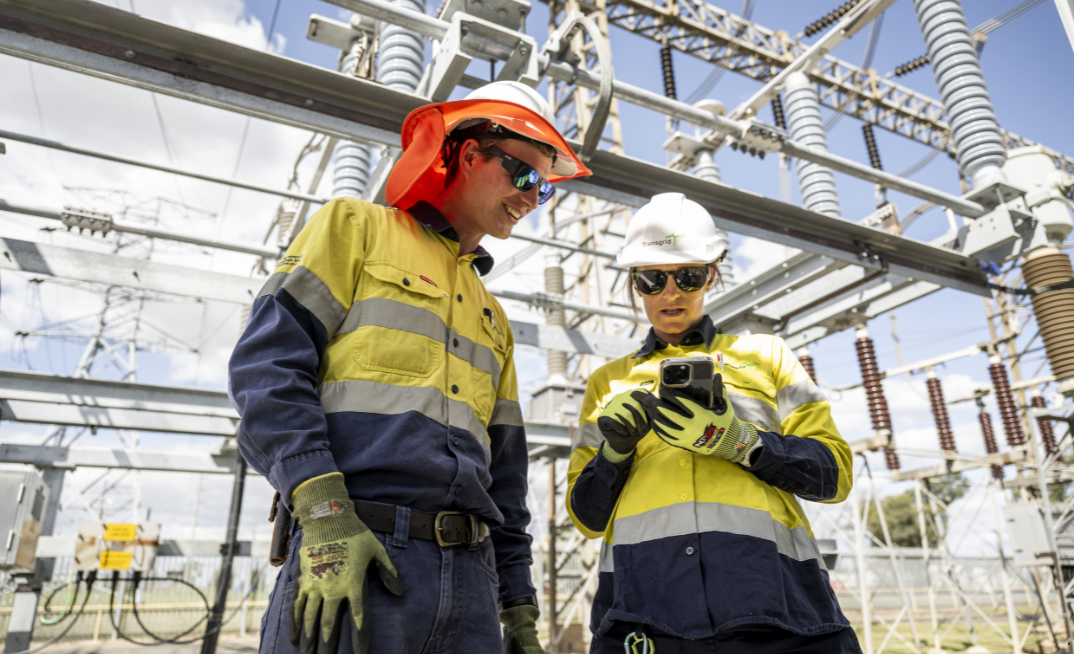
In the Hunter region, network operator TransGrid has injected fresh momentum into the clean-energy workforce. Over the past five years, it has taken on 86 apprentices across six sites in sectors like substation, telecoms and transmission line work. In January it plans to onboard 30 more. Through structured mentorship and field experience, TransGrid aims to build not just tradespeople but skilled network professionals.
Transgrid executive GM of Delivery Jennifer Hughes said: "Our apprentices are vital to Australia's energy future. We're not just providing jobs – we're developing skilled professionals who can support our transition to renewable energy and strengthen local communities along the way.

"Through comprehensive training and mentorship, we're committed to preparing apprentices not only for trade qualification, but for long-term, fulfilling careers.
Samuel Codrington, who started as an apprentice with Transgrid in 2021, now works as a Grade 1 Substations Technician in Newcastle.
Apprentice Amy Longmuir joined via a women's pre-apprenticeship program and says the support from senior female mentors was key in her path.
"I first connected with Transgrid through the women's pre-apprenticeship program. I've always wanted to do a trade – my dad and brothers are tradies – and a hands-on path felt right for me," she said.
"The training, learning and people are fantastic. I honestly feel like I won a golden ticket getting this job."
Beyond trades: industry-led pathways
The workforce challenge doesn't end with trades. Several companies are building multi-entry pathways from school outreach to graduate rotations.
-
The Clean Energy Council's Grid Connection Engineer Graduate Program fast-tracks electrical and mechatronic engineers through placements with developers, manufacturers, transmission providers and AEMO.
-
Zinfra and Engineers Australia are partnering to strengthen technical leadership and inclusion, targeting a quarter of apprentices and half of graduate engineers to be women by 2025.
-
Hydro Tasmania is running one of the country's most comprehensive training pipelines, bringing free STEM activities into schools and running Girls in Power workshops to lift female participation in Year 11–12 physics and engineering. They alsotake 17–25-year-olds onto live hydropower sites and run graduate programs which rotate participants through civil, mechanical, electrical, IT and environmental roles, with a guaranteed job at completion.
Hydro Tasmania engagement manager Sarah Metcalf says visibility is half the battle: "Women are still underrepresented in STEM industries, including the renewable energy sector. We need young women to feel they belong and can achieve great things in our sector."

Production Supervisor Jeramy Whitehouse-Summers, who started as a line worker apprentice, now manages a 13-person team on King Island.
"Supplying power to the community is a great passion of mine," he says.
"Hydro Tasmania has really supported and encouraged me throughout my career."
State-by-state strain
Across all states, women remain only 3–4% of the energy-trade workforce, though apprentice participation is somewhat higher. First Nations representation remains low, with incremental improvements in new intakes.
The PSO report provides striking regional snapshots:
-
Victoria needs 5,000 additional apprentices this year to keep pace with a 65% workforce increase since 2010.
-
Queensland's project pipeline has exploded tenfold in a decade; it requires 5,000 more apprentices immediately.
-
Western Australia has doubled apprentice numbers to 7,500 but still needs another 2,500 in 2025.
-
New South Wales is seeing strong uptake from network operators. In the Hunter region, TransGrid's apprenticeship program is expanding with 86 apprentices onboarded already and 30 more due, the company is actively investing in the next generation of high-voltage technicians.
-
Even the ACT, with just 3,000 energy-trade workers, must add 425 apprentices this year to meet net-zero goals.
Culture, capability and urgency
"Delivering a just transition means more than just numbers," Middleton said. "It requires cultural change so that women, First Nations people and culturally diverse workers can thrive."
Technological change adds another layer. Electricians already the largest occupation will see the fastest growth in new skill demands, from EV infrastructure and battery integration to digital fault-finding and automation.
Looking beyond 2030
The Albanese Government's new 2035 emissions-reduction target has set a target of between 62-70% below 2005 levels and has extended the horizon for the nation's clean-energy transition.
Prime Minister Anthony Albanese said the target "reflects both the science and a practical plan to deliver a future made in Australia."
In its advice, the Climate Change Authority described the goal as "ambitious, achievable and in Australia's national interest."
For the energy workforce, the new target pushes the demand for skilled trades, engineers and technicians well past the 2030 window. Large-scale electrification, grid modernisation and the integration of hydrogen, carbon capture and storage and long-duration storage projects will all require a second wave of workforce growth through the mid-2030s.
PSO says the lead time for developing skilled workers is measured in years, not months and the stability provided by a 2035 target gives industry the certainty needed to plan long-term training pipelines.
A 31-point roadmap
PSO proposes 31 actions across four pillars: capacity, capability, culture and confidence. They include:
-
a national apprentice register to connect candidates with employers
-
grants for training providers to expand infrastructure and hire educators
-
incentives for mature-age apprentices and early-year hires on major projects
-
rapid updates to the Electrotechnology (UEE) training package to reflect clean-energy technologies
Skills and Training Minister Andrew Giles said the government's New Energy Apprenticeship Program and VET trainer initiatives "will help grow the number of electrical VET teachers and get more Australians into the sector."
Time is short
Australia's energy-trade workforce has grown 20% since 2010 to more than 300,000 workers, yet PSO modelling shows a further 40% lift in apprentices is required to meet 2030 goals.
The challenge ahead is clear, turn legislative promise and budget allocations into functioning classrooms, funded trainers and real placements.
"The challenge now is to remove the barriers and ensure people can access the training and support they need to succeed," Middleton said.
"If we get this right, Australia can not only meet its own clean-energy needs but export those skills to the world."