

Australian pipeline giant APA Group has won a judicial review hearing against a Fortescue subsidiary regarding rival plans for wind farms in the Pilbara which has laid bare the contentious issue of the wake effect.
In a hearing in October, lawyers for APA took on Pilbara Energy in a dispute about plans for wind farm projects in the Chichester region of the Pilbara.
YOU MIGHT ALSO LIKE
Between September 2020 and April 2023, Alinta (who later sold the project to APA) applied for several licences to build a renewable energy project - the Chichester Renewable Energy Hub – which would be built by APA Pilbara Holdings.
In October 2023, Pilbara Energy also applied for similar licenses to construct their own 200-turbine, Bonney Downs Generation Hub on several tenements - some of which overlapped with Alinta's proposed locations and some of which were merely adjacent to Alinta's proposals.
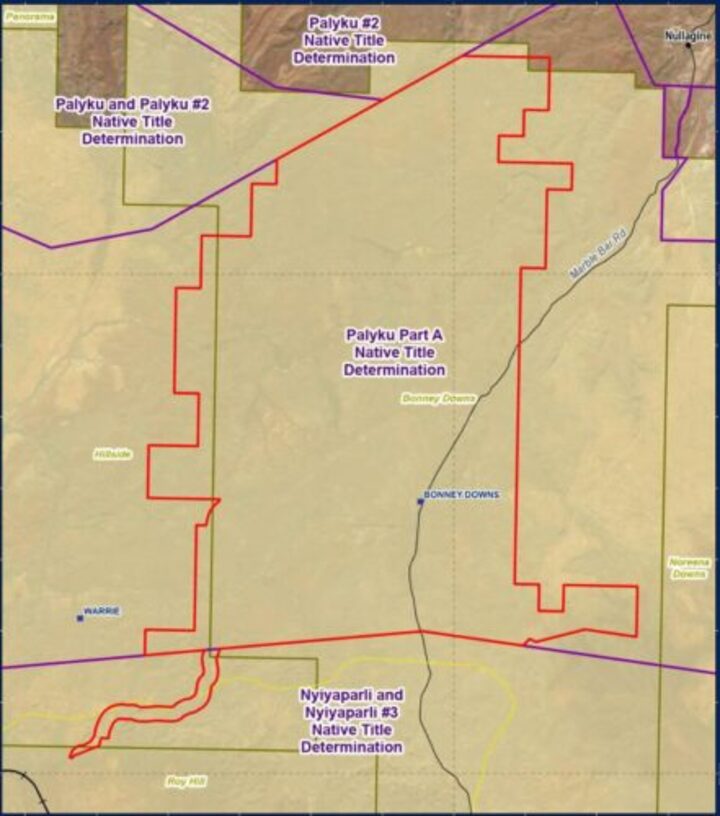
As required by the legislation, in early December 2023, Alinta lodged objections to Pilbara Energy's applications. This application, for objections to the overlapping areas, was lodged within the 35-day time limit. An application regarding the non-overlapping areas was made seven days outside of the time limit.
Alinta's objections were based on the premise that the non-overlapping licenses might detrimentally impact their Chichester Hub, as the wind energy might be lessened by Pilbara Energy's nearby array of turbines.
When Alinta appealed for a retrospective extension to cover its late application, Thomas McPhee, in his capacity as mining warden, refused the appeal.
APA Group, which in the intervening months had purchased Alinta's Pilbara interests, took the matter to a judicial review, heard in the Supreme Courts of Western Australia late last year.
In a judgment handed down earlier this month, Justice Alain Musikanth agreed with Alinta's/APA's ground of appeal and set aside. He set aside McPhee's previous dismissal, meaning the extension application will be reconsidered.
Alinta declined to comment - as it no longer owns the Pilbara assets - but APA said it was pleased with the result.
"We welcome the decision from the Supreme Court of Western Australia. Our project remains on track, and we are in the advanced stages of securing land tenure," a spokesperson said.
Wake effect
The issue at the centre of the case is likely to become increasingly common in both onshore and offshore disputes.
"Wind farms produce energy, and that energy is extracted from the air. And the extraction of energy from the air comes with a reduction of the wind speed," says Peter Baas, a research scientist at Whiffle, a Dutch company specialising in renewable energy and weather forecasting.
The wind is slower behind each turbine within the wind farm than in front of it, and also behind the wind farm as a whole, compared with in front of it, he explains.
"This is called the wake effect," he says.
Analysts say this wake can stretch more than 100km for very large, dense offshore wind farms, under certain weather conditions.
A wind farm built upwind of another wind farm, can reduce the downwind producer's energy output by as much as 10% or more, studies suggest.