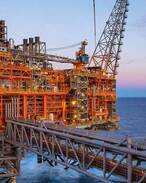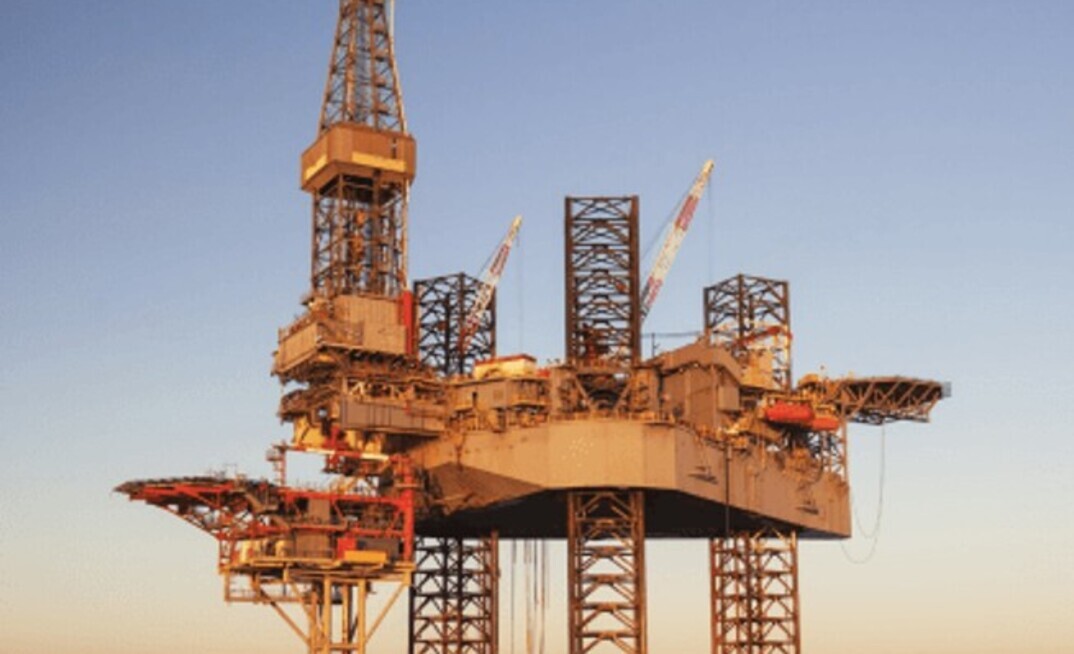


Santos will next week start work on removing their Harriet Alpha platform, the biggest offshore rig to ever be removed from Australian waters.
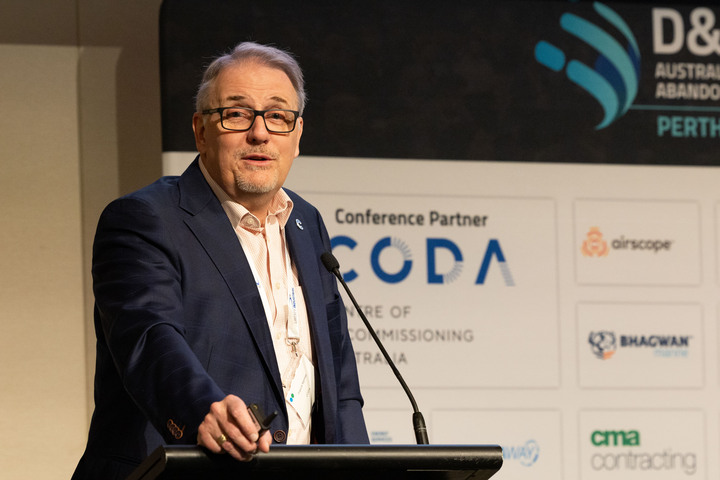
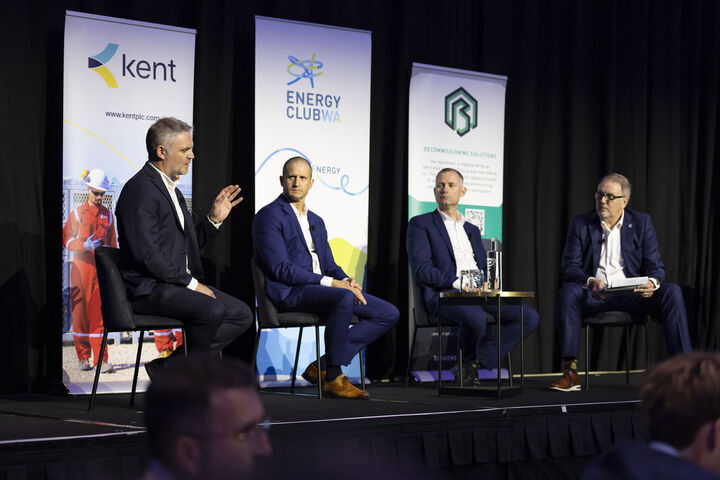
Speaking last night at an Energy Club WA event in Perth, Jason Young – the firm's general manager of wells, supply chain and decommissioning – spoke about the challenge ahead.
"We've got a big program coming up this year - it's about to start next week, actually - to pull out Harriet Alpha, which will be the biggest platform we've pulled out, probably the biggest platform that has been removed in Australia to date.
"So, we're looking forward to working with our partners, commencing next week, to pull that platform out safely and recycle most of that back here," he said.
YOU MIGHT ALSO LIKE
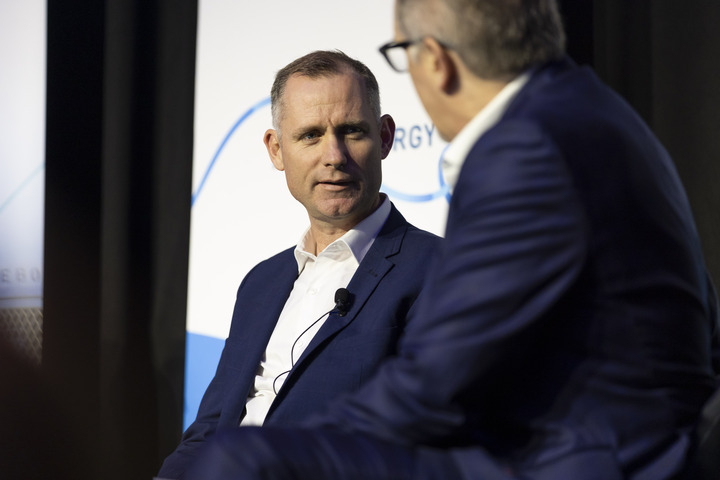
While decommissioning was once an element of the production process which was put off for engineers of the future to worry about, Santos is now well entrenched in having to address the challenges of dealing with their ageing oil and gas infrastructure as the field in which they have operated decline.
"Over the last six years, we've probably spent already a billion dollars in decommissioning in offshore through our twin ventures like Chevron on Barrow Island but also in our own operating space," said Young, referencing the two FPSOs which have been removed and the 40 wells which have been plugged and abandoned.
With decom work having to become such a focus for Santos, Young said the company has adopted a sustaining decommissioning model.
"We're keeping a flat activity for the next eight years and just working through our decommissioning obligations, starting with the high risk activities first, and then working down from there.," he said, adding that approach enables Santos to have a consistent spend of around $200-$300m each year and avoid "peaks and troughs" which in itself drives performance.
"We can start to build our own in house team that can start one project, take the learnings, take it to the next, and that's where the huge amount of value is going to be. Keeping your good team that we have currently got, and making sure those learnings keep getting passed through, from project to project to project to ride that continuous improvement train," he said.
Harriet Joint venture
Santos announced their intention permanently decommission the Harriet Joint Venture (HJV) offshore platforms and structures in their September 2024 environment plan which was approved by the Western Australian state government later in the same year.
The plan addressed removing the 13 platforms/structures located in WA state waters, approximately 115km west of the Dampier Archipelago, on Production Licences TL/1, TL/6, TL/8 and TL/9 in the Carnarvon Basin.
The Harriet Alpha platform – which Santos indicated in their plans would be removed to 900mm from the seabed - was installed in 1986 and is located in production licence TL/1 approximately 6km north-east of Varanus Island in approximately 22.8m water depth.
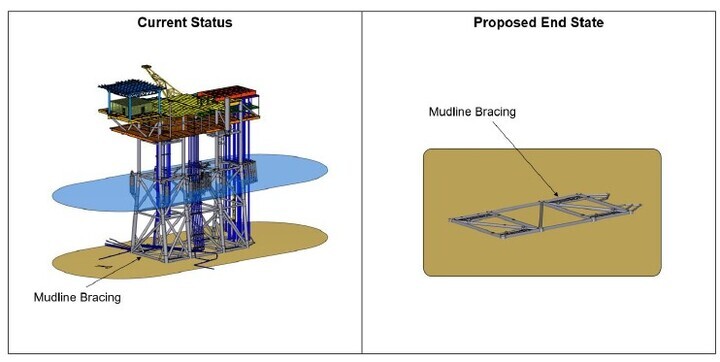
The platform comprises an 8-legged jacket substructure supporting four topsides modules (west deck, east deck, pancake on top of west deck and accommodation) and eight P&A'd wells.
The jacket supports externally nine conductors, four caissons, 10 risers and one I-tube. The jacket is fixed to the seabed via eight grouted sleeve/insert piles which protrude above the mudline by approximately 29m and 17m, respectively (internal to the jacket members).
Harriet Alpha is currently isolated from the wells and flowlines and bypassed subsea, so Harriet Bravo production no longer flows through the Harriet Alpha topsides. Six anode skids are located at the base of the platform.
Harriet Alpha
At the end of 2024 McDermott announced they been awarded the engineering, procurement, removal and disposal (EPRD) contract by Santos for the decommissioning of the Harriet Alpha platform and associated infrastructure, located offshore Western Australia.
At the time Mahesh Swaminathan, McDermott's Senior Vice President, Subsea and Floating Facilities, said: "This is our largest decommissioning project to date, reflecting our continued commitment to delivering bespoke solutions for the timely, safe, and environmentally responsible removal of infrastructure at the end of its operational life cycle.
"McDermott's growing decommissioning portfolio in Australia also underscores the commitment we share to continue supporting circularity efforts in a lower carbon economy."
The challenge ahead
According to data from the Centre of Decommissioning Australia (CODA), a membership body which is driving better decom collaboration in the industry, Santos has a total of 193 subsea structures, 72 offshore wells, 19 fixed facilities and one floating facility which will need to be decommissioned.

Speaking at the same event last night CODA boss Dr Francis Norman set out the challenges but also the opportunities ahead for the sector.
"This is what we're seeing right now...we have a lot ahead of us. But this is realistically solid forecast, which is one of the really nice things that makes it so interesting to be doing this work here in Australia, rather than in some other jurisdictions where these dates look the same every year - all they do is change the dates along the bar at the bottom," he said.