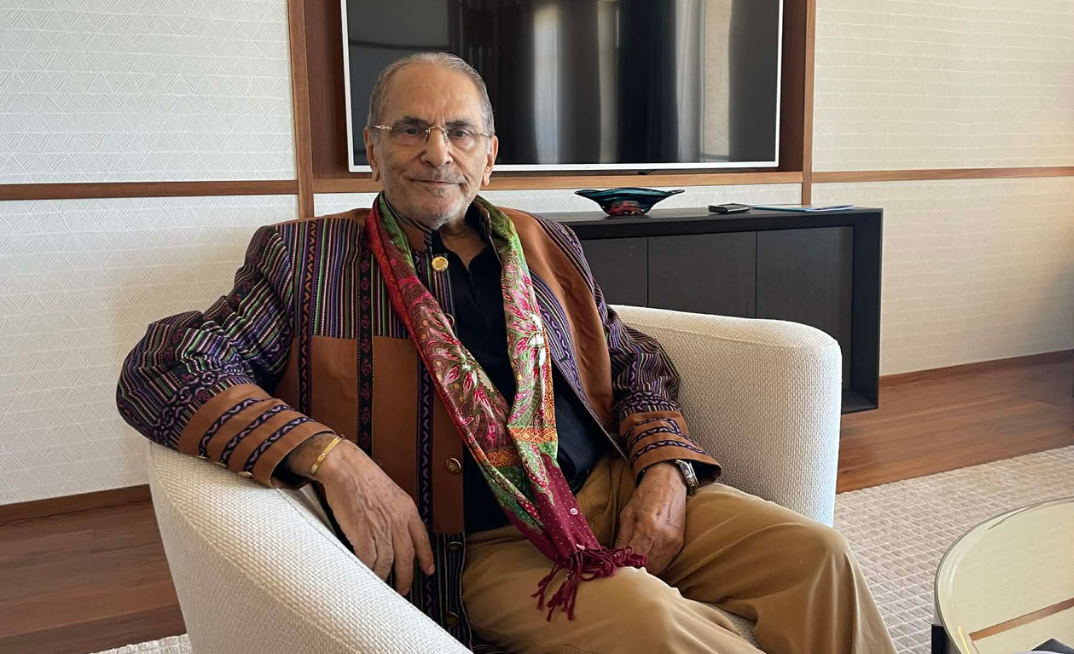


The president of Timor-Leste, Jose Ramos Horta, says he expects the partners of the Greater Sunrise joint venture - Timor GAP and Woodside - to announce in the middle of next year that the LNG project's processing facilities will be built in his island nation.
Discovered 1974, the Greater Sunrise fields hold a total estimated contingent resource of 5.3 trillion cubic feet of natural gas and 226 million barrels of condensate making it one of the most significant undeveloped gas resources in the region. The possibility of tapping into it as a viable project, has been kicked around for many years with discussion centred on the location of the processing facilities.
But recently momentum has been growing.
YOU MIGHT ALSO LIKE
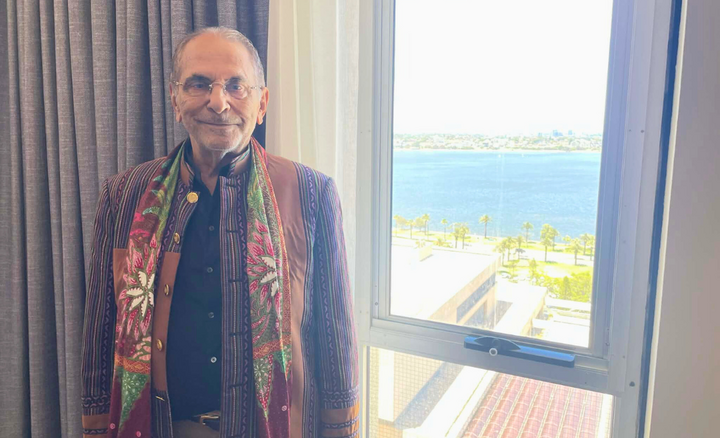
"The atmosphere is quite positive with the new management of Woodside and with Timor GAP, and my belief is that by sometime in next year, in the first six months of next year, they will finalise an agreement," said José Ramos-Horta, speaking exclusively to ENB while on a fleeting visit to Perth to Western Australia.
The president visited Perth to attend the Australian Institute of International Affairs' year-end event, also attended by Julie Fallon, Woodside's executive VP, who the president recently hosted in Dili for gas project feasibility studies.
"The signing of the agreement is a signal that the Greater Sunrise development is going ahead, and the long-standing claim by the Timor side that the pipeline should come to Timor-Leste is going to be a reality, supported by the study by Wood," said Ramos-Horta.
Categorised as a "Least Developed Country" by the UN, he sees the development of the processing plant in Natarbora, the greenfield region on the south of the island, as being transformative for his nation.
"The south coast is one of the most, the least populated area of the entire country – traditionally Timorese live in the northern coast. The south coast is actually fertile…and could be a whole new economic hub of Timur-Leste, including agriculture and industries of all sorts.
"But going back to the '60s, everybody's talked about it, from the time of the Portuguese, they talk about the south coast will be the breadbasket team but it never happened.
"Now, finally, it's going to happen, starting with the gas industry, which will generate possibilities for a fertilizer industry and fertilizer plants, which will aim for the world market, but also for our country's needs in terms of our strategic policy to make Timor-Leste self-sufficient in agriculture to double or triple our agriculture output," enthused the president.
For Ramos-Horta, the benefits for the JV partner to opt to build the LNG plant on Timor-Leste, is something of a no-brainer.
"Even a small shopkeeper owner would look at it and see the advantage of bringing the pipeline to Timor-Leste.
"It's a bit like you're trying to compare the cost of taxes and labour between the United States and Mexico. Our labour cost is very low…we don't have any dispute or conflict with any of our neighbours and…with the plant in Timur-Leste also, we are already several hundred kilometres closer to the gas energy market.
"And Australia, anyway, has endless opportunities all over Western Australia, northern Australia…full of resources," the president added.
"The Darwin option would give the Australian government a lot of headaches in terms of addressing Australia's commitment…to clean energy.
"In Timor-Leste, we don't have the problem. Our contribution to CO2 emission, emissions is 0.003%, so it's next to nothing.
"And because of our status as a least developed country, we have much more leeway and time frame to transition to renewables," he added.
The president also had some words which will be particularly welcomed by those at the top of Woodside's gleaming HQ office block, who might still have some concerns that Timor-GAP – the larger of the two JV partners, might look to a Chinese company to oust Woodside from the venture if they started to favour the Darwin option.
"Prime Minister Xanana Gusmão had been very emphatic, even in private conversations, that he prefers very much to continue to work with existing partners and no new partners," said Ramos-Horta.