The week in review
Life is never straightforward.
Neither it would seem is planning for the energy needs of your state, judging by events of this week.
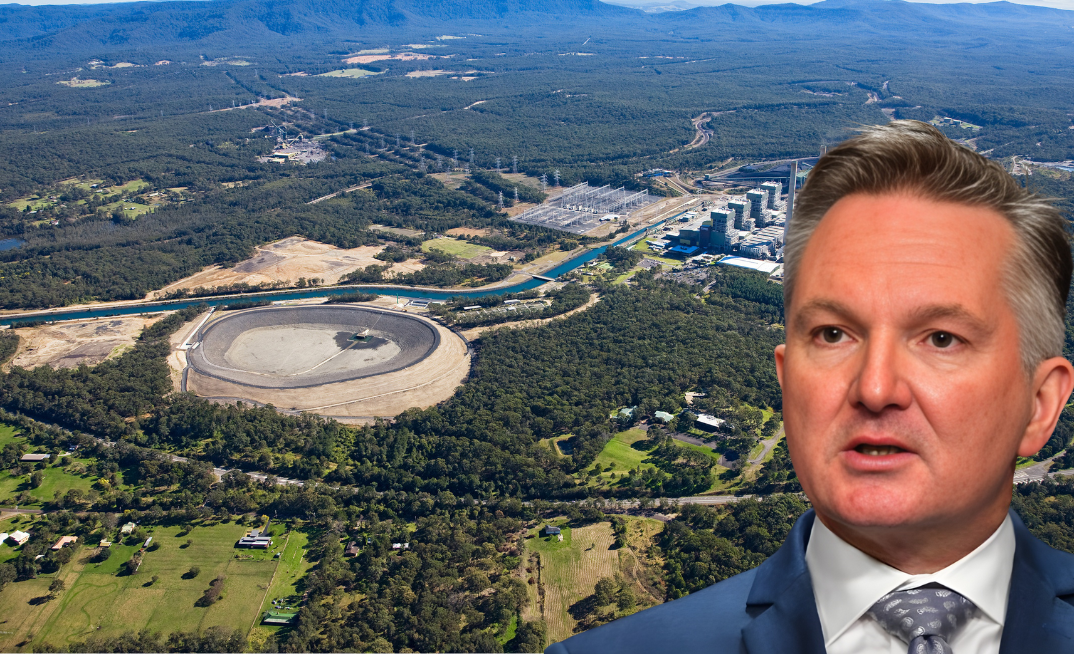
On Tuesday we heard news from Origin that it will keep the Eraring coal-fired power station operating until April 2029, a move which pushes back its previously scheduled closure date by two years.
As ENB reported, the decision exposes the pressure being felt by policy makers on the east coast as the region's power system faces a future seemingly without the necessary renewable capacity to fill the void left by the exit of coal.
Originally the 2.88GW Eraring plant in NSW - Australia's largest coal-fired generator - was due to close last August, but in 2022 Origin struck an agreement with the state government to keep it running until August 2027 with the latest extension able to be made under an option under that agreement, setting a new retirement date of 30 April 2029.
"Our decision to keep Eraring operating until April 2029 provides more time for renewables, storage and transmission projects to be delivered, and reflects uncertainty regarding the reliability of Australia's aging coal and gas fleet," said Origin CEO Frank Calabria.
Even the uninitiated will be able to see this is code for ‘the renewable pipeline isn't flowing fast enough.'
The reaction from Canberra was more straightforward with climate change and energy minister Chris Bowen stating: "No one wants these coal-fired stations to stay open longer than necessary."
Which means the news out of Western Australia this week that the state's government will prop up Griffin Coal particularly unwelcome in the Australian capital.
Roger Cook, WA's premier, has promised to anyone who'll listen to him that his state will be the first in the country to exit coal entirely – promising a hard deadline of 2030.
This is a pledge which sits rather uneasily with the decision he announced this week then to extend Griffin's State Agreement from this July by up to five years, which allows it to continue operations at the Ewington Mine in the Collie Basin and supply coal to industry as well as the privately owned Bluewaters Power Station.
As their press release boldly states, "since 2022 the State Government has provided $308 million in support to Griffin Coal, supporting thousands of local jobs and supporting energy security across the South West Interconnected System."
And now there's more to come, it seems, although Cook's statement does add "Advanced negotiations with Griffin's major direct and indirect customers are set to significantly reduce the subsidy required from July 1."
From Canberra's perspective, the federal government maintains coal exits must be coordinated with the delivery of firming gas and/or renewables and transmission.
Easier said than done, I'd say, Mr Bowen.
And of course, now one power station has extended, there's an increased possibility that others could follow suit as reliability pressures mount.
In NSW Vales Point owner Delta Energy has already said it cannot rule out pushing back the 2033 closure of the 1320MW plant, which supplies about 4% of Australia's electricity.
And in Queensland, while CS Energy struggles on with Callide C's reliability issues, some market participants believe operating lives could be extended if system risks escalate. The state's Energy Roadmap makes clear that state-owned coal stations will operate "as required" to maintain reliability.
That's a loaded phrase if ever I saw one.
If renewables are to pick up the slack from the exit of black gold, the pipeline needs to be thoroughly greased by both developers and governments and regulators.
The question is, how big is Bowen's pot of Vaseline?
Yours,
Russell Yeo
Editor Energy News Bulletin
To get the best analysis and insight of what's happening in APAC's energy sector, sign up for a free trial.