


Shell's plan to exit the North West Shelf (NWS) joint venture marks more than the end of a fruitful partnership with Woodside Energy - it signals the dismantling of a framework that has shaped Western Australia's gas economy for half a century.
Analysts say the move also reflects a growing misalignment between Shell's global strategy and the project's next phase.
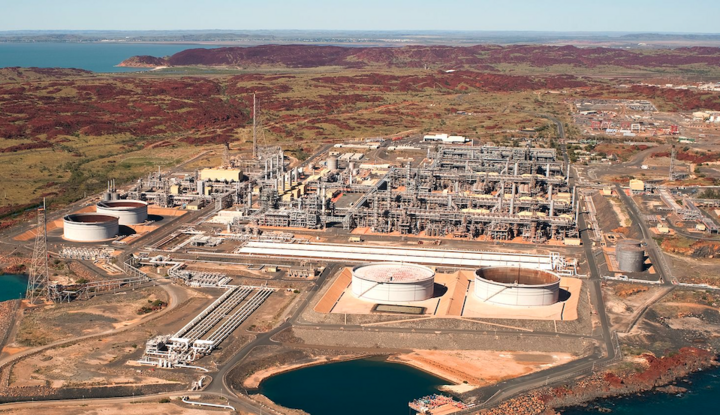
The supermajor is reported to have opened discussions to divest its 16.67% stake in the NWS LNG project, valued at about US$3b. Operated by Woodside, the JV anchors the Karratha Gas Plant, five LNG trains and associated domestic gas facilities, and remains Australia's oldest and largest LNG complex.
YOU MIGHT ALSO LIKE
Analysts say the project's evolution into a multi-user, third-party tolling model has stripped out the features Shell now prioritises in its portfolio. One analyst said Shell has little appetite for being a passive infrastructure participant late in an asset's life, particularly where fresh capital is required, and returns are increasingly diluted.
"That shift alone makes an exit logical," he said.
Shell is reportedly conducting an in-house sale process with external advisers. A preliminary memorandum - 'Project Adenium ' - was shared in September, with due diligence ongoing.
CNBC reported initial interest from Asian LNG buyers and Middle Eastern investors. However, XRG, which is still seeking an Australian asset after last year's Santos failure, seems unlikely to move, as the Abu Dhabi consortium prefers a turnkey platform over a complex tolling arrangement.
Browse becomes the flashpoint
The strategic split is already playing out in Browse. Shell has exited the long-running LNG development, now set to backfill the NWS through third-party processing rather than proceed as a standalone project. A second analyst said the tolling model created a structural conflict.
"Browse would be paying other parties to process gas through an ageing facility connected to a field with rapidly diminishing lifespan that it doesn't control," he said.
"That's not a position Shell wants to be in."
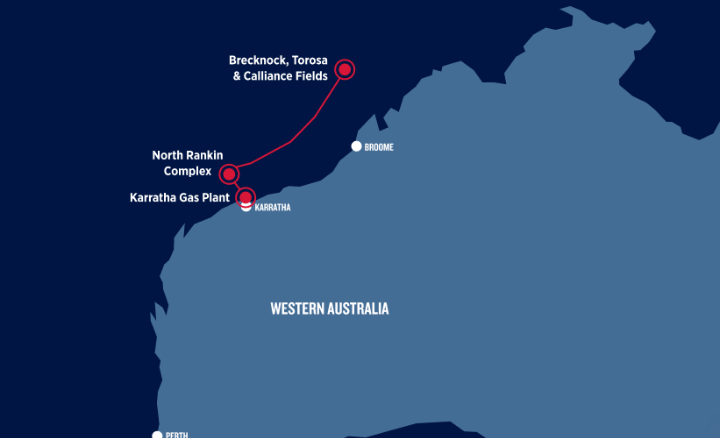
The outcome reveals an unworkable convergence, with Browse and the NWS having different ownership structures and timelines. With Shell exiting, some Browse participants lack stakes in the gas processing infrastructure, while NWS owners, focused on extending operations to 2070, have imposed strict third-party terms; one analyst called the relationship asymmetrical.
Meanwhile, Woodside has sought to align incentives, agreeing in December 2024 to swap assets with Chevron and lift its NWS stake to 50%. Shell's exit now raises the question of who will fund the next phase.
Beginning of the end
Shell's retreat has been decades in the making. Its failed 2001 bid for Woodside Petroleum marked the beginning of a slow withdrawal that is now set to end with an exit from its final NWS stake.
The failed bid - ultimately blocked at the 11th hour by then Treasurer Peter Costello on national interest grounds - saw Shell progressively sell down its equity from 2010, exit its direct Woodside shareholding in 2017, and pivot towards higher-return, directly operated assets. The shift to third-party tolling marks the final break.
Politics shaped much of that trajectory. Canberra's rejection of the takeover prioritised domestic gas control, while Western Australia later dismissed Shell's push for floating LNG at James Price Point. A subsequent FLNG strategy in the Browse Basin also stalled, before Browse re-emerged as a possible NWS backfill option.
At its peak, the NWS contributed about 1% of Australia's GDP and served as Shell's LNG proving ground, with secondees embedding systems and asset-management discipline that still influence Woodside today.
But the economics have eroded. Where partners once earned billions in what one analyst described as "clean cash," Shell's remaining exposure now offers little more than thin tolling margins vulnerable to rising operating costs at an ageing plant.
"The operating DNA Shell helped build is still there," one analyst said, "But the economics that justified Shell's presence no longer are."
A clear exit case
Shell and BP stepping back reflects a broader retreat by majors from long-dated, capital-intensive LNG. Any buyer of Shell's stake must fund maintenance, life-extension works and eventual decommissioning under a tolling-led future. Speculation ranges from Asian LNG buyers to infrastructure investors, with Beach Energy, Origin Energy, Mitsui E&P, and Brookfield all cited.
Woodside is unlikely to stay on the sidelines, as absorbing Shell's 16.67% stake, in addition to the Chevron deal, would test its balance sheet at peak investment levels. For Shell, the calculus is simpler. Tolling someone else's ageing infrastructure is no substitute for ownership.
As one analyst put it, the NW Shelf is "a shag on a rock", an increasingly hard place from which to extract value.