

While the work on installing Shell's Crux platform has been temporarily delayed after its transportation was hit by bad weather and mechanical issues, the project has undoubtedly been making slow but steady progress.
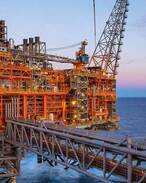
As reported last week, the Crux unmanned platform - seen below before it left the Sembawang construction yard in Singapore - was due to go directly to the Crux field on the back of CNOOC's HAI YANG SHI YOU 278 heavy lift vehicle (HLV).
However, due to "unsettled weather conditions" on its journey, predominately created by Tropical low TL 28U, the HLV was forced to make an unplanned stop at Dili in Timor Leste.
YOU MIGHT ALSO LIKE
Jacket installation
But while the topside is waiting to get going again, there's been notable progress with the jacket's installation.
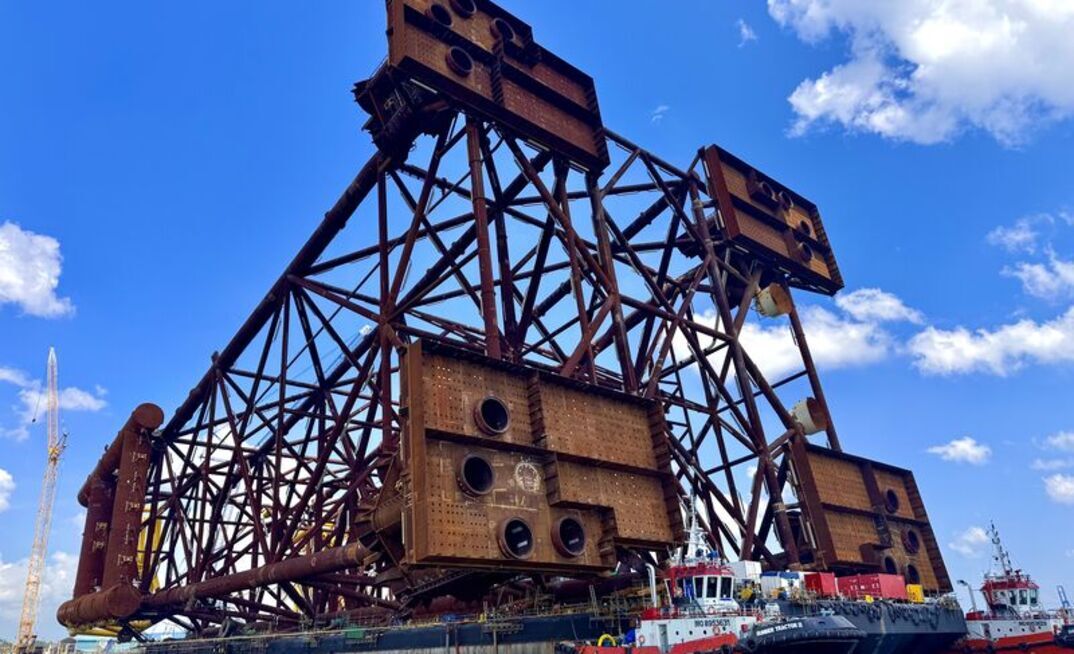
In July, Shell's contractor McDermott confirmed the load-out of the jacket for the Crux platform, one of their biggest and most immense structures ever, as it departed the Indonesian Batam yard.
Once on the back of its transporter barge, the jacket was joined by other components as travelled to the Crux field, in the northern Browse Basin, 190km offshore of Western Australia (WA).
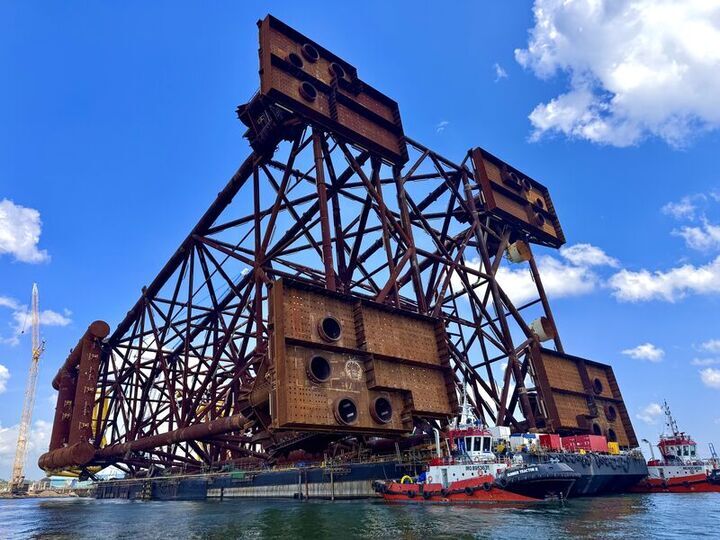
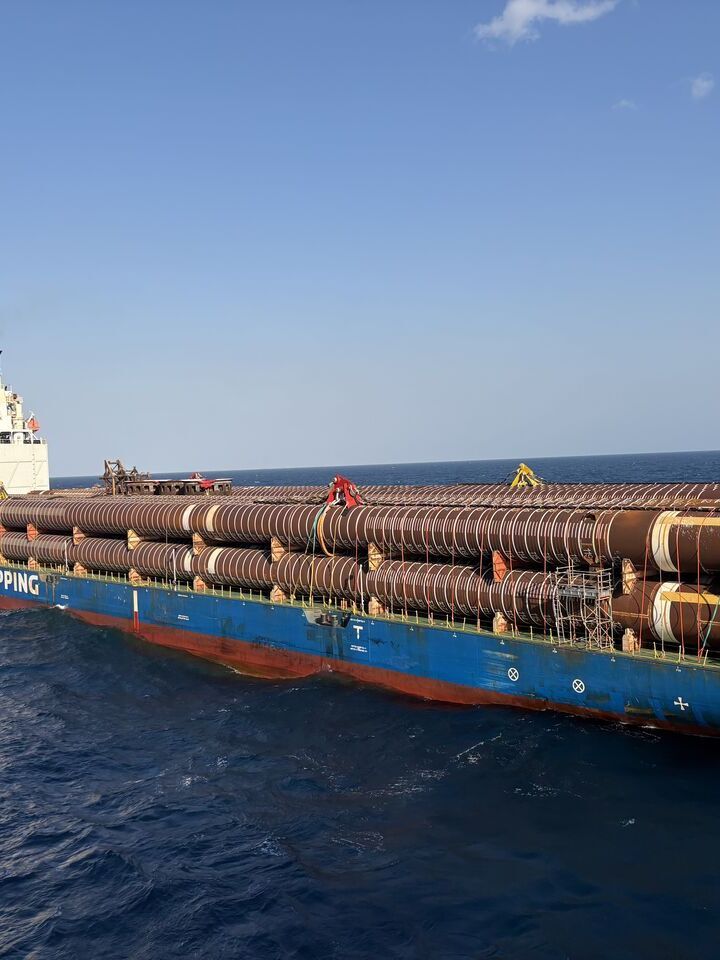
After its slow journey the field, the jacket has now been submerged and anchored to the seabed, in anticipation of the topside arriving to be fixed on top of it.
Topside features
While there is still some delay to the topside arriving in the field, some glimpses have been provided about some of the unmanned platform's features.
The Texas Deck Project, installed on by Revision Zero, is an offshore structural extension installed on the Crux platform, which adds to its operational capacity by providing a safe and accessible working area for offshore operations, including the installation and maintenance of piping and utilities, access to the cantilever Piperack and support for offshore construction and operational activities.
Revision Zero were also responsible for the installation of the cantilever piperack project.
According to a statement, the Philippines based contractor was engaged by Shell to deliver a complete package of 3D modelling, and structural steel detailing services for the project.
"Our scope included the preparation of highly detailed fabrication drawings and construction models covering 121 tonnes of steelworks and 31.6 metres of handrails. These deliverables were developed to meet stringent offshore engineering standards, ensuring precision, safety, and constructability throughout all stages of design and fabrication.
"By leveraging advanced 3D modelling tools and a collaborative design approach, Revision Zero facilitated real-time coordination between engineers, fabricators, and construction teams. This digital integration minimized design clashes, reduced rework, and optimized material use, contributing to a smooth and efficient construction process," the statement said.
We'll be watching closely when the topside arrives on site...