

For years, the retail energy debate has been dominated by affordability. But in 2026, that framing is no longer enough. The more pressing question is whether retailers can help customers do more than endure higher bills, whether they can give households and businesses real tools to respond.
That means shifting the conversation from price pain to practical control: better data, better tariffs, better automation, and a market design that rewards flexibility rather than passivity.
The future retail model is one where technology, pricing and product design do the work in the background, allowing customers to capture value from their solar, batteries, EVs and flexible demand with minimal friction.
How do retailers move customers from passive bill payers to active participants?
The first step, these experts agree, is trust.
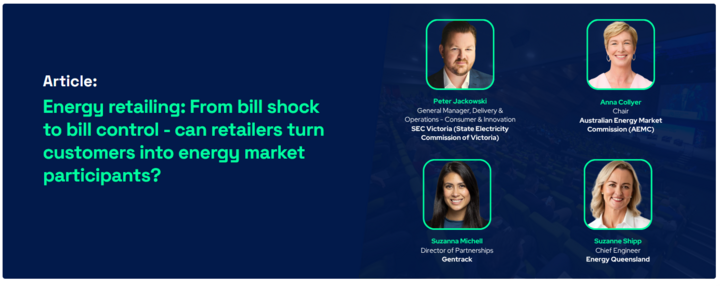
Peter Jackowski, General Manager, Delivery and Operations, Consumer and Innovation at the State Electricity Commission (SEC) Victoria, says retailers have an opportunity to turn customers into active participants, but only if they offer greater simplicity and transparency to build trust.
In practice, that means tailored incentives and demand response programs that reward engagement, rather than expecting customers to navigate an increasingly complex market on their own.
Anna Collyer, Chair of the Australian Energy Market Commission (AEMC), notes that consumer protections are necessary but not enough. While reforms such as limiting price increases and ensuring hardship customers are placed on the cheapest offer reduce harm, they do not drive participation.
Retailers need to use smart meter data more proactively, presenting personalised savings opportunities in ways customers can easily understand.
Suzanna Michell, Director of Partnerships at Gentrack, says retailers must evolve from commodity providers into "energy advisors". This starts with clearer, more personalised insights into energy usage, supported by targeted incentives to shift consumption.
Suzanne Shipp, Chief Engineer at Energy Queensland, highlights the broader transformation underway across the grid. With increasing rooftop solar and battery adoption, there is growing potential for collaboration between customers, retailers and networks.
"Trust between customers, networks and retailers is critical," she says, particularly when helping customers monetise their energy assets.
Which technologies and pricing models will matter most?
Across all perspectives, one point stands out: smart meters are essential, but only the starting point.
"Smart meters are the non-negotiable digital foundation. Without them, none of the more sophisticated tools are possible."
However, data alone does not create control. The real value comes when it is combined with automation, flexible pricing, and devices that respond on behalf of the customer.
Technologies such as smart EV charging, home energy management systems, and automated demand response can optimise energy use in the background, reducing effort for customers.
Michell highlights automated demand response combined with dynamic pricing as a major shift, enabling systems to charge or store energy when prices are low and export when prices rise.
Jackowski also points to virtual power plants (VPPs) as key enablers, allowing households to trade excess energy and participate more actively in the market.
What is stopping wider participation?
Despite progress, several barriers remain.
Interoperability is a major challenge, with many devices unable to communicate effectively across platforms, creating a fragmented user experience.
"Many Australian retailers are still tethered to legacy systems built for a one-way grid."
These systems struggle to support high-frequency data flows and flexible trading models. At the same time, complex tariffs and programs can discourage customer participation.
There are also regulatory and cost barriers, particularly for renters and apartment residents who may not have access to solar, batteries or EVs.
Programs that succeed tend to be simple, automated, and require minimal active participation.
What does a customer-centric retail model look like in five years?
The future points toward a more customer-focused model, where energy is delivered as a service rather than just a commodity.
Retailers will focus on delivering outcomes such as lower costs, efficiency, and convenience, supported by automation and smart technologies.
"The energy system should work around the customer's life, not the other way around."
In this model, flexible tariffs, virtual power plants, and automated protections become standard, while retailers compete on helping customers reduce their overall energy costs.
Greater coordination between networks and retailers, supported by real-time data, will allow better integration of consumer energy resources.
Ultimately, customers will benefit from greater control and the ability to capture more value from their energy assets.
The challenge for the sector is clear: moving from rhetoric to real solutions that are simple, intuitive, and genuinely useful, turning bill shock into bill control.

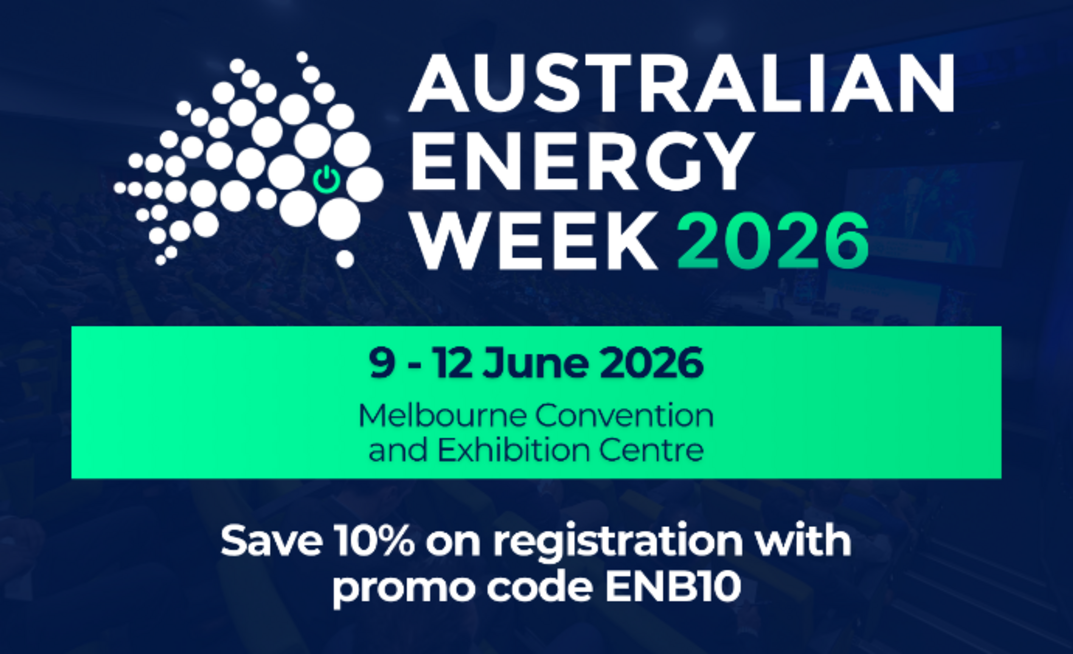
Join the conversation with Anna Collyer, Suzanne Shipp, Suzanna Michell, Peter Jackowski, and other industry experts at Australian Energy Week.
ABOUT THIS COMPANY
Quest Events

Quest Events is a fast-growing business information and networking event provider – producing timely and relevant conferences, exhibitions and training seminars for industry and government participants alike.
HEAD OFFICE:
- Level 2, 53-55 Sydney Rd, Manly, NSW, 2095, Australia
- Telephone: +61 (0)2 9977 0565
- Web: www.questevents.com.au
- Email: [email protected]