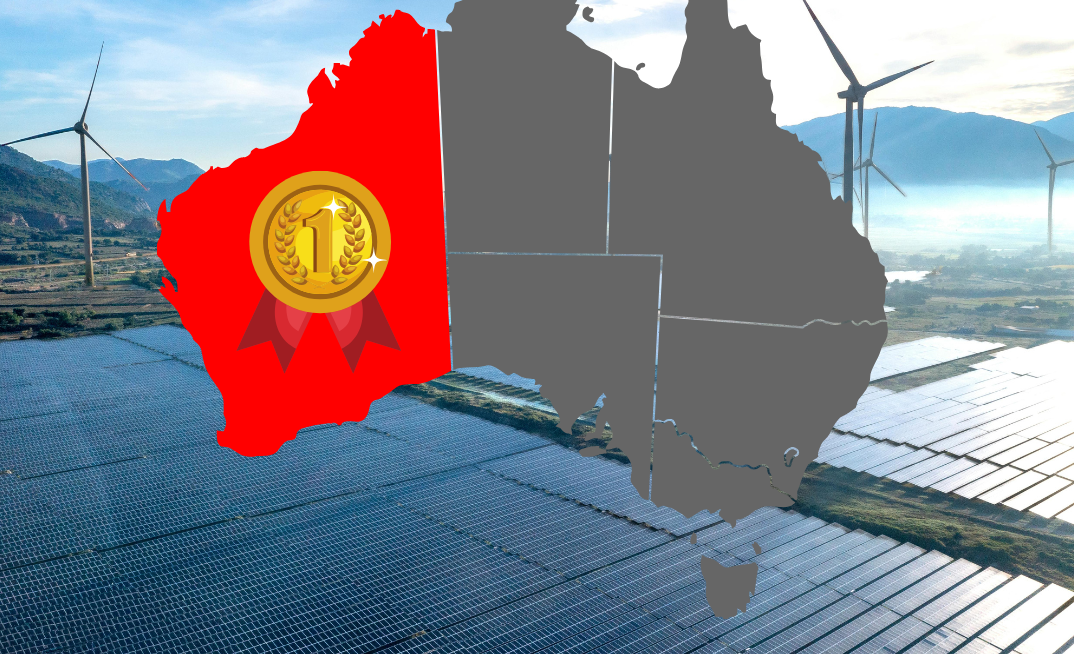


Western Australia (WA) – the home of the world's most isolated grid – is also emerging as a renewable energy powerhouse, home to some of Australia's best generating renewable energy assets.
That's according to analysis from Rystad which showed that in February Australia's best three performing wind farms were in WA and that two of the top three performing solar farms were in WA too.
The top-performing wind assets were Potentia Energy's/Synergy (Electricity Generation and Retail Corporation)'s Warradarge (60.5 % CF), APA Group's Badgingarra (55.6 % CF) and Alinta Energy/RATCH-Australia Yandin Wind Farm (53.9 % CF).
YOU MIGHT ALSO LIKE
The best performing solar facilities for the month were SUN Energy's Merredin solar farm (41.2% AC CF) in WA and Potentia Energy's/Synergy (Electricity Generation and Retail Corporation)'s Greenough River solar farm (38.0% AC CF) in WA. CIMIC Group's Glenrowan solar farm (37.2% AC CF) in Victoria was the third best performing.
Despite WA's apparent supremacy, the analysis also confirmed that at a state level New South Wales was the best generating state for solar and wind generation, producing 1,470GWh with 617GWh from wind and 853GWh from solar.
Of the developers, the Andrew Forrest-backed Squadron Energy was the top wind generator for the month, generating 387 GWh, beating Tilt Renewables (364 GWh), who have been the top wind generator on a monthly basis for most of the last 6 years.
Across the nation, utility PV and wind assets generated 5TWh, up 11% from 4.5 TWh YoY.
WA's energy and decarbonisation minister Amber-Jade Sanderson welcomed the results.
"This is WA's renewable advantage on display — and with the Cook Government's record investment in renewable projects and infrastructure, we're harnessing our world-class wind and solar to make WA a renewable energy powerhouse.

"Last quarter, the South West Interconnected System operated at 52.4% renewable generation - the highest level on record - while wholesale electricity prices declined by 30%."
Regional WA focus
The WA government has also just released new community benefits guideline for clean energy projects, informed by extensive public consultation and direct engagement by PoweringWA with key stakeholders.
The document sets expectations for developers to deliver meaningful, place-based benefits to communities hosting renewable energy projects and includes a tiered approach to benefits which will balance community and industry interests.
It will also outline how developers should work with local governments, Native Title holders, and other community representatives to develop and deliver benefits through community benefits plans which reflect local priorities.
"Regional communities are at the heart of our energy transition, and they must be able to benefit from new energy infrastructure in a meaningful and lasting way.
"This guideline ensures that, as WA builds the infrastructure we need to deliver our sustainable energy future, we are also supporting the communities that host new renewable energy projects," said Sanderson.
Jackie Trad, CEO of the Clean Energy Council, welcomed the guidelines and said strategic, place-based plans provide clarity to industry and ensure that communities benefit from investments made to support regions hosting projects.
"These guidelines will help Western Australia deliver tangible local outcomes for host communities and residents," Trad said.

"Community benefits are most impactful when local residents can see a distinct association between clean energy projects and new programs, services or infrastructure established in the area."
Enough for govt targets?
The analysis comes as the brains behind Renewmap says the pipeline of new renewable energy project is "running laps" around what's needed to meet national renewable energy and net zero emissions targets.
But it is the pace of delivery that is the problem.
According to the Australian Energy Market Operator (AEMO) Australia needs 200GW of extra capacity to meet its 2050 net zero targets. RenewMap cofounder Alex Thompson told the Clean Energy Investor Group conference in Melbourne on Tuesday that there is 670GW of large-scale on- and offshore projects currently somewhere in the development process.
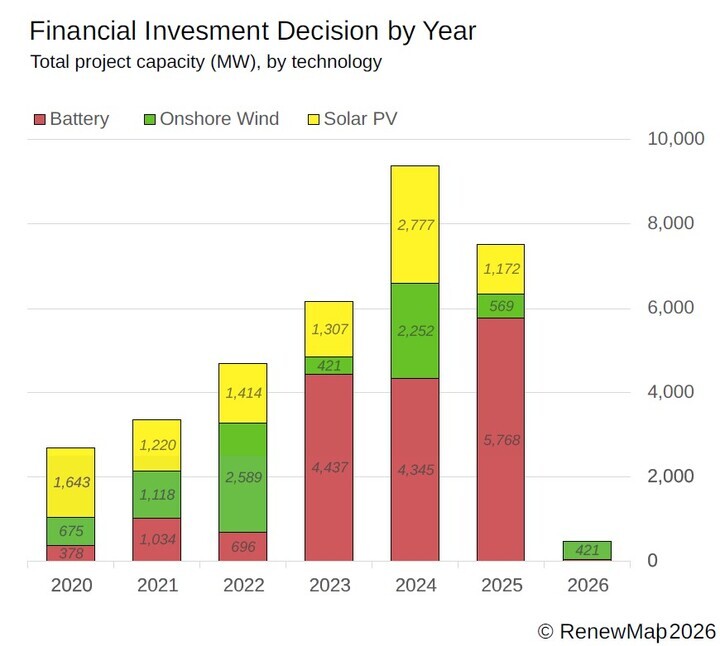
Speaking to ENB Thompson added: ""On paper, we have more than double the capacity under development than AEMO's Step Change pathway requires for the NEM.

"The issue isn't ambition or origination – it's the friction between stages, particularly approvals and grid connections, and how that affects capital's confidence in delivery timelines."
According to RenewMap, that 450 GW contains 155 GW of onshore wind, 90 GW of large solar, 185 GW, 530 gigawatt hours (GWh) of batteries, and 26 GW of offshore wind.