

Industries across Australia are finding it increasingly challenging to operate while keeping energy consumption as low as possible. The budget has tightened for many businesses, especially in the retail sector, which is under threat as more and more people turn to online shopping.
Business premises, both large and small, expend a large percentage of their outgoings on energy usage. Although this is necessary, energy is not always used in the most efficient way. Often, illuminated signage is on 24/7, and multiple cameras run as part of antiquated security systems, instead of updating to automatic lighting controls and PTZ cameras.
However, the future holds promise for these Australian industries, as smart systems are implemented to help reduce energy costs and more.
Energy Challenges Faced by Australian Industries
With energy costs reaching unprecedented highs in recent years, businesses are also feeling the pinch. This has a knock on effect leading to branch closures and staff cutbacks. Ultimately, the energy crisis is impacting peoples' livelihoods and threatening jobs.
Two industries that notoriously have a high energy expenditure are manufacturing and retail. In manufacturing, large warehouses and factories use huge amounts of energy every day to keep spaces well lit, machinery constantly operating, and ensure that temperature remains consistent. These inefficient, energy-consuming processes operate round-the-clock, even during periods of down time.
In retail, the premises may indeed be smaller. However, there are usually a larger number of stores to run. In regards to food retailers, they require adequate lighting, similarly to other types of retailers, however, their products need to be consistently refrigerated in line with food health and hygiene standards, which is a huge drain on resources.
With so many stores shutting down due to cost-cutting, there has to be another solution. By turning to new technologies, instead of relying on traditional ways of working, these energy challenges can be overcome.
What are Smart Systems and How Can They Help?
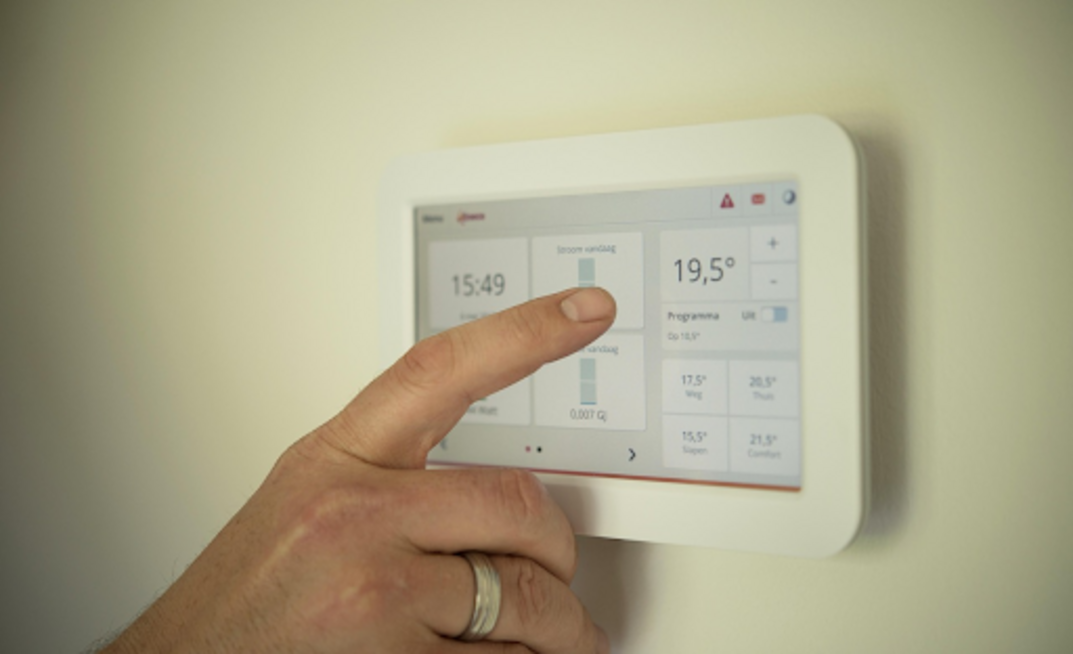
Smart systems are interconnected systems that are able to sense, collect and analyse data, and make informed decisions, much like an additional employee helping to streamline processes. These systems rely on sensors, machine learning and AI to improve efficiency in industry. Here are a few examples of smart systems in action.
Smart Energy Management Systems
SEMS or smart energy management systems evaluate a business's energy usage to gauge when is best to carry out tasks requiring high energy consumption. For example, in manufacturing there may be one stage of production that can be scheduled for off-peak periods. This way everything operates as it should, albeit on a more energy efficient timeline.
Automated Controls and Sensors
The use of sensors and automated controls is highly beneficial to industries such as retail or hospitality, where some areas of a store or hotel may be unoccupied. Traditionally, all areas of a business premises would require to be well lit and heated regardless of whether customers were present. With sensors, lighting can be turned off and energy saved if the room is empty.
Access Control
Using card readers, digital authentication, and mobile apps to access control saves on employee energy and time, as it reduces the need for unnecessary administrative protocols to gain entry into a warehouse space, for example. Teamed with smart PTZ cameras that activate once movement is detected, results in a more streamlined warehouse security system.
Smart Grid Technology
Smart grid technology replaces the old ways of receiving energy and allows for two-way communication between energy providers and consumers. This is beneficial for businesses through the use of features such as a smart meter. This provides consumers with alerts relating to their energy usage and allows them to act on energy wastage in real time.
The Future of Smart Systems in Australian Industries
In order to stay relevant and operational in the retail and manufacturing sectors, more and more businesses will have to adopt smart systems within Australian industries. Energy prices will continue to grow, and companies may see their profit margins shrink if energy wastage is not addressed.
In terms of technology, it's inevitable that smart systems will advance further and integrate with clean energy solutions. So, it is imperative that businesses remain in the loop about industry innovation. Those who do not adapt may find themselves lagging behind their competitors and ultimately succumb to their own energy inefficiencies.