

The Ukrainian ambassador to Australia has called on the Australian government to intervene to stop the import of petroleum products derived from Russian crude oil.
Speaking exclusively to Energy News Bulletin, Ambassador Vasyl Myroshnychenko said: "Technically, what Australia is importing is Indian petroleum—but it originates from Russian oil.
YOU MIGHT ALSO LIKE
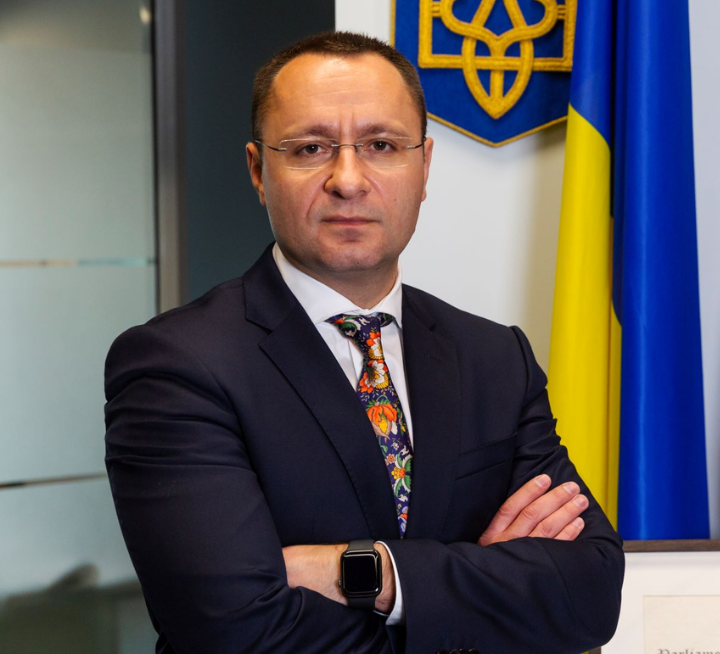
"According to World Trade Organisation rules, the country of origin becomes India once it's processed there. But we must not ignore the source.
"This isn't a new issue," he added. "Australia has been importing these fuels for three years. What's changed is that Ukraine is stepping up its efforts globally—we've made this a top priority after recent meetings with our President and Prime Minister. There needs to be more sanctions and more pressure on the Russian economy."
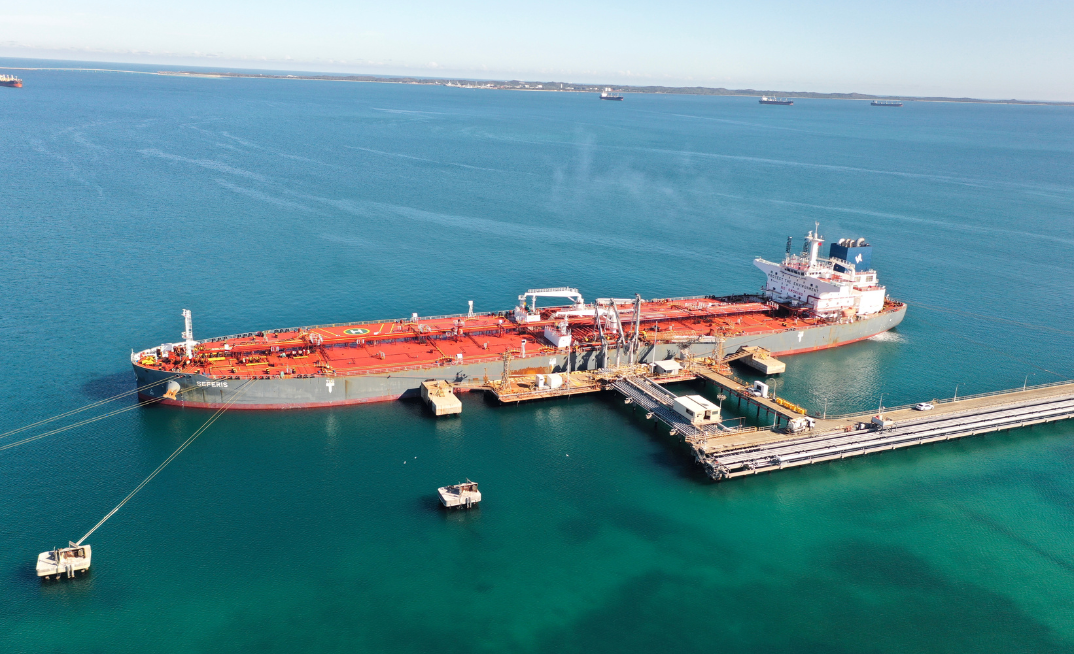
Myroshnychenko's comments came as members of Perth's Ukrainian community gathered at Kwinana Beach today to protest against the unloading of the Seferis fuel tanker at BP's Kwinana terminal.
While turnout was limited to protest organisers, the message was forceful - close the sanctions loophole that allows Russian oil to enter Australia via third-party refineries.
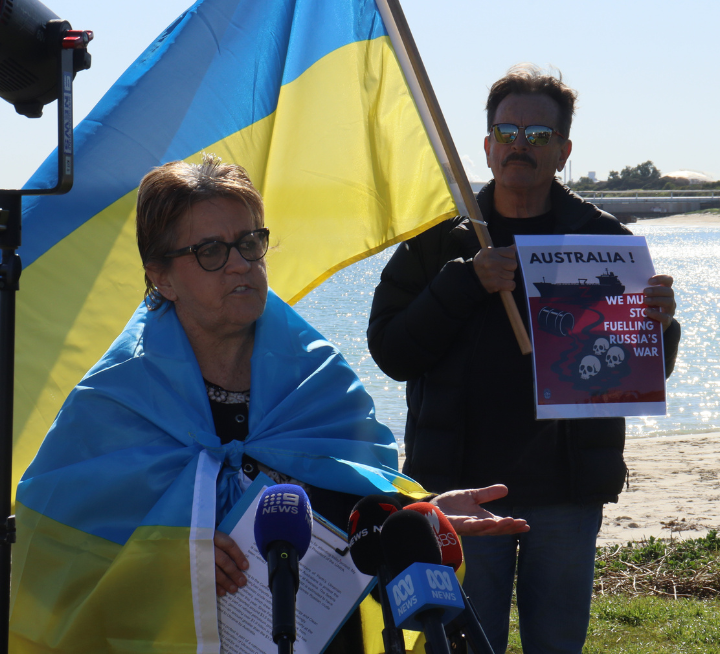
"We gathered here today—members of the Perth Ukrainian community and concerned West Australians—to protest against the unloading of the Seferis tanker at Kwinana," said Roma Popadynec, vice president of the Ukrainian Association of WA.
"The Seferis is carrying 100,000 tonnes of diesel, which is estimated to include about 50,000 tonnes of Russian crude oil. Every litre of fuel refined from Russian crude is, in essence, Russian blood oil—blood oil feeding the Kremlin's budget and facilitating missiles of destruction that continue to ravage Ukraine."
The demonstration, part of a broader campaign coordinated by the Australian Federation of Ukrainian Organisations (AFUO), called on the federal government to impose a ban on fuel refined from Russian crude, greater supply chain transparency and mandatory disclosure by fuel retailers.
"Together, we must make certain that Australian values are not undermined at the pump," Popadynec added. "This peaceful protest is vital to ensure that Australians are not unknowingly funding Putin's war machine."
"Since February 2023, Australia has reportedly imported $3.5 billion worth of Russian-origin crude oil as part of petroleum products from Indian refineries—generating over $1.9 billion in tax revenue for the Kremlin," she said. "That's more than the $1.5 billion in aid that Australia has already provided to Ukraine."
Popadynec also noted that Australia continues to import such fuels despite international moves to restrict them, referencing the EU's 18th sanctions package banning refined fuel derived from Russian oil and former U.S. President Donald Trump's stated intent to impose 100% tariffs on such trade.
As reported the Seferis, a Greek-flagged tanker, departed India's Jamnagar port, home to one of the world's largest oil refineries and a major buyer of Russian crude, on July 11 and docked in Western Australia on July 27. The ship is scheduled to depart on August 2.
Independent federal MP Andrew Wilkie, who last week raised the issue in Parliament, also weighed in.
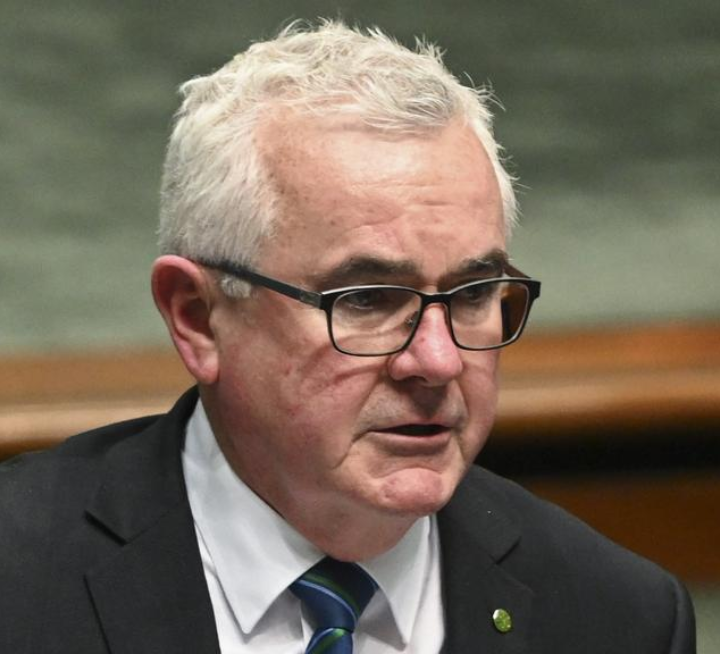
"Notwithstanding the complexity of global oil supply and the fact that it is difficult to ensure at least some Russian oil isn't making its way into the supply of liquid fuels for Australia, Australia should and could do more to try and prevent or at least reduce it."
"That is what is demanded of us as a country loudly supporting Ukraine…Many Australians would be horrified that the petrol in their cars or the jet fuel in aircraft is in part based on Russian oil. The community would be especially concerned to know they are helping to fuel Putin's war machine."
Earlier this week the federal Department of Foreign Affairs and Trade (DFAT) has acknowledged the issue but says it lacks the tools to trace the crude's origin once it has been processed overseas.
This claim was challenged by Mark Corrigan, an independent researcher who has tracked global fuel shipments for years.
Corrigan, who has a list of hundreds of vessels that have come from India to Australia, delivering petroleum products derived from Russian crude oil, said it "defies belief" that DFAT says they cannot show where these arrivals come from.
He added he believes the Australian administration does not wish to start a "diplomatic stoush" with India.
Protest organisers say the issue now sits squarely with the federal government and commercial fuel importers.
As Roma Popadynec told reporters: "We urge the Australian government to take action… to clean up the supply chains."
ENB contacted the office of Anthony Albanese but were referred to the comments previously made by DFAT.