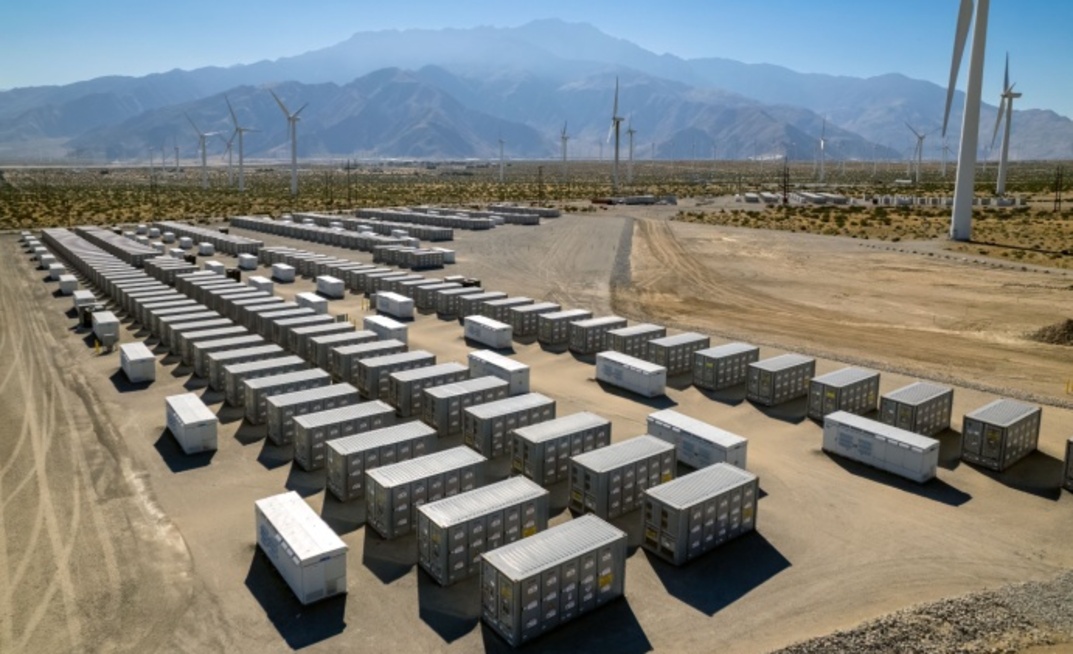


Batteries are already transforming Australia's energy landscape. From stabilising the grid to capturing cheap solar during the day, they are essential to managing the transition to renewables. But their role has so far been largely limited to short-duration storage — responding to frequency changes and shifting energy over a few hours.
As renewables continue to scale up, so too must storage solutions. Medium-duration storage — defined by AEMO as 4 to 12+ hours of discharge — could be the missing link in delivering a reliable, renewable-dominated grid.
So what will it take to move beyond two-hour batteries? We spoke to four leaders shaping the future of energy storage to hear what they had to say about the potential and the path ahead for medium-duration batteries.
Why medium-duration matters
Medium-duration batteries are increasingly critical to balancing Australia's energy system as coal retires and renewables scale up.
It's all about what problem you're solving: "Short duration manages peaks and stability, medium duration shifts energy across the day, and long duration (or deep storage as AEMO refer to it in the ISP) manages energy sufficiency," says Shannon O'Rourke of Powering Australia.

Akaysha Energy's Emma Fagan agrees, noting: "For many years, two-hour systems dominated the market, but the focus is now shifting toward four hours and beyond." Akaysha Energy sees a future where four- to six-hour batteries, in combination with solar and wind, could support over 90% of Australia's energy needs.

AEMO Services' modelling supports this view, identifying a portfolio comprising 95% four-hour and 5% eight-hour batteries as the most cost-effective solution.
According to EY's Matt Armitage, these systems "enable storage operators to capture more value from intra-day energy arbitrage and network support services" while displacing high-cost gas generation.

What's holding medium-duration back?
Despite the growing need, medium-duration batteries face several barriers.
Cost and financing
Alex Wonhas (ex-AEMO, now Chief Executive Officer of Ampyr Energy) points to the financing challenge: "The typical barrier for standing up medium-duration batteries work is making the business case work. Peak prices in the first one to two hours of high price periods are the most attractive. Longer duration batteries thus typically capture lower spreads, which makes batteries with four-plus hours difficult to finance."

Armitage says although cost is the main barrier, it's coming down fast, particularly with the potential for second-life EV batteries to be repurposed for grid storage.
O'Rourke highlights recent progress: "BNEF reports a 40% drop in utility scale costs between 2023 and 2024… In the medium-duration category, flow batteries become competitive, enabling broader choice and expansion options."
Regulatory and market structures:
Historically, markets favour short-duration. "Ancillary service markets such as FCAS tend to reward shorter-duration assets, and energy price volatility has typically occurred in brief windows," says Fagan, noting that this is changing as the generation mix evolves.
Connection and planning uncertainty:
"Connections remain a challenge," notes O'Rourke. AEMO's February 2025 data shows a doubling of the battery storage pipeline to 18GW year-on-year. Approval rates are similar year-on-year. "And certainty is always an issue. A volatile international trade environment, coal exits, and the spectre of nuclear makes for an investment environment that favours the bold."
What technologies could lead the shift?
While lithium-ion remains dominant, a range of new technologies are jostling for position in the medium-duration race.
O'Rourke says: "We are big fans of Allegro Energy's emulsion flow battery being piloted by Origin at Eraring, and also ESI Asia Pacific's iron flow battery being piloted at Stanwell. We're also excited by the WA Government's commitment to a large scale vanadium flow battery in Kalgoorlie.
"Of course, there's many established technologies which serve medium duration needs. For example, the BASF NaS battery has 20 years in market, 5GWh installed across over 250 sites and Australia now has two sites in play."
Fagan says we already have what we need: "The reality is we don't need emerging technologies. Existing technologies – like lithium iron phosphate batteries – are already suitable.
"Large-scale BESS assets are inherently flexible and can operate for longer durations as needed. A 500MW four-hour battery can provide 250MW of capacity for eight hours, or 125MW of capacity for 16 hours."
Armitage and Wonhas say innovation will continue to improve costs. Wonhas cautions: "New technologies… can come with drawbacks, like higher technology risk, higher cost/risk development, longer development time, greater community impact, more location specificity."
Can policy and market reform unlock the next generation?
Policy is evolving to keep pace. Fagan sees promise in current reforms: "The Independent Review of the NEM Wholesale Market Settings is a critical process shaping the future market design."
She highlights the Capacity Investment Scheme (CIS) and Long-Term Energy Service Agreements (LTESAs) as key levers to provide certainty and accelerate investment.
O'Rourke agrees, and says planning for the long term is essential. "There may be a case for incentivising greater investment in scalable long-term storage, to avoid duplicating balance of system costs, and to minimise expansion costs."
He also raises a broader point about market structure, calling for a review of the National Competition Policy: "Storage can avoid costs in transmission and generation… a capacity market, over time, will favour incumbents… as the system shifts from centralised to distributed generation, the competitive dynamics will change."
Consumer energy resources must also play a part, O'Rourke says. Vehicle-to-grid chargers could be included in the proposed Federal residential battery program. Let consumers participate and front-of-meter investment will reduce, he says.
Wonhas agrees reform is needed "to ensure we have an effective mechanism in place to induce sufficient dispatchable capacity. The Nelson Review is tasked with developing this mechanism."
What's next?
Medium-duration batteries are poised to become a core part of Australia's energy mix. But scaling up won't be easy. Cost, connection, market design, and policy clarity remain critical hurdles. The question is no longer if we need medium-duration storage — but how quickly we can make it viable at scale.
Hear more from Shannon O'Rourke, Emma Fagan, Alex Wonhas, Matt Armitage and other expert speakers at Australian Energy Week 2025 in Melbourne, 17–20 June.
ABOUT THIS COMPANY
Quest Events

Quest Events is a fast-growing business information and networking event provider – producing timely and relevant conferences, exhibitions and training seminars for industry and government participants alike.
HEAD OFFICE:
- Level 2, 53-55 Sydney Rd, Manly, NSW, 2095, Australia
- Telephone: +61 (0)2 9977 0565
- Web: www.questevents.com.au
- Email: [email protected]